
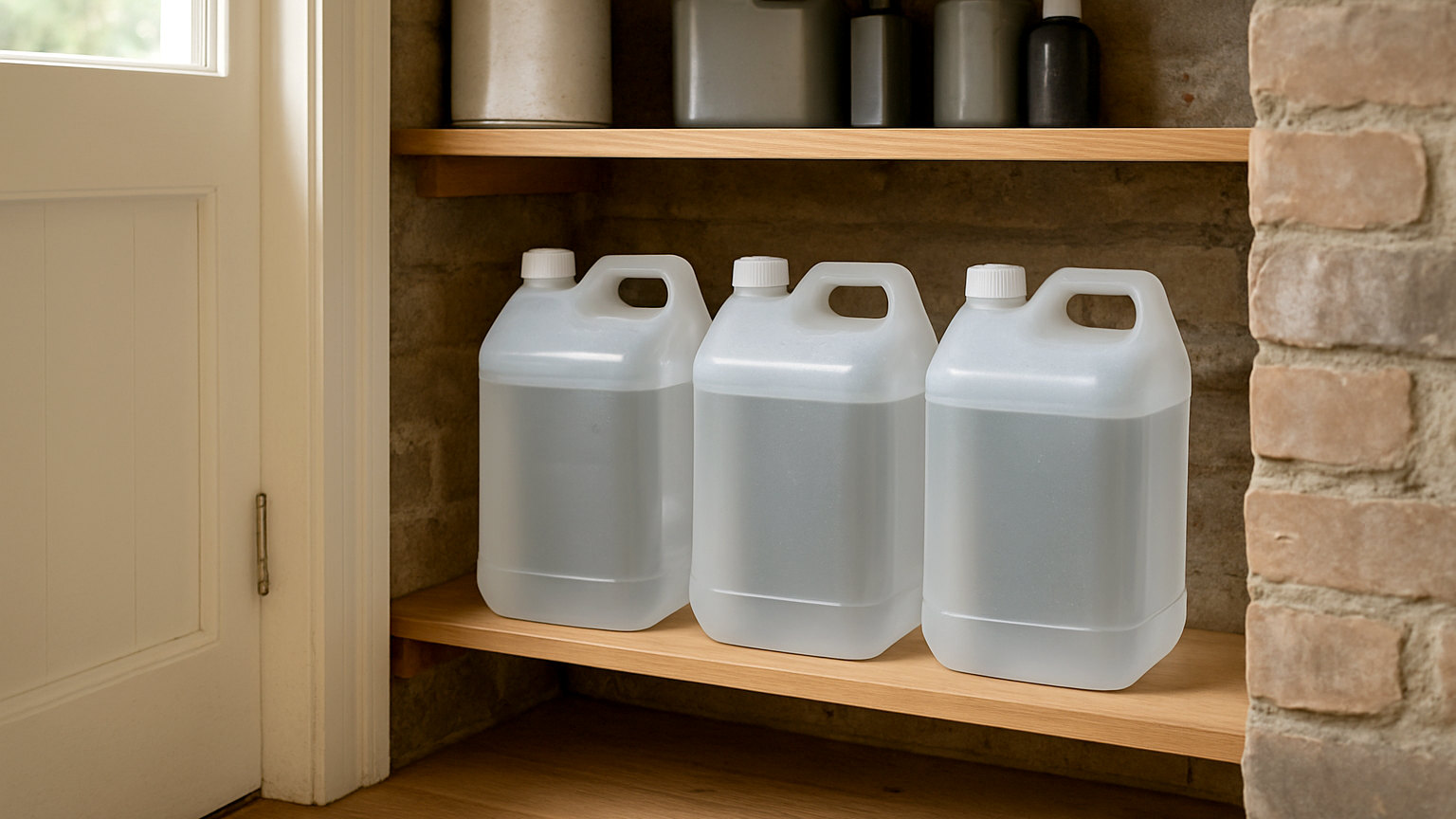
Water is heavy and bulky, so it tends to end up wherever there is room rather than wherever is suitable. Two of the most common locations actively spoil it.
What conditions does water need?
Cool, dark, dry and away from anything with a smell. Cool because warmth accelerates both microbial growth and the migration of compounds from plastic. Dark because light drives algae. Away from odours because plastic containers are permeable to vapours, which is the factor most people are unaware of and the one that ruins the most stored water.
Why does permeability matter?
Because polyethylene and PET allow vapour molecules through slowly. Water stored in a garage alongside petrol, paint, white spirit, creosote or strong cleaning products will pick up those compounds and taste of them within months. The container has not leaked and nothing has been spilled, and the water is still unusable. This is the single most common way a garage store is spoiled.
- Under beds, which is cool, dark, stable and otherwise wasted
- Interior cupboards and the bottoms of wardrobes
- A cool dry cellar, if there is one
- Never beside fuel, paint, solvents or pesticides
- Never in a loft, which reaches extreme temperatures
- Always raised off bare concrete on a board or pallet
Why not on concrete?
Because concrete transfers cold and moisture and can affect plastic over long periods, and because a garage or cellar floor is where water from a leak or a flood arrives first. Standing containers on a wooden board, a pallet or a low shelf costs nothing and removes both problems. The same advice applies to tinned and dried food.
What is wrong with the loft?
Temperature. Lofts routinely exceed thirty degrees in summer and freeze in winter, and both extremes are damaging. Heat accelerates deterioration and encourages growth, and freezing splits containers filled to the top since water expands as it freezes. Lofts are also difficult to access and the weight is considerable: a hundred litres is a hundred kilograms, which is a genuine structural consideration.
Where is best in a typical house?
Under beds, by a wide margin. The space is cool, dark, stable, within the heated envelope of the house, and otherwise entirely wasted. Flat crates of two litre bottles slide underneath most bed frames. After that, the bottom of a wardrobe, the back of a hall cupboard, and the space under the stairs all work well.
Should the store be split?
Yes, across two or three locations. It spreads the risk of a leak, a flood or an inaccessible cupboard removing everything at once, and it makes use of the small spaces most houses have rather than requiring one large one. Keep some upstairs if you are in a flood risk property, since ground floor storage may be exactly what is unavailable.
What about the weight?
Worth thinking about for large volumes. A hundred litres is a hundred kilograms, which is fine on a ground floor and worth considering upstairs, particularly concentrated in one spot. Spreading it across several rooms rather than stacking it in one corner is sensible, and it also improves accessibility.
What about a garage or shed?
Acceptable for non drinking water and poor for drinking water. Temperature swings, damp and the near certainty of fuel, paint or garden chemicals being stored nearby all work against it. If you must use one, keep containers well separated from anything with a smell, raised off the floor, and rotate on a shorter cycle.
What about condensation and the containers themselves?
Containers stored in a cool place can sweat when the room warms, and persistent moisture around the base encourages mould on carpet, cardboard and skirting. Standing them on a tray, a board or a plastic crate deals with it and contains any slow leak at the same time. Check underneath occasionally, since a container quietly weeping onto a floorboard for months causes more damage than the water is worth.
Does the store need to be accessible?
Yes, and it is frequently overlooked once the space is found. Water that requires moving furniture, emptying a wardrobe or crawling the length of a bed is water you will not use for rotation and will struggle to reach in a hurry. Store it in units you can slide out, keep the front of the space clear, and make sure everyone in the household knows where it is.
Under beds and interior cupboards, off the floor, away from anything that smells, split across locations, and nothing in the loft.


