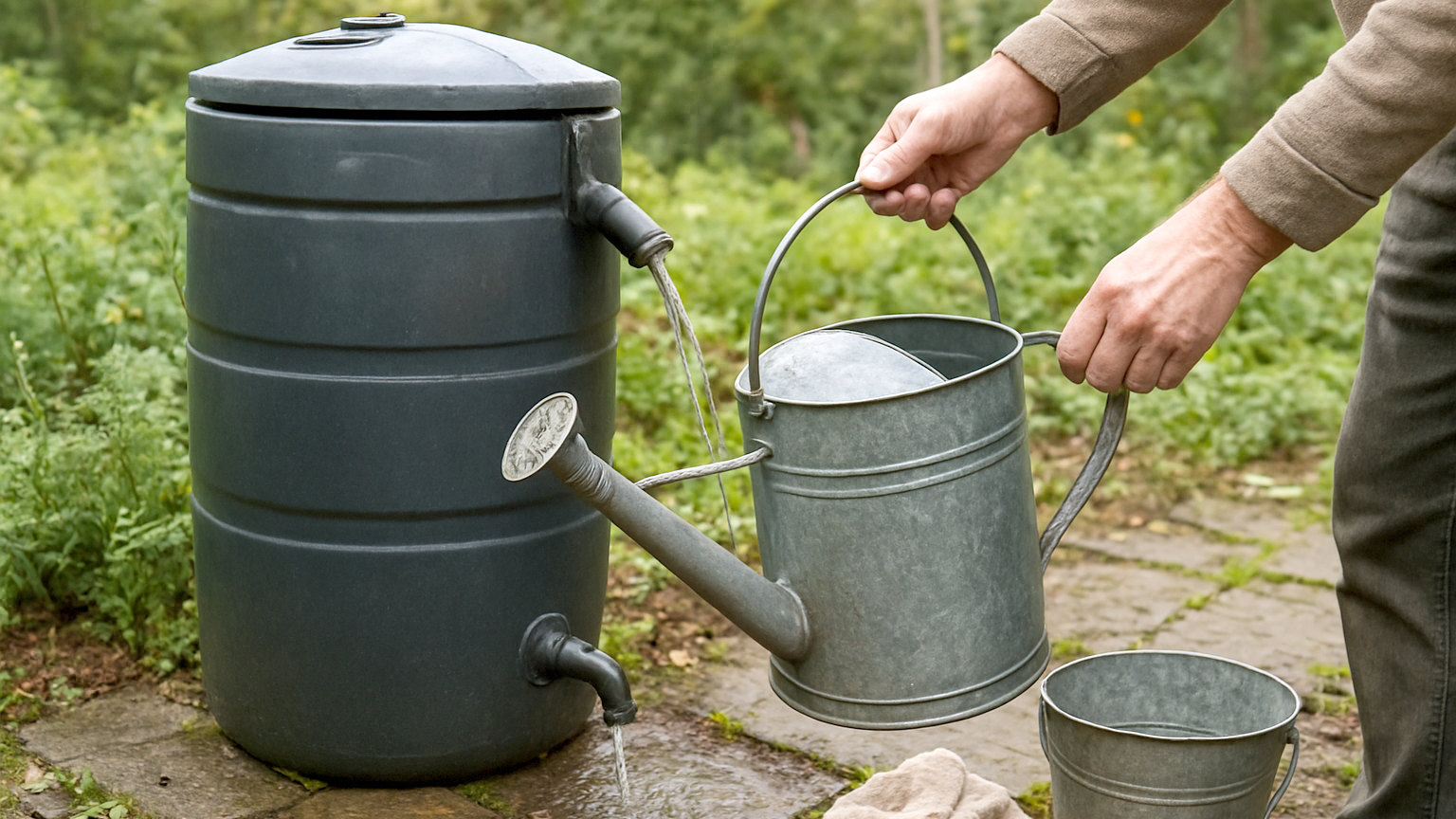
A water butt is the cheapest way to hold a large volume of water at home, and it is consistently misrepresented in preparedness content as a drinking supply. It is not one, and it is genuinely valuable for everything else.
Why is it not drinking water?
Because of what the roof adds. Runoff collects bird and rodent droppings, decaying leaves, moss, insects, dust and material shed by the roofing itself, and the butt then sits open to the air for months at ambient temperature. Bird droppings alone can introduce salmonella, campylobacter and cryptosporidium. It is contaminated water in an uncontrolled container, which is a different proposition from rain caught in a clean vessel.
What is it good for?
Every household use that is not drinking or cooking. Flushing lavatories, which is the single largest use in a typical home. Washing hands and bodies, with soap. Cleaning floors and surfaces. Washing a car. Watering the garden and greenhouse. Filling a pond. In a supply interruption, having a couple of hundred litres for these purposes takes enormous pressure off your stored drinking water.
- Flushing lavatories, the largest household use
- Washing and general cleaning
- Garden and greenhouse watering
- Not for drinking, cooking or teeth cleaning
- Fit a lid, a filter and ideally a first flush diverter
- Keep it out of direct sunlight to limit algae
How much does one hold?
Typically two hundred litres or more, which is far beyond what most households store indoors. A square metre of roof yields around a litre for every millimetre of rainfall, so a modest British roof fills a butt several times over across a year. Adding a second butt linked to the first roughly doubles the capacity for very little cost.
How do you keep it usable?
Lid on, debris out, and shaded. A close fitting lid keeps out leaves, insects and animals and prevents mosquito breeding, which is also a safety consideration for small children. A filter or a mesh at the inlet catches debris from the gutter. Keeping it out of direct sunlight limits algae. Clean it out annually, which is unpleasant and quick.
What is a first flush diverter?
A simple device that discards the opening few litres of runoff, which carry the highest contaminant load after washing accumulated material off the roof. It substantially improves the quality of what ends up in the butt for a modest cost, and it is worth fitting if the water will be used for anything beyond the garden.
Could you drink it in extremity?
Only after proper treatment and with real caution. Filtering to remove sediment and then boiling deals with organisms, and neither addresses chemical contamination from roofing materials, which can include lead from old flashing, compounds from bitumen felt and preservatives from treated timber. Roofs with lead or asbestos containing materials should be ruled out entirely. Treat it as a last resort behind every other option.
Does it help with flooding?
Marginally, and it is not the point. Water butts reduce the peak load on drains during heavy rain by a small amount, and many water companies encourage them for that reason. The benefit to a household is the stored water rather than any meaningful flood protection.
Is it worth having?
For any house with a garden, yes. It costs little, needs almost no maintenance, reduces water bills for metered households, and provides a large non drinking reserve that makes an interruption considerably less unpleasant. It is among the best value additions to household water resilience.
How do you get water out of it?
Through a tap near the base, which is how most are supplied, and it is worth checking the height. A tap set too low will not clear a watering can, and one set too high leaves a dead volume beneath it that never empties and goes stagnant. Raising the butt on a stand solves the first problem, and draining it fully once a year deals with the second along with the sediment that collects there.
Use it for flushing, washing and the garden, fit a lid and a filter, and treat it as a last resort for drinking even after treatment.