Water itself does not expire. What changes over time is the container, what is living in it, and what has migrated into it, and those determine how long a store remains usable.
Why do bottles carry a date?
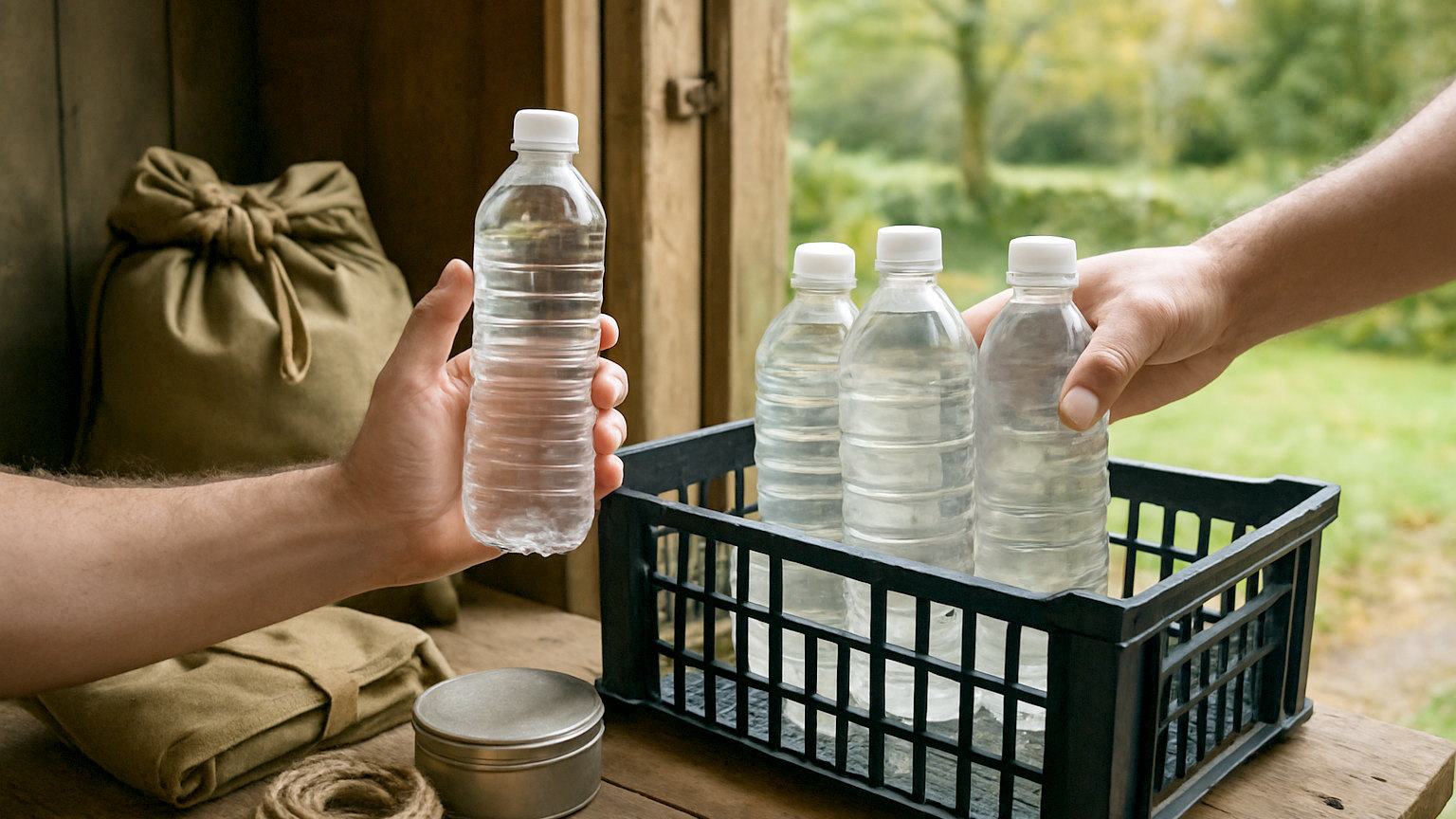
Because of the plastic, not the water. Over time PET bottles allow a slow exchange with the surrounding air, and compounds from the plastic can migrate into the contents, affecting taste. The date relates to quality rather than safety, and sealed commercial bottled water stored cool and dark remains safe well beyond it. Manufacturers generally suggest around two years for best quality.
How long does home bottled water last?
Rotate it every six to twelve months. Water from a mains tap in Britain is treated and safe when it comes out, and your container and the filling process are not sterile, so a small population of organisms is introduced with the water. Chlorine dissipates within days, after which nothing is holding that population back. Annual rotation is a sensible working rule.
- Sealed commercial bottles: several years, kept cool and dark
- Home filled containers: rotate every six to twelve months
- Label every container with the date it was filled
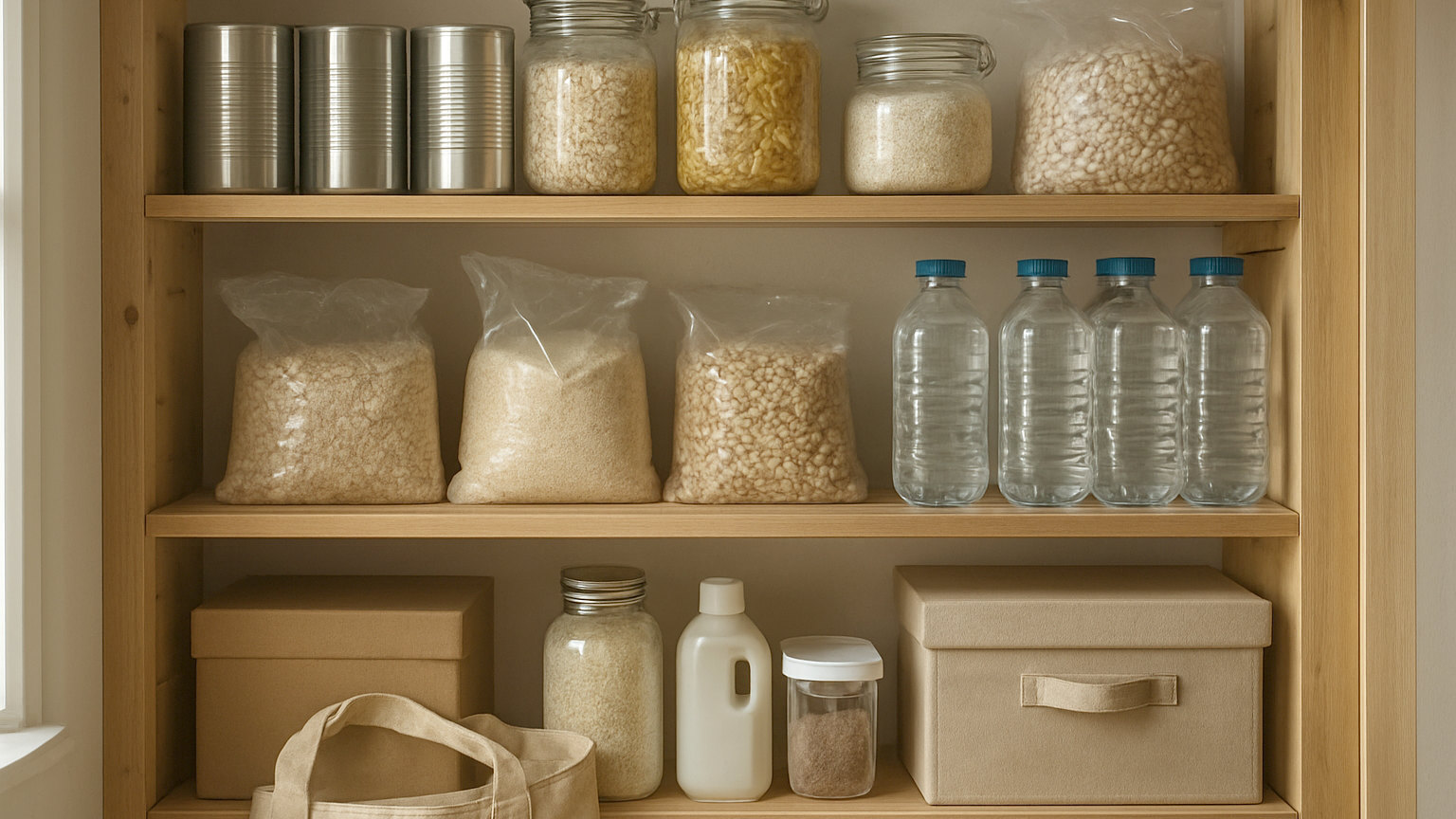
- Store cool, dark and away from chemicals and fuel
- Discard anything cloudy, green, smelly or with growth
- Treat at the point of use if there is any doubt
What actually goes wrong?
Three things. Algae, where light reaches the container, appearing as green growth or a green tinge. Biofilm, a slippery layer of bacteria on the inside surface, which develops slowly in any wet container. And taste, from the plastic or from absorbed vapours if the container has been stored near fuel, paint or solvents. All three are avoided by storing dark, cool and clean.
Does storage temperature matter?
Considerably. Warmth accelerates both microbial growth and the migration of compounds from plastic, so a store in a loft or a conservatory deteriorates far faster than one under a bed. Cool and stable is what you want, ideally under twenty degrees. This is one of the reasons a garage is a poorer location than an interior cupboard despite being more convenient.
Should you add anything to preserve it?
For a household store, rotation is a better answer than chemistry. Adding household bleach to stored water is a widely repeated technique, and the dosing is easy to get wrong, many products contain fragrances and additives that make them unsuitable, and the protection fades over months anyway. The simpler and safer approach is to rotate annually and to treat at the point of use if anything is in doubt.
How do you know if it has gone off?
By looking and smelling. Cloudiness, a green tinge, visible growth, floating particles, a slimy feel inside the container or any musty or chemical smell all mean it should not be drunk. Water that looks and smells clean after a year in a sealed, dark, cool location is almost certainly fine, and boiling it removes any remaining doubt about organisms.
Can you rescue doubtful water?
For drinking, boil it for a minute or treat it with purification tablets, which deals with anything biological. Neither removes chemical contamination, so water that tastes of plastic, fuel or solvent should be discarded rather than treated. Doubtful water is still perfectly good for flushing lavatories and washing, so it need not be wasted entirely.
What is the practical routine?
Label every container with the fill date, and rotate the home filled ones once a year at the same time as the rest of your preparedness check. Pour the old water on the garden or use it for cleaning, rinse the container, and refill. It takes twenty minutes for a household store and keeps everything current.
Does the container material change the answer?
Somewhat. Thicker high density polyethylene containers, of the type sold specifically for water storage, resist both vapour transfer and light better than thin PET bottles, so water in them keeps its taste longer. Glass is chemically inert and effectively perfect on that measure. In practice the storage location matters more than the material, since a good container in a warm bright garage will still disappoint.
Label with the fill date, rotate home filled water annually, store cool and dark, and treat at the point of use rather than preserving in advance.