Water filters divide into a small number of formats that suit genuinely different situations. Choosing well is mostly about being honest about how you will actually use it, rather than about which product performs best in the abstract.
What are the formats?
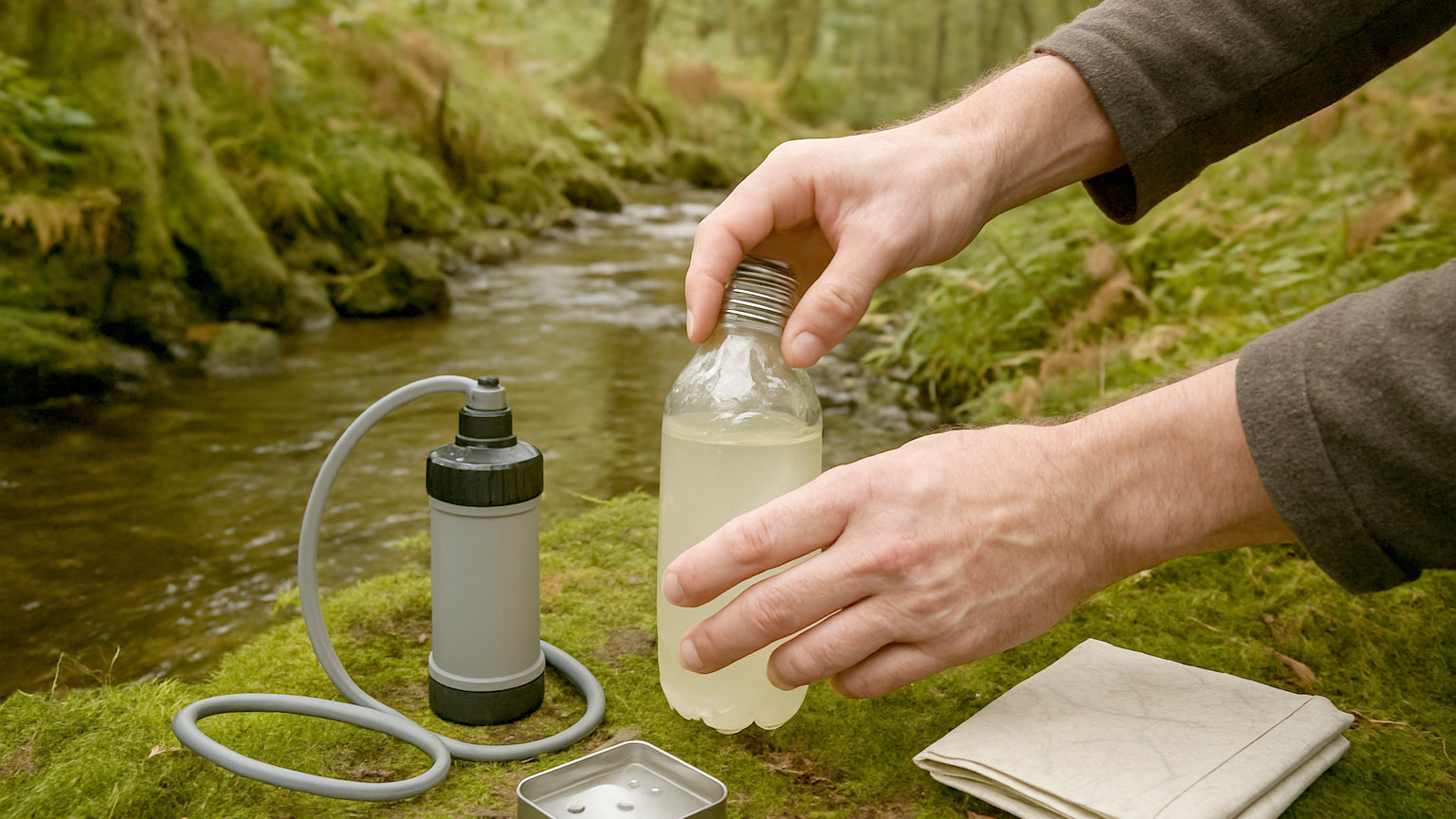
Five in common use. Squeeze filters, where water is forced through a cartridge from a soft bottle or pouch. Straw filters, drunk through directly. Gravity systems, where a bag hangs and filters unattended. Pump filters, which draw water through by hand. And bottle filters with the element built into the container. Each solves a different combination of speed, volume and convenience.
Which suits an individual walker?
A squeeze filter, for most people. They weigh very little, filter fast enough to drink on the move, work directly into a bottle, and cost modestly. The limitation is that filling several litres for a group is tedious. For a single walker or a pair on a British hill day, a squeeze filter plus a strip of chlorine dioxide tablets covers essentially every realistic situation.
- Squeeze filters: light and fast, best for individuals
- Gravity systems: best for groups and base camps
- Pump filters: best for shallow or awkward sources
- Straw filters: emergency backup only
- Bottle filters: convenient for day trips and travel
- Purifiers or tablets in addition where viruses are a risk
Which suits a group?
A gravity system, without much argument. Hang a bag of dirty water from a branch and several litres filter through unattended while you put up tents or cook. It removes the tedium of filtering by hand for four or six people and is the standard choice for scout groups, expeditions and anyone camping in one place. The drawback is bulk and the need for somewhere to hang it.
When do you need a pump?
When the source is difficult. A shallow puddle, a trickle between rocks, a boggy seep or a source you cannot dip a bag into all defeat squeeze and gravity systems, and a pump with an intake hose handles them. Pumps also give control over flow rate and are easy to use in cold weather with gloves. They are heavier and have moving parts that can fail.
What rating do you need?
Around zero point two microns for British and European use, which stops protozoa and bacteria. That covers giardia, cryptosporidium, E. coli and campylobacter, which are the realistic risks from UK upland water. It does not stop viruses, which is acceptable here and not acceptable where human sewage may reach the water.
What should you add?
Chemical tablets, always. A strip of chlorine dioxide tablets weighs a few grams, costs very little and covers what the filter cannot: viruses, and the situation where the filter clogs, freezes or is lost. Filtering first and then treating chemically gives complete coverage against anything biological for almost no additional weight.
What should you avoid?
Products making implausible claims, and anything without a clear specification. A filter that does not state its pore size, or that claims to remove everything including viruses and heavy metals at a very low price, deserves scepticism. Buy from established manufacturers who publish independent testing, since this is a product where failure is invisible until you are ill.
How much should you spend?
Modestly. A good squeeze filter costs about the same as a decent head torch, and a gravity system perhaps three times that. Both last for years and thousands of litres. This is not a category where the most expensive option is meaningfully better for ordinary use, and the money is better spent on a second filter or on tablets.
Do you need one at all in Britain?
For day walks with a bottle filled at home, no. Filters earn their place on multi day trips where carrying all your water is impractical, on hot days when consumption outstrips what you can sensibly carry, and anywhere you might need to refill from a stream. A litre of water weighs a kilogram, so on a two day walk a filter saves several kilograms of carrying, and that is the honest case for owning one.
Buy a hollow fibre squeeze filter for individual use or a gravity system for a group, add chlorine dioxide tablets, and upgrade only for travel where viruses matter.