The filter that serves perfectly well in Britain becomes inadequate in much of the world, and the reason is a single category of organism.
What changes abroad?
The likelihood of human sewage reaching the water. In Britain the realistic risks from fresh water are protozoa and bacteria from livestock and wildlife, which a zero point two micron filter stops. Where sanitation infrastructure is limited, human waste enters water supplies, bringing viruses such as hepatitis A, rotavirus and norovirus, which are far too small for an ordinary filter to catch.
What do you need instead?
Something that handles viruses. Three routes work. A purifier, meaning a device combining filtration with a chemical or ultraviolet stage, or using ultrafiltration fine enough to stop viruses. Chemical treatment with chlorine dioxide, used after filtering for clarity. Or a ultraviolet pen, again after filtering. All three are effective and the choice depends on weight, water clarity and how much you will treat.
- Ordinary filters do not stop viruses
- Purifiers combine filtration with chemical or ultraviolet treatment
- Filter for clarity, then treat chemically, as a light combination
- Chlorine dioxide covers viruses and cryptosporidium
- Boiling remains completely effective everywhere
- Ice, salads and teeth cleaning count as consumption
What is the lightest effective combination?
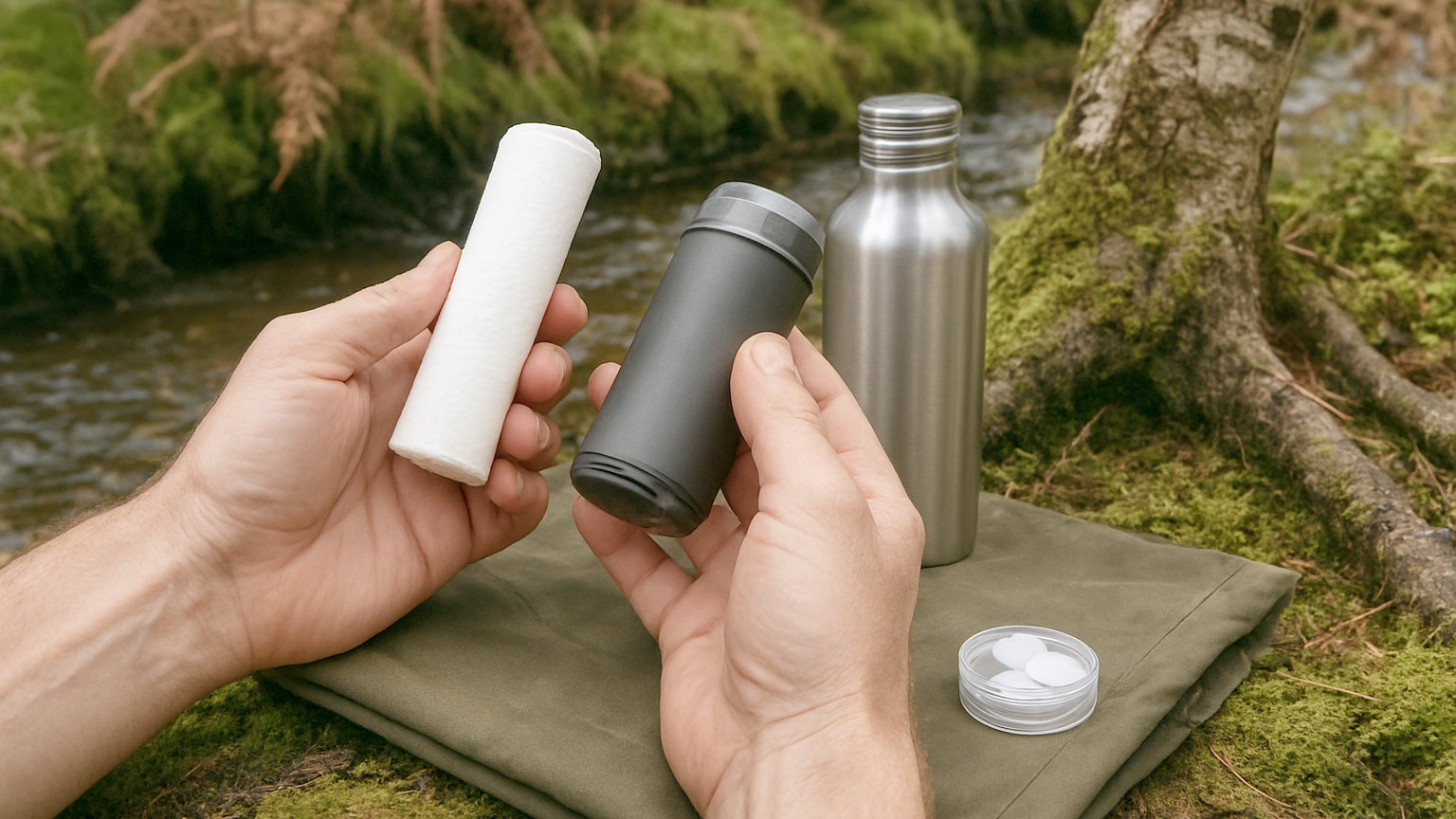
A squeeze filter plus chlorine dioxide tablets. The filter removes sediment, protozoa and bacteria, which also makes the chemical work better by removing the organic matter that consumes it. The tablets then handle viruses. Together they weigh little more than a filter alone, cost very little, and cover everything biological.
Is bottled water simpler?
Often, and it has drawbacks. In many destinations bottled water is cheap, available and entirely reasonable, and it produces a great deal of plastic waste and occasionally is not what it claims to be. Carrying a filter and treatment lets you use tap water, which is cheaper, lighter to obtain and better environmentally. Many travellers use both depending on circumstances.
What about tap water in developed countries?
Generally fine, and worth checking rather than assuming. Tap water across most of Europe, North America, Australia and Japan is safe to drink. Elsewhere, official travel advice from the Foreign, Commonwealth and Development Office and destination specific guidance will indicate whether it is. Local advice is usually reliable, since residents know which supplies are trusted.
What do people forget?
The indirect routes. Ice in drinks, salads and raw vegetables washed in tap water, fruit you peel yourself with wet hands, teeth cleaning, and the water swallowed in a shower. Illness abroad frequently comes from these rather than from a glass of water, and treating your drinking water carefully while eating a rinsed salad achieves less than it appears.
What about altitude and remote travel?
Boiling remains effective, with a caveat. Water boils at a lower temperature as altitude increases, and it remains well above the pasteurisation threshold, so boiling still works. The usual guidance extends the time to three minutes above around two thousand metres as a margin. Fuel becomes the constraint rather than effectiveness.
What should you actually pack?
A squeeze filter, a strip of chlorine dioxide tablets and, if you will be treating large volumes or the water is likely to be clear, a ultraviolet pen. Check whether your destination has specific risks, and remember that vaccination against hepatitis A and typhoid addresses part of the same problem from a different direction.
What about the return journey?
Consider how you will pack it. A wet filter sealed in a bag for a long flight and then left in a suitcase for a week is exactly the condition that grows a biofilm, and a filter in checked baggage may be exposed to freezing temperatures in an aircraft hold. Dry it as far as you can before travelling, keep it in hand luggage if freezing is a concern, and flush and dry it properly on arriving home.
Does vaccination change what you carry?
It reduces the consequences without removing the need. Vaccination against hepatitis A and typhoid protects against two specific waterborne threats, and it does nothing about the many others, including the ordinary bacterial and protozoal causes of travellers diarrhoea. Treat vaccination and water treatment as complementary, and seek travel health advice well before departure since some courses take weeks.
Assume viruses matter abroad, carry a filter plus chlorine dioxide, watch the ice and the salad, and check destination specific advice before you go.