Activated carbon appears in many filters and in every domestic jug filter, and it is routinely misunderstood as doing the microbiological work. It does not, and the distinction matters.
What does it actually do?
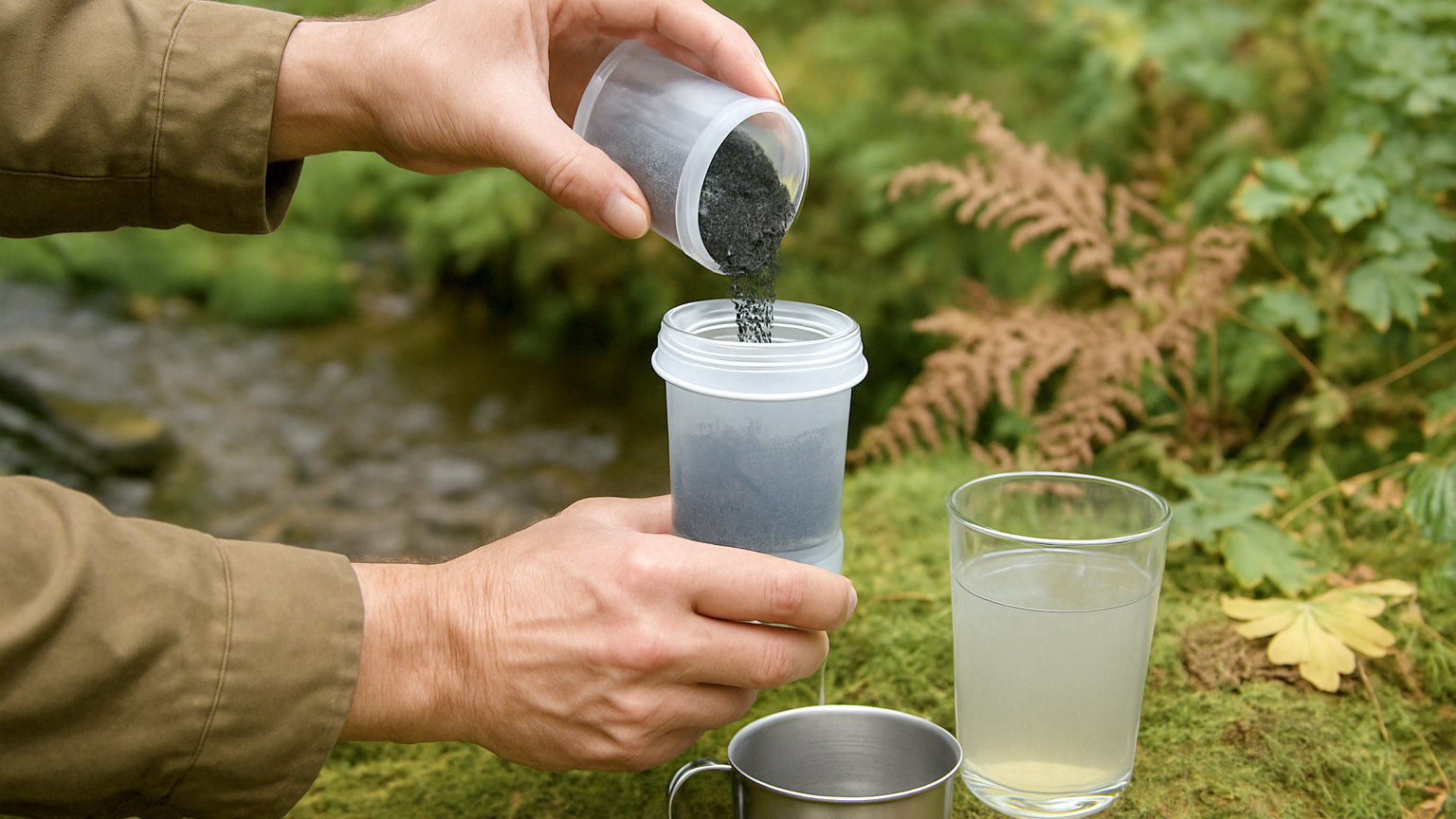
Adsorption, which is the binding of molecules to a surface. Activated carbon is processed to have an enormous internal surface area, and dissolved organic molecules stick to it as water passes through. That removes compounds causing taste and odour, chlorine, many pesticides and industrial organics, and some heavy metals to a limited degree.
What does it not do?
Kill or remove pathogens. Bacteria, viruses and protozoa are not adsorbed and pass straight through a carbon element. Worse, a damp carbon element that has been in use provides a surface and a food supply on which bacteria can grow. Carbon is a polishing stage for taste and chemistry, and it is never water treatment on its own.
- Removes chlorine, taste, odour and many organic chemicals
- Removes some heavy metals to a limited extent
- Does not remove or kill bacteria, viruses or protozoa
- Does not remove salt, nitrates or most dissolved minerals
- Exhausts on a much shorter timescale than a membrane
- Can harbour bacterial growth if left damp and unused
Why is it in outdoor filters?
Because it makes the water taste better, which genuinely matters. Peaty upland water tastes strongly of tannin, water treated with chemicals tastes of them, and water from a plastic container tastes of plastic. A carbon stage removes all of that and makes people drink more, which is a real benefit even though it contributes nothing microbiologically.
How long does it last?
Far less than a membrane, because it works by binding molecules and eventually saturates. Once the available surface is occupied, it stops removing anything and may begin releasing previously bound compounds. Manufacturers state a capacity, typically in litres or in months, and it should be replaced on that schedule rather than when performance is noticeably worse, since exhaustion is invisible.
What about jug filters at home?
They are carbon and ion exchange devices for taste and hardness, not treatment. A domestic jug filter improves the taste of tap water and does nothing useful during a boil water notice, when the problem is microbiological. During an incident, boil or use tablets, and do not assume the jug in the fridge is providing any protection.
Does it remove heavy metals?
Partially and unreliably. Some carbon products are treated to improve lead and copper removal, and performance varies widely by product and by the chemistry of the water. Do not rely on carbon for a source you suspect of metal contamination, such as water from a former mining area. That water should be avoided rather than treated, since no portable method deals with it properly.
How should you look after it?
Keep it dry between uses and replace it on schedule. A damp carbon element stored for months is the worst case, providing warmth, moisture and a nutrient rich surface for bacteria. Dry it fully, or remove and discard it if the filter design allows, and start a new one at the beginning of a season.
Is it worth having?
Yes, as a stage rather than a system. A filter combining a membrane for organisms and carbon for taste produces water that is both safe and pleasant, which is a better outcome than safe alone. Just be clear which component is doing which job, and never treat a carbon only device as water treatment.
Where else do you meet it?
In more places than people realise, which is why the confusion persists. Domestic jug filters, plumbed in under sink units, fridge water dispensers, some outdoor filter bottles and most travel purifiers all contain carbon, and all of them are marketed on cleaner tasting water. Each is doing the same job of adsorbing taste and chemistry, and none of them is making unsafe water safe. Assume any device you meet is a taste device unless it explicitly states otherwise.
Carbon handles taste, chlorine and chemicals, kills nothing, exhausts quickly, and must never be mistaken for the part that makes water safe.