
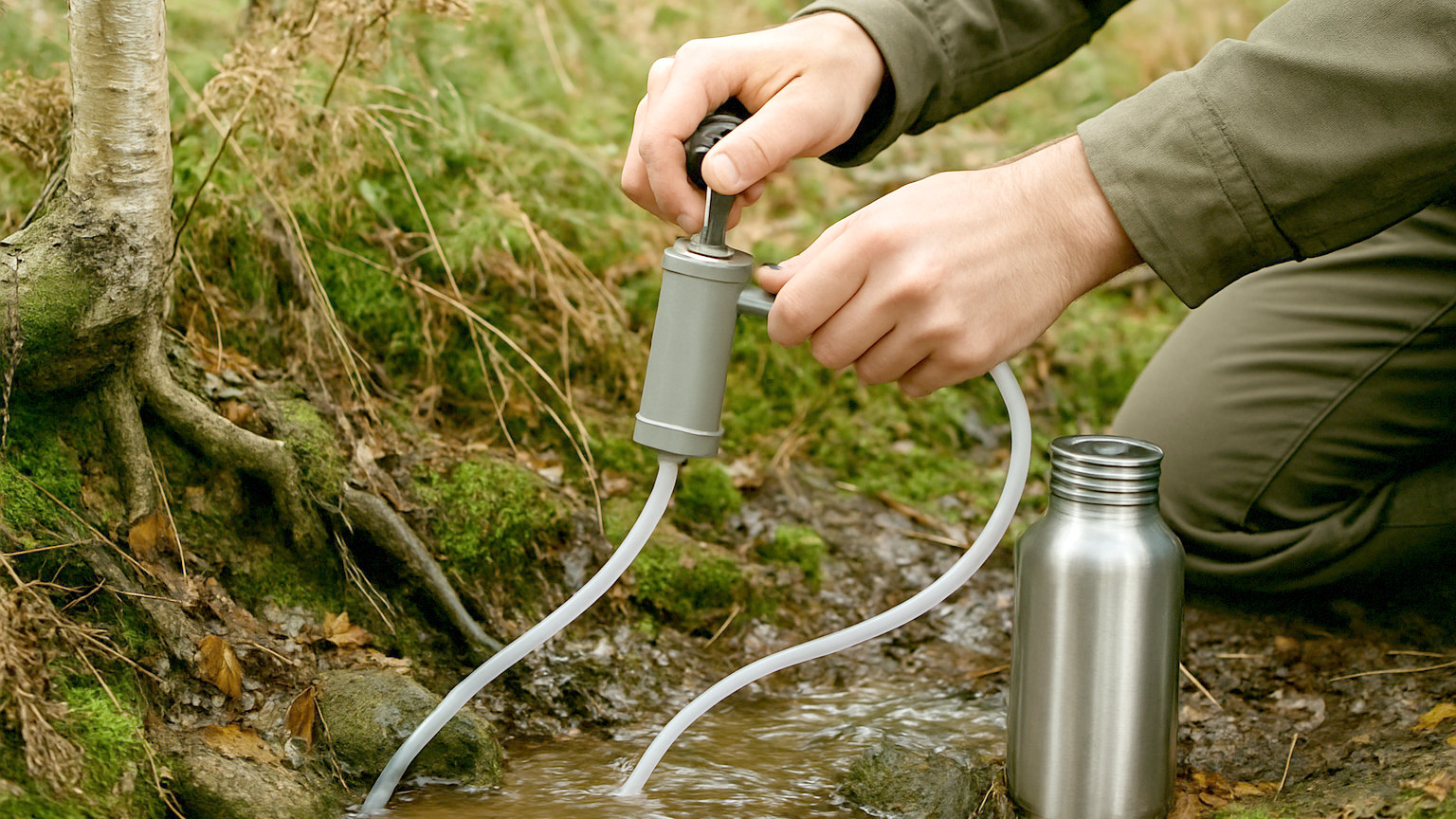
Pump filters are heavier and more mechanical than the alternatives, which makes them look outdated until you meet a water source that nothing else can use.
What problem do they solve?
Access. Squeeze and gravity systems need you to scoop water into a bag, which requires enough depth to submerge a container. A pump draws through a hose with a small intake, so it works from a centimetre of water in a rock hollow, a boggy seep, a trickle between stones or a source you can only reach by lowering a hose down a bank. In dry conditions or on limestone country, this can be the difference between water and none.
What else do they do well?
Control and cold weather use. You choose the flow rate, you can stop when the container is full without spilling, and the intake stays where you put it rather than needing to be held. Pumping is straightforward with gloves on, which matters in winter when squeezing a cold pouch is unpleasant and fiddly.
- Work from very shallow or awkward sources
- Intake hose reaches water you cannot get a bag into
- Usable with gloves in cold conditions
- Many use field serviceable ceramic elements
- Heavier and with moving parts that can fail
- Float and pre filter on the intake keeps sediment out
What is a ceramic element?
A rigid porous cartridge, common in pump filters, which can be cleaned by scrubbing the surface rather than backflushing. That makes them genuinely field serviceable: when flow drops, you take it out, brush the outer surface, and the rate recovers. Each cleaning removes a little material, so the element has a finite number of cleanings before it must be replaced, which is usually marked by a gauge.
Are ceramic elements better than hollow fibre?
Different rather than better. Ceramic tolerates silty water better and can be cleaned repeatedly in the field. Hollow fibre is lighter, faster and cheaper. Ceramic is brittle and cracks if dropped or frozen, which is a real risk in a pack. For most British use hollow fibre is the sensible choice, and ceramic earns its place where sources are consistently dirty.
What maintenance do they need?
More than the alternatives. Seals, O rings and pump washers wear and should be checked and lubricated occasionally, and spares are worth carrying on a long trip. The intake pre filter needs rinsing. The element needs cleaning when flow drops. None of this is difficult and it is more than a squeeze filter demands, which is essentially nothing.
How do you keep sediment out?
With the float and pre filter on the intake. Most pumps include a foam pre filter and a float that keeps the intake just below the surface rather than in the silt on the bottom. Positioning matters: draw from the clearest part of the source, avoid stirring the bed, and let disturbed water settle before pumping. This extends element life considerably.
What are the drawbacks?
Weight, bulk and mechanical failure. A pump filter typically weighs three or four times a squeeze filter and takes up meaningful pack space. Moving parts, seals and hoses can fail, and a cracked ceramic element is unusable. For a straightforward walk with reliable streams, the extra weight buys nothing.
Who should buy one?
Anyone whose sources are unreliable, shallow or silty. Expedition travel, dry regions, limestone areas where surface water is scarce, and paddling where you are drawing from a boat all favour a pump. For UK hill walking with running streams, a squeeze or gravity filter is lighter and easier.
How fast are they?
Typically around a litre a minute with a clean element, comparable to a squeeze filter and slower than a good gravity system under a decent head. The effort is steady rather than intense, which suits filling several containers in sequence. Flow drops noticeably as the element loads, and unlike a hollow fibre filter you restore it by cleaning the surface rather than by backflushing, which takes a couple of minutes in the field.
Buy a pump if your water sources are shallow, silty or awkward, keep spare seals, use the intake float, and clean the element before the flow drops badly.


