Filters are marketed heavily for household preparedness, and for the most common British water emergency they are not the answer. Knowing when one genuinely helps prevents both wasted money and false confidence.
What is the usual household water problem?
A boil water notice or a supply interruption. A notice means the supplier suspects microbiological contamination, and the instruction is to boil water before consumption. Boiling deals with every organism completely and needs no equipment beyond a pan and a heat source. An interruption means no water at all, which is a storage problem rather than a treatment one.
So is a filter useful at all?
In specific cases. If you are on a private supply, a spring or a borehole, you have no supplier and no notice system, and a filter plus boiling is genuinely valuable. If your realistic scenario involves drawing water from a butt, a stream or a stored container of uncertain condition, a filter improves both safety and palatability. And if you have no reliable means of boiling during a power cut, a filter provides an alternative.
- A boil notice is answered by boiling, not by filtering
- An interruption is a storage problem, not a treatment one
- Filters matter for private supplies and uncertain sources
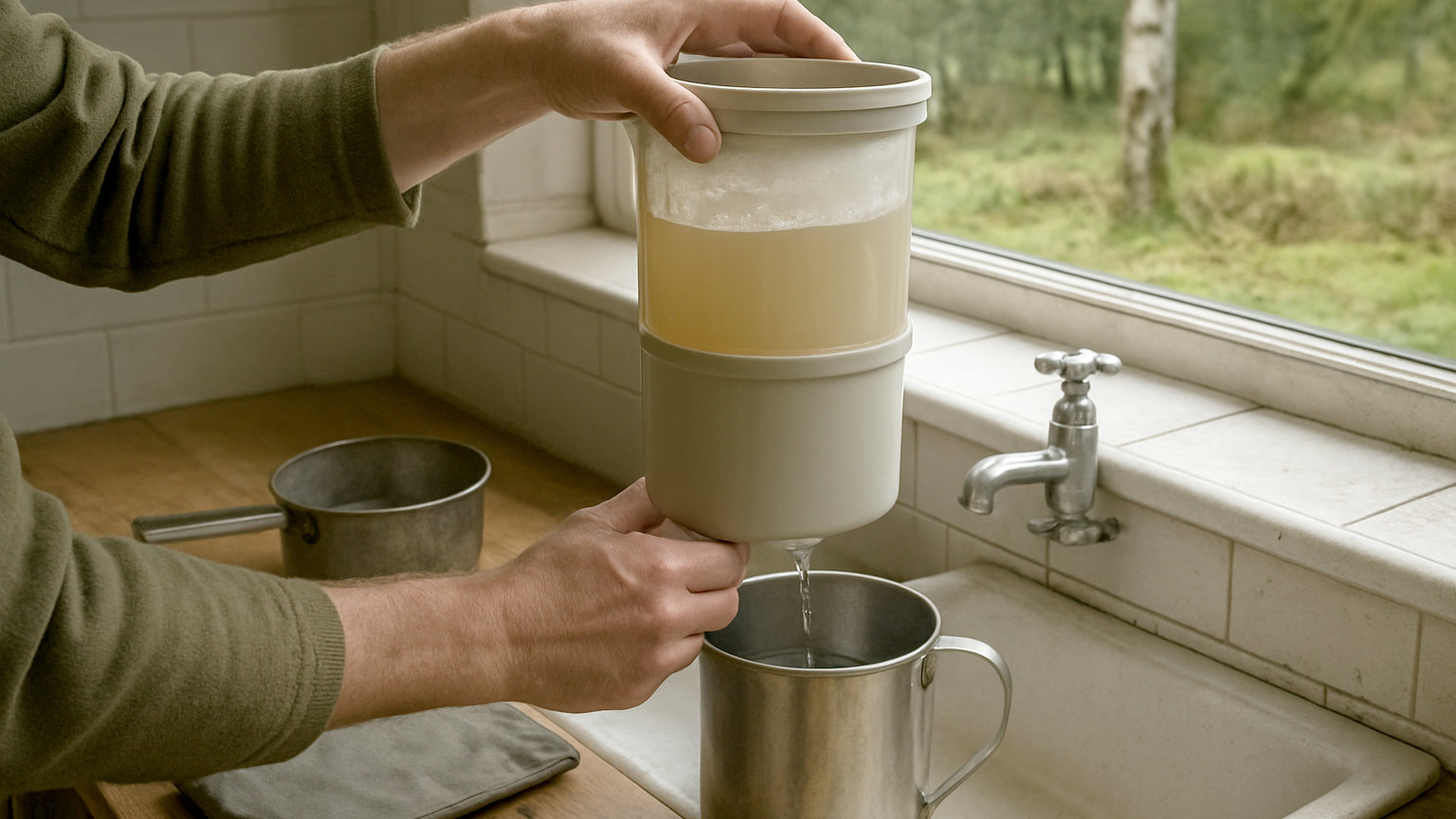
- A gravity system suits household volumes with no effort
- Filters do not remove chemical contamination
- Store water first, then consider treatment
Which format suits a household?
A gravity system. It processes several litres unattended, needs no power, no pumping and no squeezing, and produces enough for a household daily requirement while you do something else. Hang it from a door frame or a shelf bracket. A squeeze filter will do the job and becomes tedious at household volumes.
Would it help after flooding?
Only partially, and this is important. Flood water mixes sewage, agricultural chemicals, fuel oil and whatever was stored at ground level. A filter addresses the biological component and does nothing about the chemical one, and boiling makes chemical contamination worse by concentrating it. Water affected by flooding should be treated as unusable rather than filtered, and bottled or tankered supplies used instead.
What about plumbed in home filters?
They are for taste and hardness rather than emergencies, and they stop working when the supply does. An under sink carbon filter or a jug filter improves everyday tap water and provides no protection during a boil notice, when the problem is microbiological. Do not assume the filter jug in the fridge is doing anything useful during an incident.
What should you buy first?
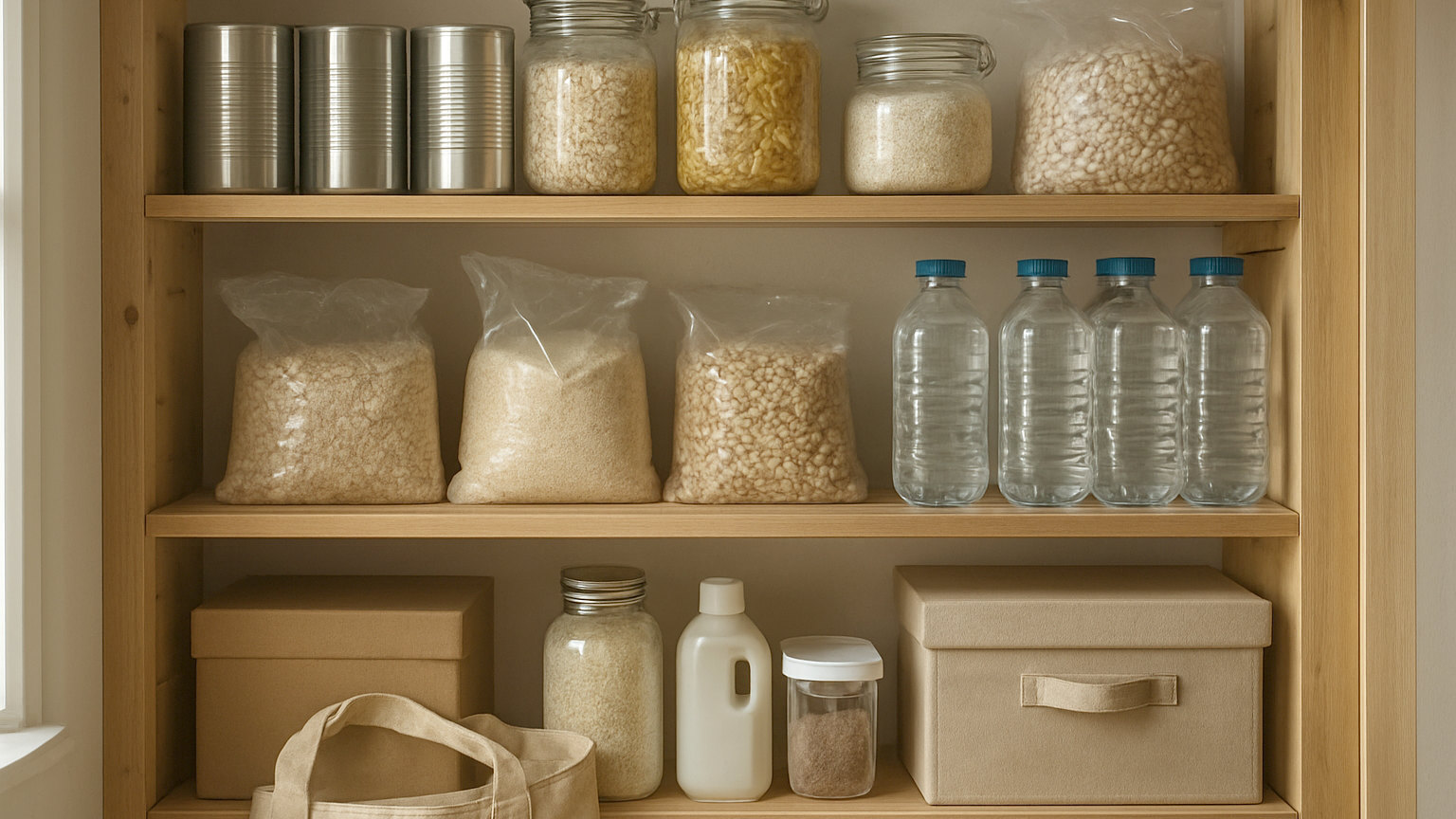
Stored water, then a means of boiling, then a filter. Bottled water under a bed addresses the most likely problem completely. A camping stove and fuel covers boiling when the power is off. A filter is the third layer and matters most where the first two are insufficient, which for a household on mains water is not often.
Does a filter help with a butt?
For non drinking uses no treatment is needed, and if you intend to drink from one, filtering and boiling together is the minimum. Roof runoff carries bird droppings and roofing material contaminants, so the chemical question remains even after filtering. Treat it as a last resort behind stored water and any tankered supply.
How should you store a household filter?
Dry, at stable temperature, and checked. A gravity system left in a cupboard for five years should be flushed thoroughly and its flow rate checked before you rely on it, and it must never have been anywhere that freezes, since freezing ruins hollow fibre membranes invisibly.
What about a private supply specifically?
Treat it as the case where equipment genuinely matters. Households on a spring, well or borehole have no supplier monitoring, no notice system and no alternative if the source is contaminated, which is a real risk after flooding or heavy rain. A gravity filter plus a means of boiling covers the biological side, and the local authority environmental health team can advise on testing, which is worth doing periodically rather than only after a problem.
Store water and a means of boiling first, buy a gravity filter if you have a private supply or an uncertain source, and never filter flood water.