
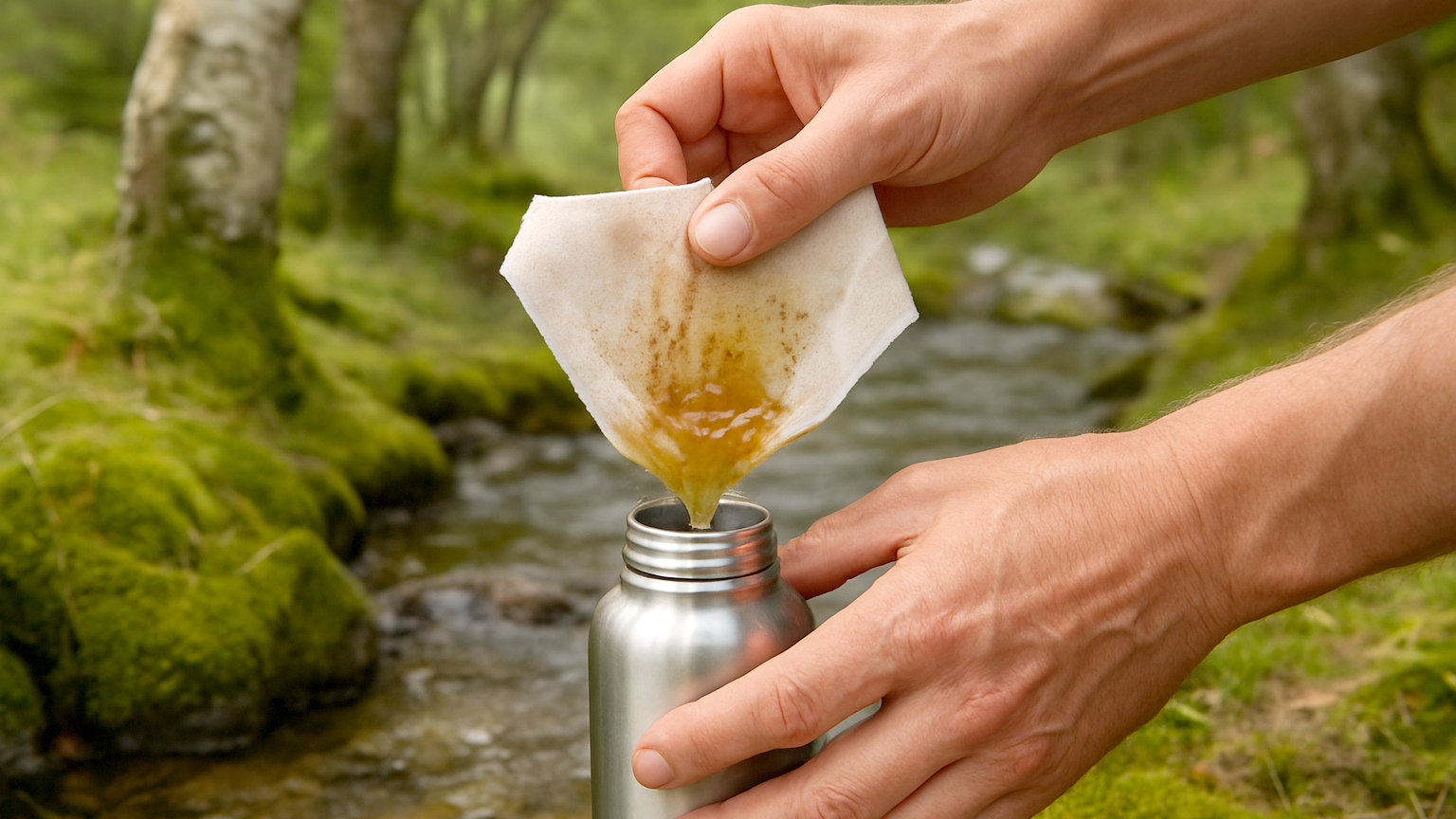
Suspended sediment is what ends filter life, and removing most of it before the water reaches the membrane costs nothing. It is the cheapest and most effective thing you can do for a filter.
Why does sediment matter so much?
Because it accumulates on the membrane surface and progressively blocks it. Every litre of silty water deposits a layer that reduces flow and eventually compacts into something backflushing cannot lift. A filter rated for several thousand litres of clear water may manage a fraction of that from a peaty or muddy source, and the difference is almost entirely suspended solids.
What is the simplest method?
Time. Fill a container, leave it undisturbed for twenty minutes or longer, and heavier particles settle to the bottom. Then pour or siphon the clearer water off the top without disturbing the layer below. Overnight settling removes most visible cloudiness for no effort and no equipment, and it is the method to use whenever you are camped rather than moving.
- Let water settle and decant from the top
- Pour through a cloth, bandana or coffee filter
- Scoop from the clearest part of the source
- Do not stir the bed when collecting
- Use the intake float and pre filter on a pump
- Dig a seep hole beside a muddy source and let it fill
What can you pour it through?
Almost any woven fabric. A bandana, a clean t shirt, a coffee filter, a piece of muslin or a purpose made pre filter bag all catch the larger material. Several layers work better than one. Secure it over the mouth of the container with a band and pour slowly. This takes seconds and removes a substantial proportion of the load.
How should you collect water in the first place?
Carefully, which matters more than any subsequent step. Scoop from the clearest part of the source rather than dipping in the shallows and stirring up the bed. Take from moving water rather than a stagnant pool. Face upstream and fill without disturbing the bottom. A little care at the point of collection avoids most of the sediment entirely.
What is a seep hole?
A hole dug a short distance from a muddy pool, edge or bank, which fills with water that has been filtered through the intervening ground. Let the first fill settle or bail it out, and the second fill is usually markedly clearer. It is a traditional technique, costs only effort, and turns an unusable muddy source into something a filter can cope with.
Does it help with the chemistry?
Only slightly, and it does help other treatments considerably. Pre filtering removes organic matter that would otherwise consume chemical disinfectant, so tablets work better and faster in clearer water. It also removes the turbidity that shields organisms from ultraviolet light, which makes a UV pen genuinely effective rather than partially so.
How much difference does it make?
Enough to be the deciding factor in filter life. Practitioners who routinely settle and cloth filter their water report elements lasting several times longer than those who filter straight from a silty stream. Given that ten seconds of pouring through a bandana is the entire cost, the return is difficult to argue with.
What should you carry for it?
A bandana or a square of cloth, which weighs almost nothing and has a dozen other uses. A wide mouthed container or a collapsible bag for settling. That is the whole kit. Purpose made pre filter bags exist and work well, and are not necessary for anyone with a spare piece of fabric.
Does it help chemically as well?
Marginally, and worth knowing. Some contamination is bound to suspended particles rather than dissolved, so removing the sediment removes a proportion of it along with the organisms travelling on it. This is a small effect and should not be mistaken for chemical treatment, which pre filtering does not provide. The main benefits remain filter life, faster chemical action and effective ultraviolet treatment.
Collect carefully, settle the water, pour it through a cloth, and dig a seep hole beside anything genuinely muddy.


