
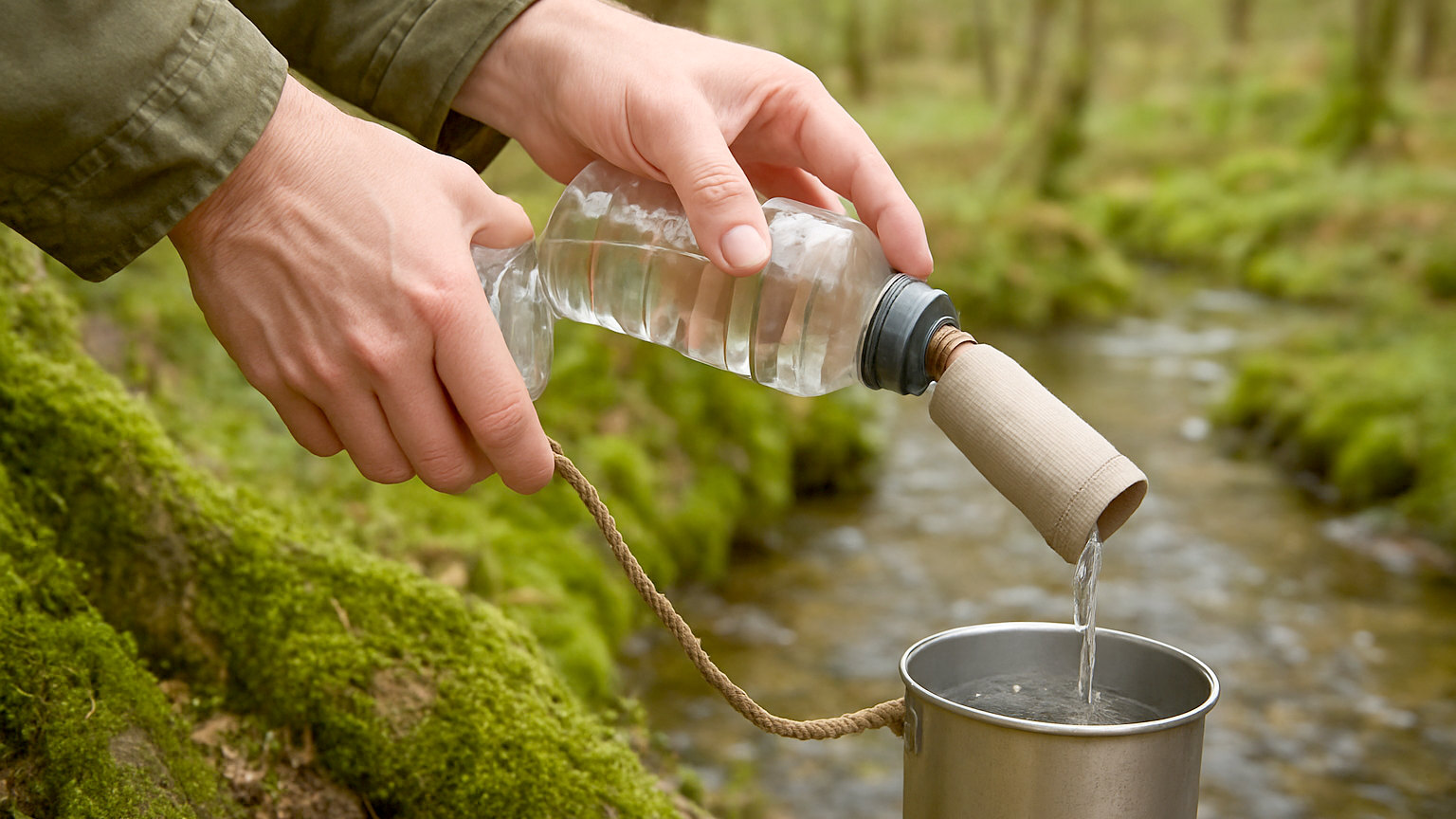
Filters clog gradually as sediment accumulates on the membrane surface, and reversing the flow clears it. Doing it early and often is the difference between a filter lasting years and one being thrown away after a season.
What is backflushing?
Pushing clean water through the filter in the opposite direction to normal flow, which lifts the accumulated layer of sediment off the membrane and washes it out. Most hollow fibre filters come with a syringe for the purpose, and many can also be backflushed by attaching a bottle to the clean side and squeezing.
When should you do it?
Before the flow slows noticeably, not after. Sediment compacts onto the membrane over time, and a filter left until it is barely passing water may never return to its original rate. Backflushing at the end of each day of use, or every few litres from silty water, keeps it in good condition for very little effort.
- Backflush before the flow drops, not after
- Use clean treated water, never untreated source water
- Repeat until the water coming out runs clear
- Scrub ceramic elements rather than backflushing them
- Pre filter cloudy water to reduce how often you need to
- Dry the filter fully before storing it
What water should you use?
Clean, treated water, and this matters more than people realise. Backflushing with untreated source water pushes contaminated water into the clean side of the membrane and the outlet, which is exactly what the filter exists to prevent. Use water you have already filtered, or bottled water, and keep the clean side clean throughout.
How do you clean a ceramic element?
By scrubbing rather than backflushing. Remove the element and brush the outer surface with the pad or brush supplied, or a clean nylon scourer, under running water. This removes a thin layer of the ceramic along with the sediment, which is by design. Elements have a minimum diameter marked or a gauge supplied, and once worn below it they must be replaced.
How do you know it is working?
By the flow rate and by the water coming out during backflushing. Time how long a litre takes when the filter is new and use that as a reference. When the rate has dropped noticeably, backflush until the water running out of the dirty side is clear and the rate has recovered. A filter that will not recover its rate after repeated backflushing is reaching the end of its life.
What if it is completely blocked?
Try repeated backflushing with warm clean water, which sometimes recovers a badly loaded element. Some manufacturers permit soaking in a mild solution, and their instructions should be followed rather than improvised, since the wrong chemical can damage the membrane. If repeated attempts fail, replace it rather than persisting, since a filter passing water very slowly is a filter you will be tempted to bypass.
How do you reduce the need?
By pre filtering. Letting water settle, pouring it through a cloth or a coffee filter, or drawing from the clearest available part of a source dramatically reduces the sediment reaching the membrane. Ten seconds of pre filtering saves several backflushes and materially extends the life of the element, which is the highest value habit in the whole subject.
What about after a trip?
Backflush thoroughly, then dry the element completely before storage. A damp filter stored in a cupboard grows a biofilm and can smell, and in cold storage it risks freezing while wet, which ruptures the fibres. Leave it somewhere warm and airy for a few days with the caps off before packing it away.
How often is often enough?
A reasonable habit is at the end of each day of use, and more frequently when the water is visibly cloudy. On a long trip from clear mountain streams you may go several days without noticing any change. From a peaty or silty source you may want to backflush after every few litres. Let the flow rate tell you rather than following a schedule, and err on the side of doing it too early.
Backflush with clean water before the flow drops, scrub ceramic elements, pre filter cloudy water, and dry it fully before storage.


