A gravity filter is the most efficient way to produce several litres of clean water without standing over it. The principle is simple and the practical advantage over hand filtering for a group is substantial.
How does it work?
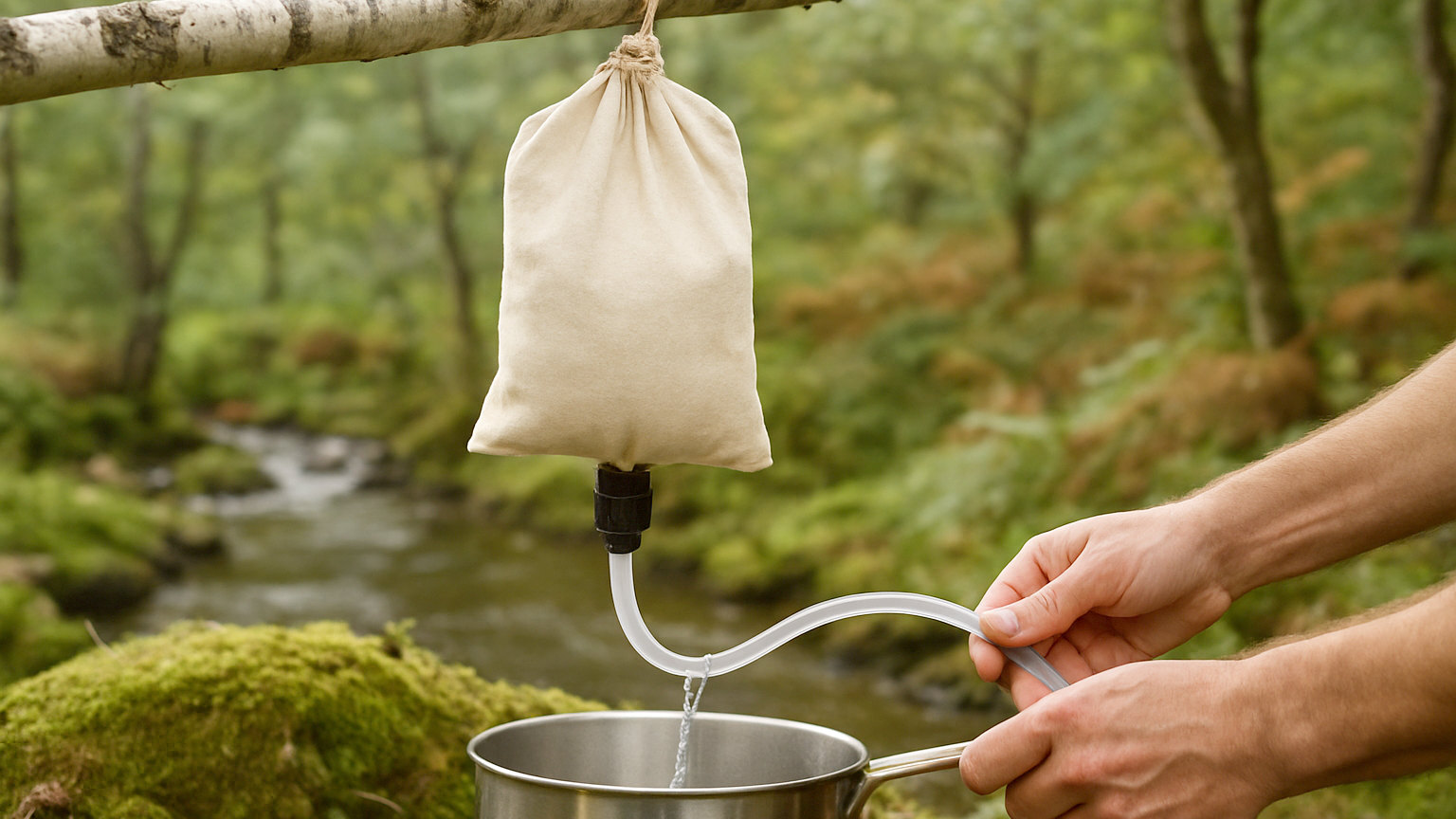
A bag of untreated water hangs above a filter element, and the weight of the water column pushes it through the membrane into a clean container below. No pumping, no squeezing and no attention required. The greater the height difference between the dirty bag and the outlet, the higher the pressure and the faster the flow.
What flow rate can you expect?
Typically one to two litres a minute with a clean element and a good hang, slowing as the filter loads with sediment. A four litre bag therefore fills a couple of bottles in a few minutes while you do something else. Cold water flows more slowly, as does water that has already partly clogged the membrane, so plan on longer in winter and from silty sources.
- Hang the dirty bag as high as practical for better flow
- Fill it by scooping rather than dipping the whole bag
- Let sediment settle in the bag before opening the tap
- Keep the clean and dirty bags clearly marked and separate
- Backflush before the flow becomes noticeably slow
- Drain and dry both bags before storing
What do you need to set one up?
Somewhere to hang it and about a metre of height. A tree branch is ideal, and a walking pole tripod, a fence post, a car roof rack or the ridge of a tarp all work. On open ground with nothing to hang from, holding the bag up or resting it on a rock at chest height still works, just more slowly. This is the main practical limitation of the format.
How do you avoid cross contamination?
By treating the two bags as strictly separate. Mark them clearly, handle the clean one with clean hands, and never let the dirty hose touch the clean container or the drinking end. This is the most common way people make themselves ill with an otherwise perfectly good filter, and it is entirely a matter of discipline rather than equipment.
Who should buy one?
Groups, families, scouts, expeditions and anyone camping in one place for more than a night. Also anyone wanting a household emergency filter, since a gravity system will process a household daily requirement with almost no effort and needs no power. For a solo walker moving fast it is more bulk than the job requires.
What are the drawbacks?
Bulk, the need for a hanging point, and slower flow in cold conditions. The bags are also vulnerable to punctures and to being left damp, which encourages growth inside. They are not well suited to drinking on the move, since setting one up takes a couple of minutes and it is designed to produce volume rather than a mouthful.
How do you keep it working?
Backflush regularly and dry it fully. Most systems allow you to reverse the flow, either by raising the clean bag above the filter or with a syringe, which clears accumulated sediment from the membrane surface. Do it before the flow slows noticeably rather than after, since a heavily clogged element never fully recovers. Never allow it to freeze.
Can you leave it running?
Yes, and that is the point. Set it up on arriving at camp, fill the dirty bag, and by the time the tents are up you have several litres of clean water. Many people run one continuously through an evening, topping up the dirty bag, which produces enough for cooking, drinks and the following day without anyone thinking about it.
What size system should you buy?
Match the dirty bag to your group. Four litres suits a couple, six to eight suits a family, and ten or more suits a larger group or a base camp. Buying larger than you need means carrying bulk you never fill and hanging a heavier bag, since ten litres of water weighs ten kilograms and needs a branch that will take it. Two smaller systems are often more practical than one large one for a group that splits up.
Hang it high, keep the bags rigorously separate, backflush before the flow slows, and dry it fully before storing.