
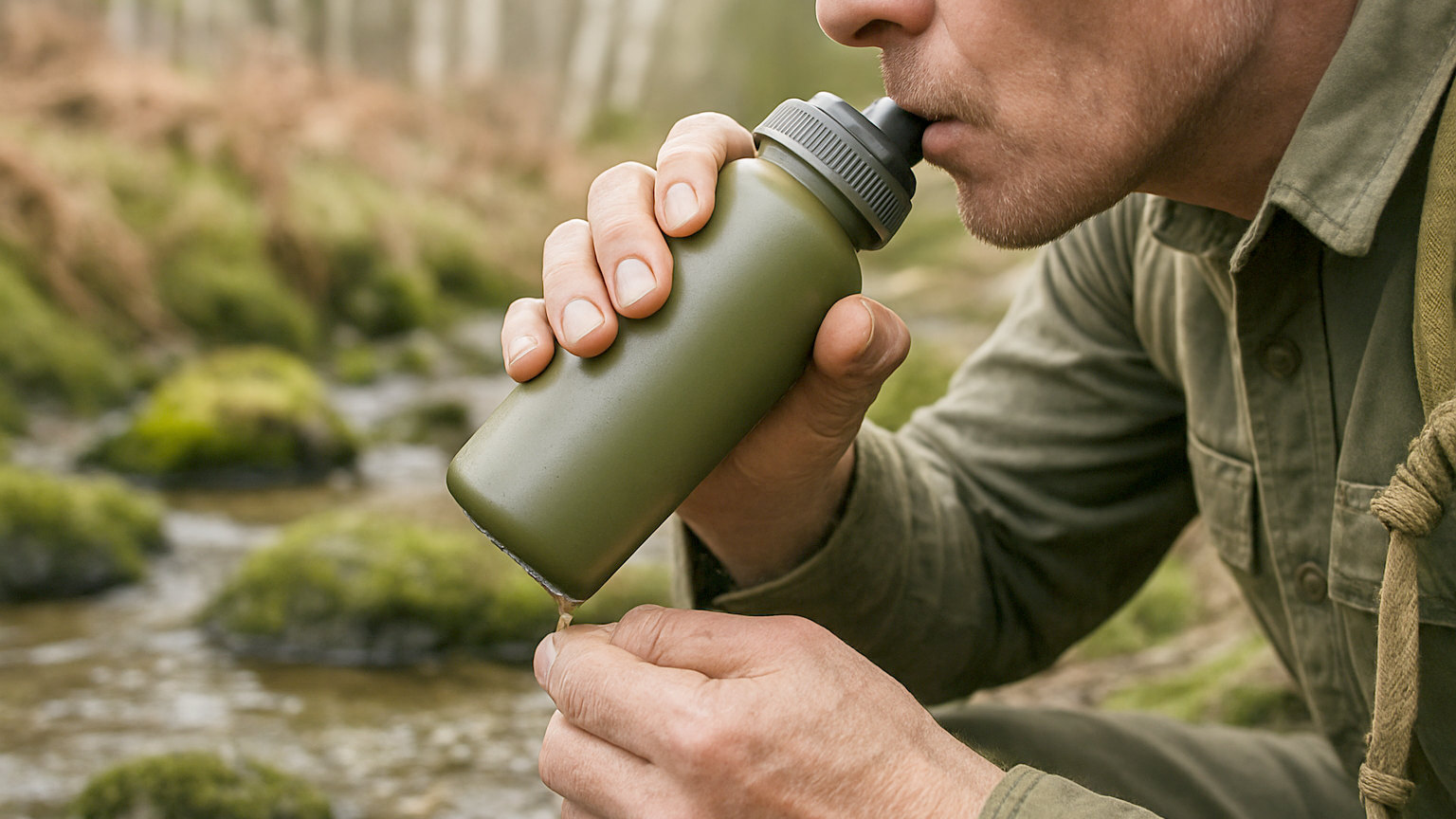
Filter bottles combine the container and the filter into one item, which is genuinely convenient and comes with constraints that are easy to overlook when buying.
How do they work?
The filter element sits in the lid or in a straw inside the bottle. You fill the bottle from the source, and water passes through the element as you drink or as you squeeze. There is no separate step and no other equipment, which makes them the simplest format to use and the fastest to deploy.
What are they good for?
Day walks, running, cycling, travel and anywhere you drink from the bottle and do not need treated water for anything else. They are also excellent for travel to places where tap water is questionable, since a bottle filled from a tap and drunk through the filter is unobtrusive and needs no preparation. For those uses they are hard to beat.
- Simple: fill and drink, with no separate step
- Good for day trips, running and travel
- Limited to the bottle capacity, usually under a litre
- Cannot easily produce water for cooking
- Travel versions with virus protection are widely available
- Element life is generally shorter than a standalone filter
What is the main limitation?
Capacity. You can only treat as much water as the bottle holds, and getting water out for cooking, for a companion or into another container is awkward or impossible depending on the design. On a trip where you need four litres for a camp meal and drinks, a filter bottle is the wrong tool and a squeeze or gravity system is right.
Do they stop viruses?
Some do, which is worth checking specifically. Bottles marketed for travel frequently include an additional stage, either a much finer membrane or an iodine or carbon element, and state virus reduction explicitly. Bottles marketed for outdoor use in Britain generally do not, and do not need to. Read the specification rather than assuming, since this is the difference that matters when travelling.
How long does the element last?
Usually less than a standalone filter, often a few hundred to a couple of thousand litres depending on the type. Carbon elements have a much shorter life than membranes and need replacing more frequently, often every few months of regular use. Factor replacement cartridges into the cost, since a cheap bottle with expensive proprietary cartridges is a poor purchase.
What about flow rate?
Slower than drinking from an ordinary bottle, which people find more irritating than expected. Drawing water through a membrane requires effort, and it becomes harder as the element loads. If you drink frequently on the move, try one before committing, since some designs require a genuinely tiring suck.
How do you look after one?
Backflush or rinse the element as the manufacturer directs, and dry it fully between uses. A bottle left with a damp element in a cupboard for months will smell and may grow a biofilm. Never allow one to freeze, since a membrane element is ruined by freezing exactly as any other hollow fibre filter is.
Should you buy one?
As a second item rather than your only filter. A filter bottle for daily use, travel and day walks alongside a squeeze or gravity system for camping covers everything. If you only ever walk for the day and never cook outdoors, a bottle alone is a perfectly reasonable choice.
What capacity should you look for?
Around three quarters of a litre to a litre for general use. Smaller bottles are lighter and mean refilling constantly, which on a hot day is tedious. Larger ones become heavy and awkward in a side pocket. Consider whether it fits your pack pockets and your bottle cage if you cycle, since a filter bottle that has to live inside the pack is one you will not use often enough to justify.
Are they good value?
Depends entirely on the cartridge cost. The bottle itself is usually inexpensive and the replacement elements are where manufacturers make their money, so check the price and availability of cartridges before buying. A bottle with proprietary elements costing a third of the bottle price every few months is a poor purchase compared with a standalone filter that lasts years.
Buy one for day trips and travel, check whether it handles viruses if going abroad, budget for replacement cartridges, and keep a separate filter for camping.


