Knives attract more attention and more poor advice than any other piece of outdoor equipment. The knife that does the work is considerably smaller and plainer than the ones that sell.
What size should it be?
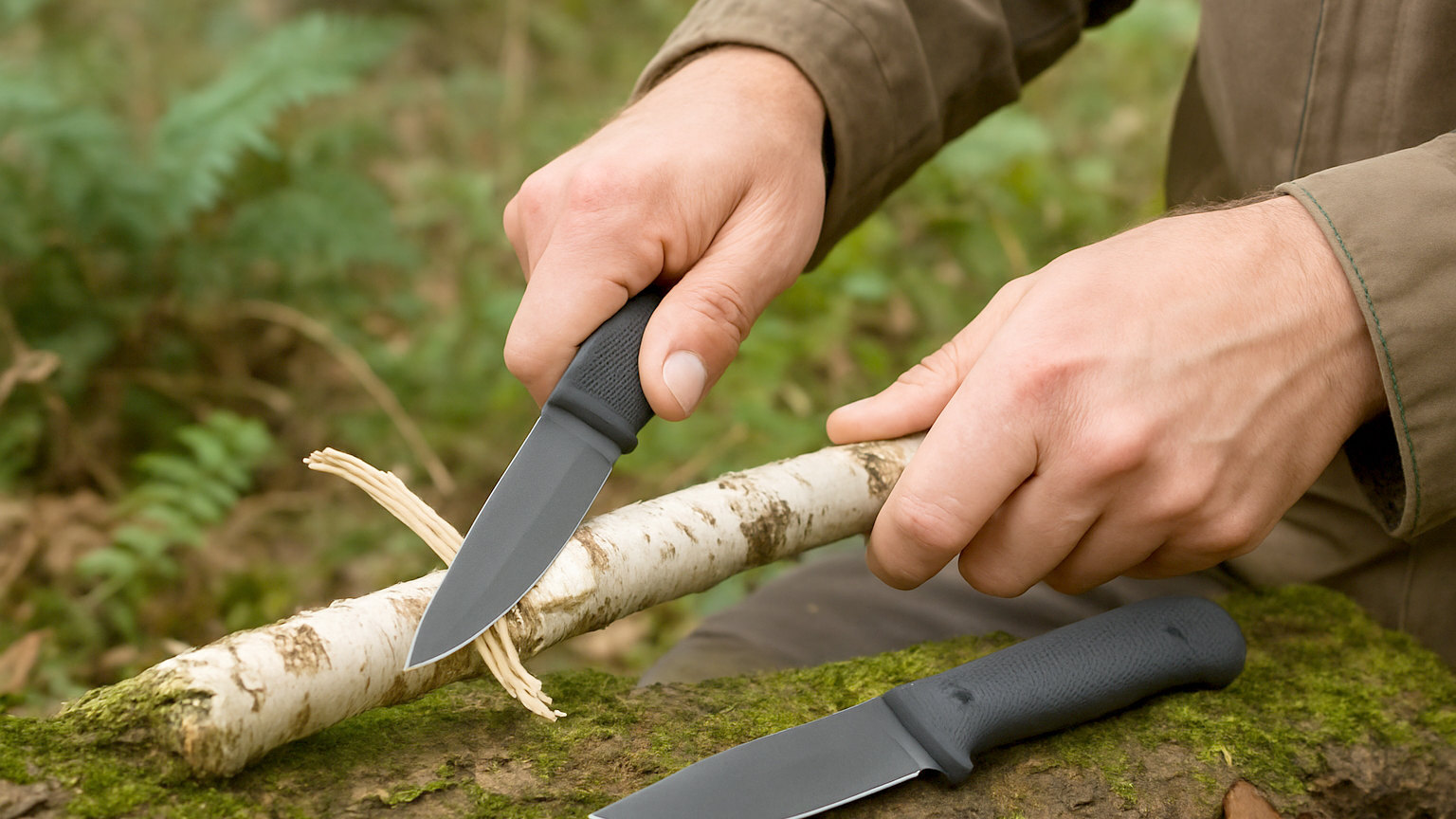
A blade of around nine to eleven centimetres. That covers every realistic task: preparing food, cutting cordage, carving, feather sticks, and splitting small wood by batoning. Larger blades are harder to control for fine work, heavier to carry and no better at anything a walker actually does. The image of the large survival knife comes from film rather than from use.
What construction should you look for?
Full tang, meaning the steel runs the full length and width of the handle rather than a narrow rod. It is dramatically stronger, particularly under the lateral loads of prying and batoning, which is where cheaper knives fail. Look for a spine that is squared rather than rounded, since a sharp spine strikes a ferro rod and scrapes tinder while the edge stays sharp.
- Fixed blade, nine to eleven centimetres, full tang
- Squared spine for striking a ferro rod
- Scandi or flat grind for wood work
- A handle that fits your hand, tested if possible
- A sheath with secure retention and a drainage hole
- Carbon steel sharpens easily, stainless resists rust
Which steel?
Either, and the trade is straightforward. Carbon steel takes a very sharp edge, is easy to sharpen in the field and rusts readily if not dried and oiled. Stainless resists corrosion, holds an edge acceptably and takes more effort to sharpen. For British conditions, where everything is wet, stainless is forgiving. For someone who will maintain it, carbon is a pleasure to use.
What grind should it have?
A scandi grind for wood work, which is a single flat bevel from the primary grind to the edge. It bites into wood well, is easy to sharpen because you lay the whole bevel flat on the stone, and is the traditional Nordic bushcraft profile. A flat grind is more versatile for general cutting and food preparation, and slightly harder to sharpen consistently.
How much should you spend?
Considerably less than the market suggests. Well regarded Scandinavian knives costing around twenty to forty pounds outperform many at ten times the price for actual use, and are what a great many instructors carry. Above that you are paying for premium steels, handle materials and finish rather than meaningful capability. Spend the difference on a sharpening stone and a course.
What about the handle?
It matters more than the blade for comfort over a long session. It should fill your hand without hot spots, provide grip when wet and cold, and have no aggressive texture that raises blisters during carving. If possible, hold one before buying. Rubberised and moulded handles grip well when wet, and wood is comfortable and needs occasional care.
What should you avoid?
Hollow handled survival knives, which are weak precisely where strength matters. Sawback spines, which cut poorly and prevent the spine being used with a ferro rod. Very large blades. Anything with a compass in the pommel. And anything sold primarily on appearance, since a knife is a tool and appearance is not a property that helps.
What else do you need with it?
A means of sharpening and a good sheath. A small diamond plate or a combination stone keeps an edge, and a blunt knife is both useless and dangerous because it requires force. A sheath should retain the knife securely when inverted and drain water rather than holding it against the blade.
Do you need one at all?
For a day walk, honestly no. Food is prepared at home, cordage is cut with scissors and nothing on a normal route requires a blade. A knife becomes genuinely useful when you are camping, cooking outdoors, working with wood or maintaining equipment. Being clear about that saves both money and the legal complication of carrying something you have no particular reason to have with you.
What about folding knives for the outdoors?
Perfectly capable for most tasks and weaker at the pivot. A good folder handles food preparation, cordage and light carving comfortably, and it is not the tool for batoning wood or anything applying lateral force. A non locking folder under three inches is also the version you can carry in the UK without needing a reason.
Buy a full tang fixed blade of around ten centimetres with a squared spine, spend modestly, and put the savings into a sharpening stone.