Clothing is the equipment nearest your skin and the one most directly responsible for whether a cold wet day becomes dangerous. The principles are simple and the mistakes are consistent.
Why is cotton a problem?
Because it absorbs a great deal of water, loses essentially all insulating value when wet, and dries extremely slowly. A cotton t shirt or jeans soaked with rain or sweat draws heat out of you continuously, which is why cotton features in a large proportion of hypothermia cases in the British hills. Jeans in particular are heavy, cold and take days to dry.
What should you wear instead?
Wool or synthetic next to the skin. Merino wool retains warmth when damp, resists odour and is comfortable across a wide temperature range. Synthetic base layers wick moisture, dry rapidly and cost less. Either is dramatically better than cotton. The same applies to socks, where wool or a wool blend outperforms cotton by a wide margin.
- No cotton next to the skin, and no jeans
- Base layer of wool or synthetic to move moisture
- Mid layer of fleece or insulation to trap warmth
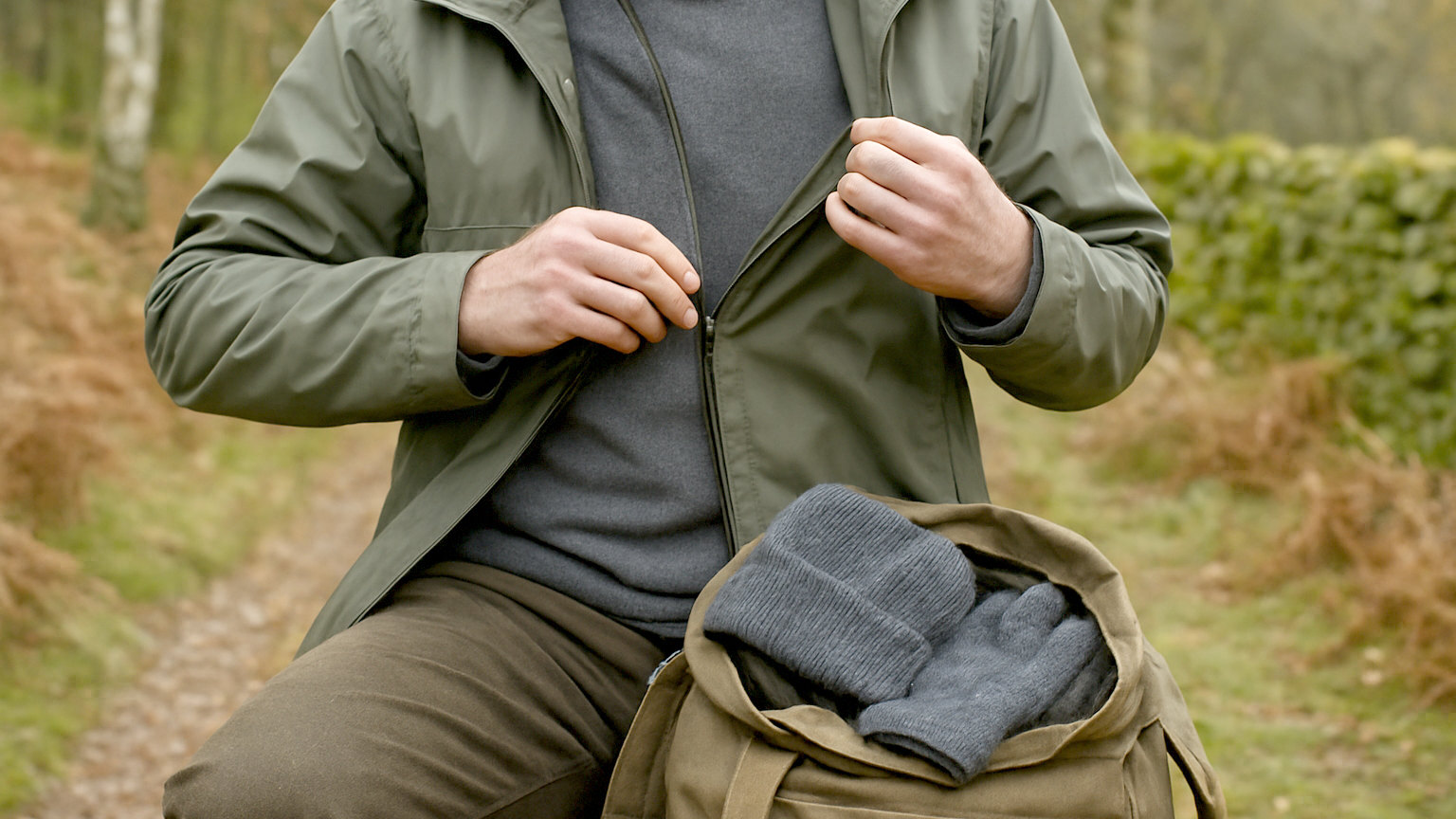
- Waterproof and windproof outer shell
- Spare hat, gloves and socks, which weigh almost nothing
- Put the waterproof on before the rain, not after
How does layering work?
Three functions rather than three garments. A base layer moves moisture away from the skin. A mid layer traps still air to insulate. An outer shell blocks wind and rain. Several thin layers trap more air than one thick one and allow adjustment, which matters because the aim is to avoid sweating on the way up and to add layers the moment you stop.
What is the most common mistake?
Putting the waterproof on too late. Once your insulating layers are wet, a shell over the top traps the moisture rather than solving it, and you stay cold. Stop and put it on when the rain starts rather than pressing on for another ten minutes. The same applies to adding a layer at a rest stop before you feel cold rather than after.
What should you always carry spare?
A hat, gloves and socks. All three are light, cheap and disproportionately effective, and all three are the things people lose or soak. A spare hat and gloves in a bag weigh almost nothing and have prevented a great many miserable descents. Dry socks transform a walk in wet conditions and are the item people are most grateful for.
Does a waterproof need to breathe?
It helps considerably and it is not magic. Breathable membranes move some moisture vapour outward, and they cannot keep up with heavy exertion, so you will still get damp from the inside. Pit zips and venting help more than the membrane rating. Keep the outer fabric treated with a durable water repellent, since a wetted out face fabric stops the membrane working almost entirely.
What about footwear?
It matters more than most items and is entirely individual. Boots should fit with the socks you will wear, be worn in before a long day, and suit the terrain. Wet feet are usually unavoidable in Britain, so the priority is warmth when damp and avoiding blisters rather than absolute waterproofing. Carry blister tape and use it at the first hot spot.
What is worth spending on?
The waterproof and the boots, which are the items where quality shows most clearly and failure matters most. Base layers and fleeces can be inexpensive and perform well. Spend on the shell, spend on the footwear, and buy the rest sensibly.
What should you wear in an emergency?
Everything you have, before you get cold rather than after. The moment you stop moving, heat production falls sharply and layers should go on immediately, including a hat and gloves, whether or not you feel cold yet. Someone waiting for help who has already put on every spare layer, eaten something and got out of the wind is in a very different position from someone who waits until they are shivering.
Avoid cotton entirely, layer for function, put the shell on early, carry a spare hat, gloves and socks, and spend on the waterproof and the boots.