
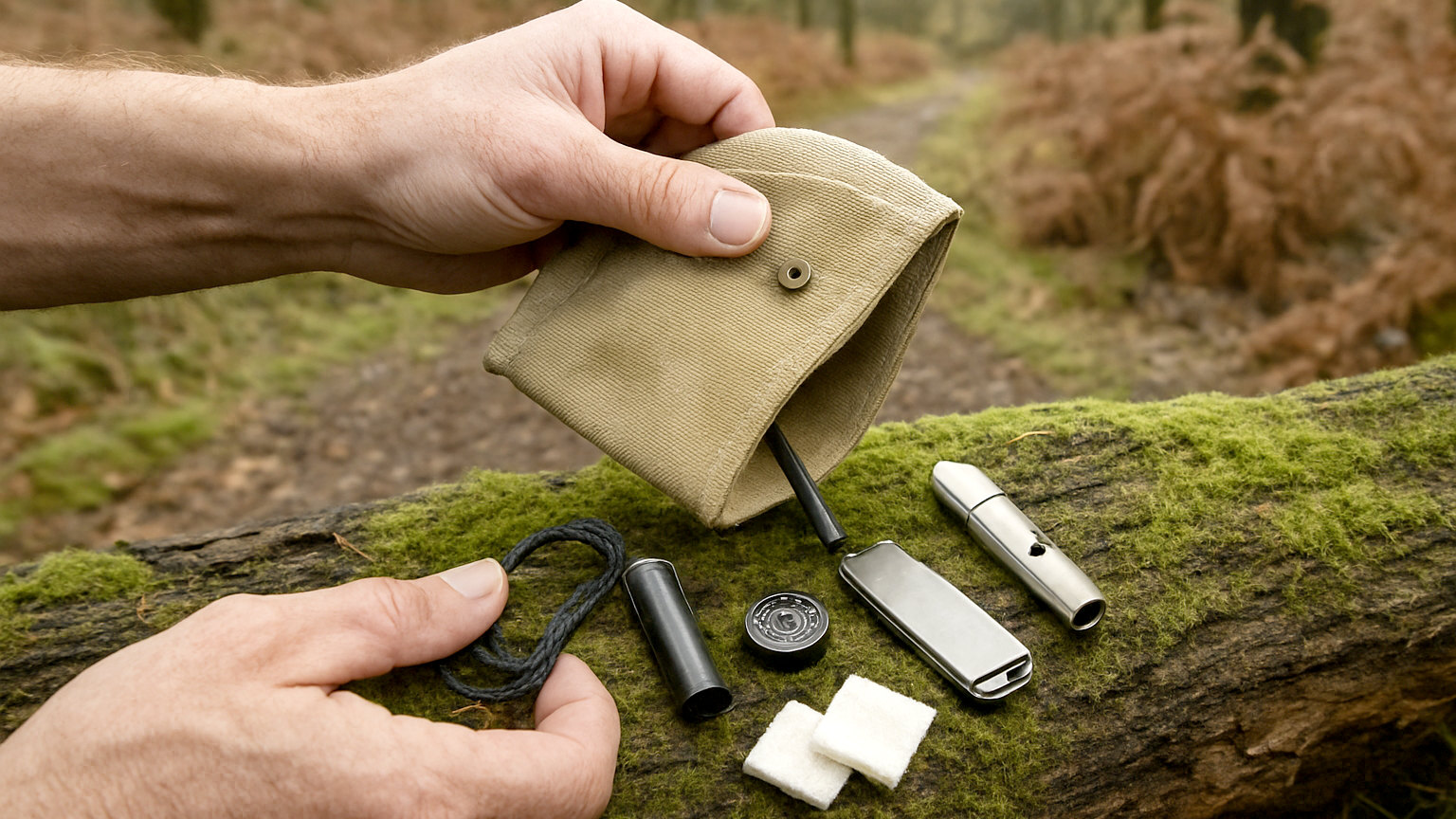
A pocket kit exists for the situation where you and your rucksack part company, which happens more often than people expect through a fall, a capsize, a theft or simply putting it down. What is on your body is what you definitely have.
Why does on body matter?
Because packs get separated from people. Someone who falls into water, slips down a slope, has a bag stolen or leaves it at a rest stop still has whatever is in their pockets. In an emergency the equipment that counts is the equipment attached to you, which argues for a very small duplicate of the essentials rather than relying entirely on the pack.
What are the core items?
A small torch, a whistle, a lighter, a phone and some cash. Those five weigh almost nothing, fit in a jacket pocket, and cover light, signalling, fire, communication and the ability to buy your way out of a problem. Add a small non locking folding knife and a couple of purification tablets and you have covered a great deal for around a hundred grams.
- A small torch, since darkness is the most common complication
- A whistle, attached to a jacket zip or rucksack strap
- A lighter, kept warm and dry in an inside pocket
- Phone with emergency SMS registered and a grid reference app
- Cash in small notes and a card
- A card with emergency contacts and medical details
Why a whistle rather than shouting?
Because it carries several times further, costs almost no energy, and works when your voice has gone. A pealess whistle works when wet and frozen. Attached to a jacket zip or a rucksack strap it is always reachable, including if you are pinned, injured or in water where shouting is close to useless.
What should be on the phone?
Emergency SMS registration, done in advance by texting the word register to 999. A grid reference app such as OS Locate, which works from GPS with no signal. What3words, which UK emergency services use. Offline maps for your area. Medical information and emergency contacts on the lock screen, which most phones support and which a paramedic can access without unlocking it.
What about a card?
Genuinely worth carrying and almost nobody does. A wallet sized card with your name, an emergency contact number, an out of area contact, any medical condition, allergy or medication, and your NHS number covers the situation where you cannot speak for yourself. It costs nothing, weighs nothing and works when a phone is lost or flat.
What should you not carry?
Anything creating a legal problem, which in practice means a locking knife or a fixed blade in a public place without good reason. A small non locking folder with a blade under three inches is the lawful default. Also skip anything bulky, since a pocket kit that is uncomfortable will be left in the pack, which defeats the purpose.
Does it change by activity?
The core stays the same and the emphasis shifts. Paddling and coastal activity favour a whistle and something buoyant and waterproof. Winter hill walking favours a lighter kept warm and spare gloves. Urban everyday carry favours cash, a card and a small torch. The five core items suit all of them, which is why they are the core.
How do you keep it current?
Check it when you check everything else, twice a year. Lighters run out, batteries die in tiny torches, cash gets spent, cards go out of date and phone apps need updating. A pocket kit is small enough to review in two minutes and easy to forget entirely because it lives in a coat rather than with the rest of the equipment.
Where should each item live?
Somewhere fixed, so you know without checking. The whistle on a jacket zip or rucksack strap. The lighter in an inside pocket where body heat keeps it working in cold. The torch in the same pocket every time. Cash and the card in the wallet. The value of a pocket kit comes partly from being able to find things one handed in the dark, which only happens if they always live in the same place.
Carry a small torch, a whistle, a lighter, a phone and cash on your body, add a contact card, and check it twice a year.


