
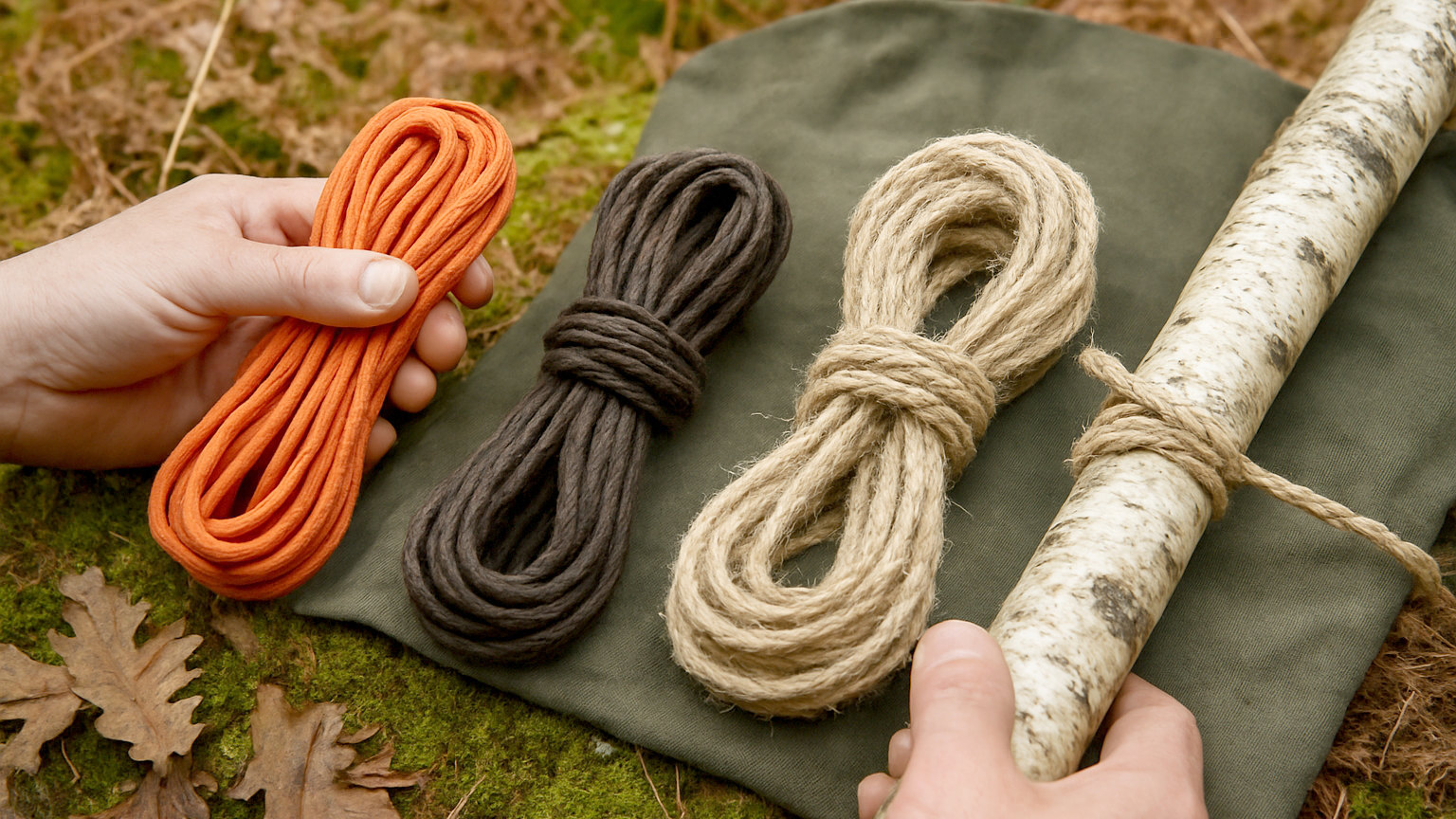
Cordage is light, cheap and endlessly useful, which is why people carry far too much of the wrong kind. A small quantity of appropriate line covers almost everything.
What is paracord?
A nylon kernmantle cord originally used for parachute rigging, with a braided outer sheath over several inner strands. Genuine type three, commonly called five fifty, has seven inner strands and a rated breaking strength of around two hundred and fifty kilograms. The inner strands can be pulled out and used separately for fine work such as sewing, fishing line or lashings, which is much of its appeal.
Is it the right choice?
Often, and not always. Paracord stretches noticeably under load, which is a nuisance for tarp ridgelines that sag as they get wet. It is thick relative to its strength, so a hundred metres is bulky. For guylines and ridgelines, thinner low stretch cord performs better. For general lashing, repairs and improvised use, paracord is excellent and forgiving.
- Genuine type three paracord has seven inner strands
- Paracord stretches, which suits lashing and not ridgelines
- Thin dyneema guyline is stronger, lighter and low stretch
- Tarred bankline is cheap, grippy and holds knots well
- Ten to twenty metres covers almost every need
- Seal cut ends with heat to stop them fraying
What about bankline?
A tarred twisted nylon line, popular in bushcraft, which is cheap, thin, extremely strong for its diameter and grips well because of the tar. It holds knots securely, resists rot and is ideal for lashings, tarp attachments and camp craft. It is less comfortable in the hand than paracord and is not suitable for anything bearing body weight.
What about dyneema?
Very high strength per weight, almost no stretch and expensive. Thin dyneema guyline of two or three millimetres is stronger than much thicker paracord and stays taut when wet, which makes it the best choice for tarp and tent lines. It is slippery, so knots must be chosen carefully, and it is not something to buy in bulk for general use.
How much should you carry?
Ten to twenty metres for a day walk or an overnight, which weighs very little and covers repairs, a tarp pitch, replacing a bootlace, an improvised sling and lashing kit together. Carrying a hundred metres because it is light is how packs get heavy. A short length of several types is more useful than a long length of one.
Are paracord bracelets useful?
Marginally. A typical bracelet contains perhaps three metres of cord, which is enough for a repair or a lashing and not enough for anything structural. Unpicking one takes time. They are pleasant items rather than a serious way to carry cordage, and anyone relying on one as their only line is carrying less than they think.
What knots are worth knowing?
Four or five cover almost everything. A bowline for a fixed loop. A taut line hitch for adjustable guys. A truckers hitch for tensioning a ridgeline. A clove hitch or timber hitch for attaching to a pole or tree. A double fisherman for joining two lines. Practising these until they are automatic does more than owning any quantity of cord.
How should you look after it?
Seal cut ends with a flame so they do not fray, keep it dry to prevent mildew, and inspect anything that has been shock loaded or abraded. Store it coiled rather than knotted so it deploys quickly. Retire any line with a glazed section, a cut in the sheath or obvious damage, since cordage fails suddenly rather than gradually.
What can you use it for?
More than people anticipate, which is why it earns its place. Replacing a broken bootlace or rucksack strap. Rigging a tarp or securing a groundsheet. Lashing a splint. Hanging food away from animals. Making a washing line. Securing a load to a roof rack. Improvising a belt or a sling. None of these justify carrying a hundred metres, and all of them argue for having ten.
Carry ten to twenty metres, use dyneema for guylines and paracord or bankline for everything else, and learn five knots properly.


