
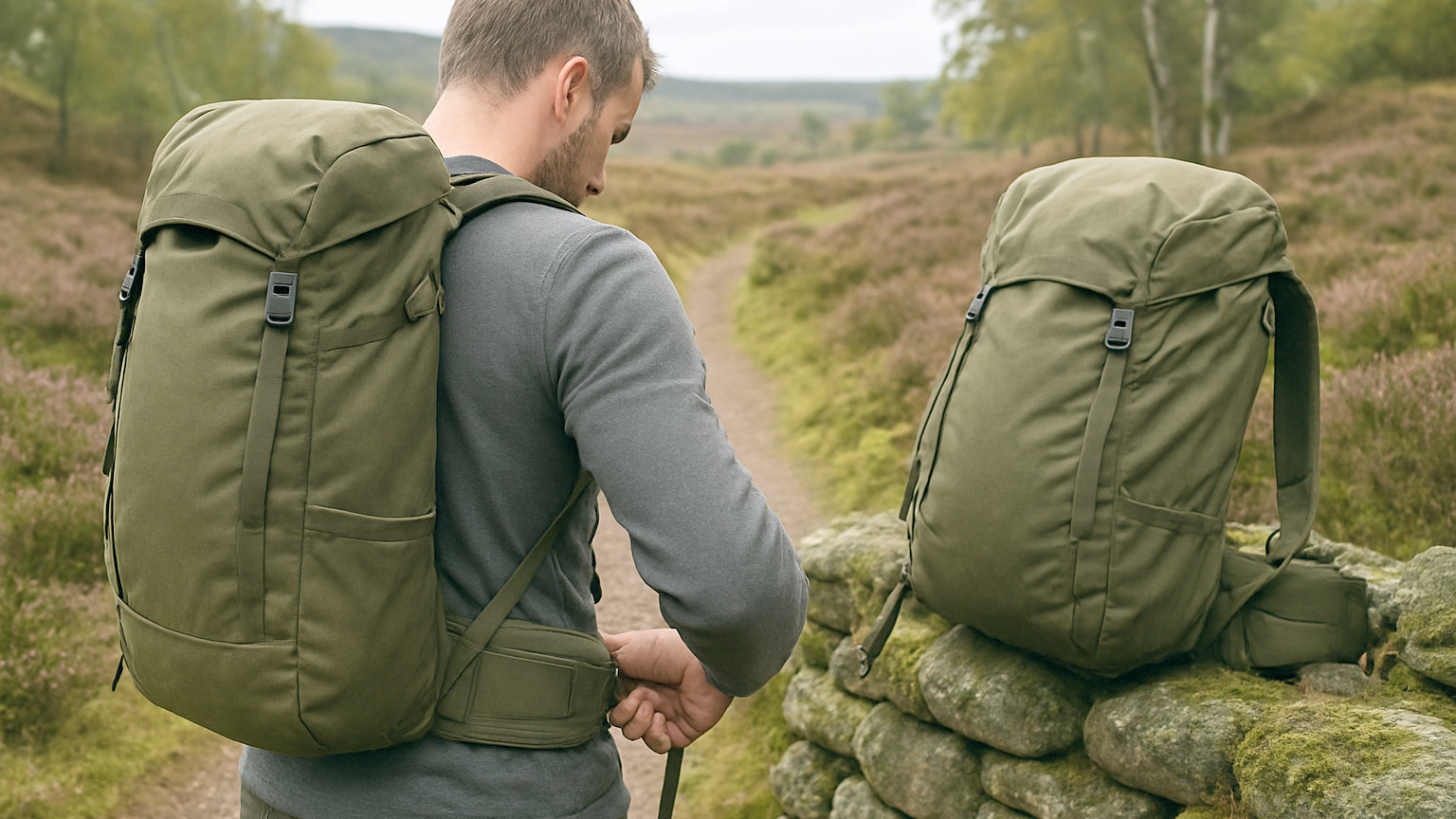
A rucksack is the item where fit matters most and is judged least, since most people buy on capacity and colour. A pack that fits transfers the load to your hips and a pack that does not puts it all on your shoulders.
What matters most?
Back length, which is the distance from the top of your hips to the base of your neck, and which is independent of your height. Many packs come in sizes or have adjustable back systems. A pack too long for you cannot transfer weight to the hips, and one too short rides awkwardly and pulls on the shoulders. Get measured in a shop rather than guessing.
How should it be loaded?
Heavy items close to your back and centred between the shoulder blades. That keeps the weight over your centre of gravity and reduces the leverage pulling you backwards. Light bulky items go at the bottom and the outside. Anything needed quickly, such as a waterproof, a head torch or snacks, goes in a lid pocket or a side pocket.
- Back length matters more than height or capacity
- The hip belt should sit on the top of the hip bones
- Most of the weight should sit on the hips, not the shoulders
- Twenty to thirty five litres for a day, fifty to seventy for multi day
- Load heavy items close to the back and centred
- Try it loaded in a shop before buying
How should the hip belt sit?
On top of the hip bones, not around the waist. Tighten it first, before the shoulder straps, so the weight settles onto the hips, then snug the shoulder straps to stabilise rather than to carry. Load lifter straps running from the top of the shoulder straps to the pack body pull the load closer and should sit at roughly forty five degrees when correct.
What capacity do you need?
Twenty to thirty five litres for a day walk with waterproofs, food, water and a group shelter. Forty to fifty for an overnight in summer. Fifty five to seventy for multi day camping with a tent, bag and stove. Buying larger than needed is a mistake, since packs get filled to their capacity regardless of what the trip requires.
What features actually matter?
A well fitting hip belt, a lid pocket or accessible pocket, external attachment for walking poles, and a design that lets you reach a water bottle without stopping. Rain covers are useful and blow off in wind, so a heavy duty liner bag inside is more reliable. Many pockets sound useful and frequently mean things get lost.
Should you buy a waterproof pack?
Assume no pack is waterproof and line it. Fabric may be coated and seams and zips leak, and a rain cover fails in wind and does nothing if the pack is set down in water. A heavy duty liner or dry bags inside keeps the contents dry regardless, and lets you group items sensibly at the same time.
How do you test one properly?
Loaded, in the shop, for several minutes. Ask staff to fill it with a realistic weight, put it on, adjust it properly and walk around, including up and down stairs if possible. Comfort empty tells you nothing. Pay attention to whether the hip belt digs, whether the shoulder straps chafe at the neck and whether anything catches when you turn your head.
How long should one last?
Decades, if reasonably treated. Rucksacks from established makers are built to last and carry long warranties. Clean it occasionally, dry it before storing, and repair small tears before they grow. Buying a good one and keeping it is cheaper over time than replacing cheap ones, and a pack you have worn in is considerably more comfortable.
Get measured for back length, tighten the hip belt first, buy the capacity the trip needs, line it rather than trusting a cover, and try it loaded.


