
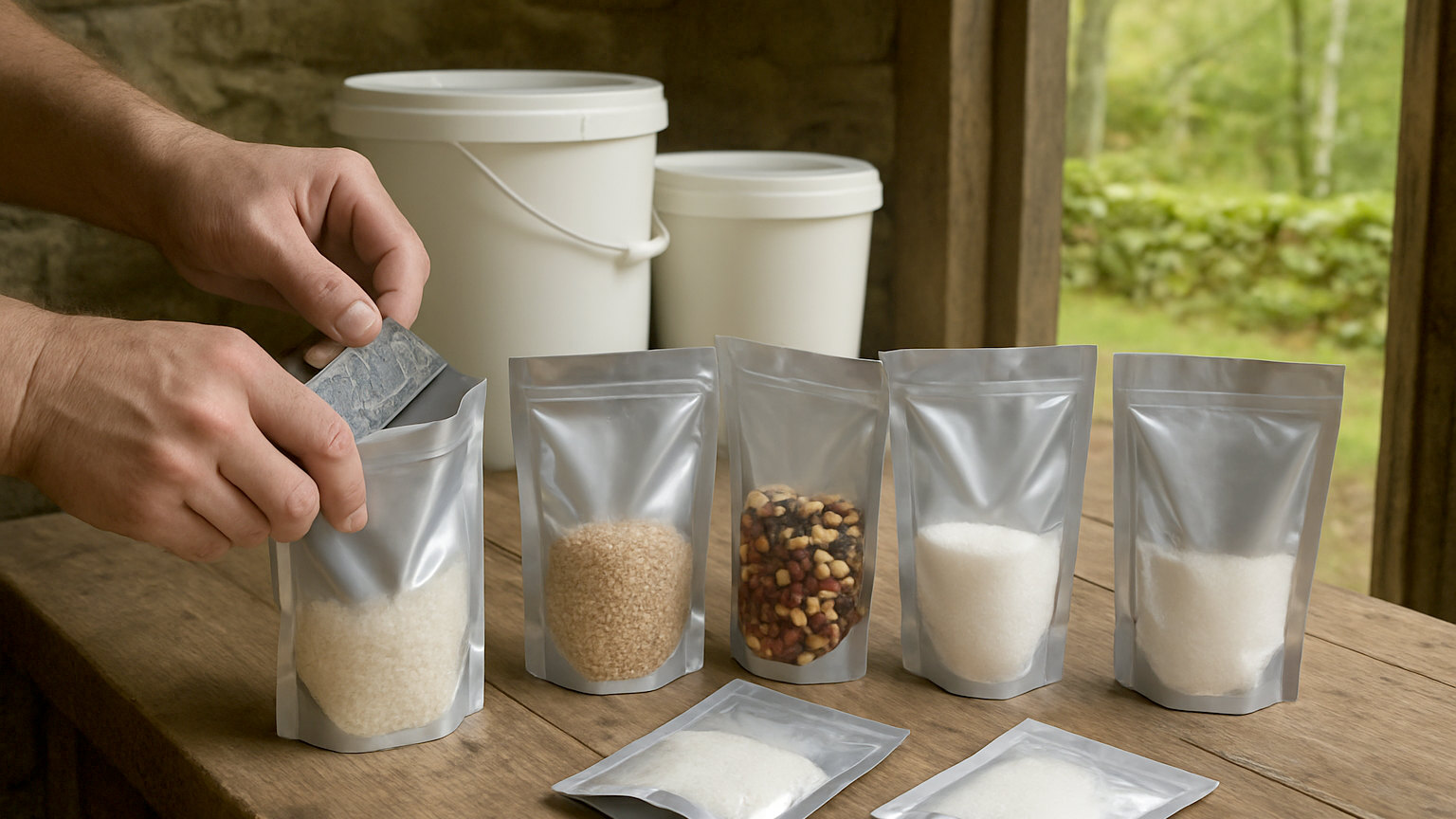
Very long shelf lives are quoted freely and apply to a narrow list of foods under specific conditions. Knowing which is which prevents both disappointment and wasted money.
What genuinely keeps for decades?
White rice, whole wheat berries, dried pasta, dried beans and pulses, rolled oats, sugar, salt, and dried potato flakes. Packed in mylar with oxygen absorbers and stored cool, these are credibly good for twenty five years or more, and long term studies of stored wheat and rice support it. They share three qualities: dry, low in fat, and low in enzymatic activity.
Why does fat content decide it?
Because fats oxidise and turn rancid, and removing oxygen slows that without stopping it. Brown rice keeps six months to a couple of years because the bran layer contains oils, while white rice from the same grain keeps for decades because milling removes them. The same applies to wholemeal flour against white, and to oats which sit in between.
- Decades: white rice, wheat, pasta, sugar, salt, dried beans
- Ten to twenty years: dried potato, dried milk powder, oats
- A few years at best: white flour, dried fruit, freeze dried meals
- Months: brown rice, nuts, wholemeal flour, anything oily
- Every figure assumes cool stable storage
- Beans remain safe and become progressively harder to cook
What happens to old beans?
They harden. Dried beans stored for many years remain perfectly safe and become increasingly resistant to softening, to the point where ordinary soaking and boiling will not make them edible. The solution is a pressure cooker, or grinding them into flour for use in soups and baking. It is worth knowing before you store a hundred kilograms of them.
What about powdered milk?
Ten to twenty years for non fat dried milk, considerably less for full fat, because of the same fat problem. It is one of the more useful long term items since milk is among the first things a household misses, and it is worth buying the low fat version specifically for storage even if you would prefer the other for taste.
Does flour keep?
Less well than people expect. White flour packed with absorbers might manage five to ten years, and wholemeal considerably less because of the germ oils. Storing whole wheat berries instead and grinding them as needed is the standard solution among people who store seriously, since the intact grain keeps for decades and flour does not. That requires a mill, which is an additional commitment.
What about commercially packed long life food?
Freeze dried meals in sealed tins are genuinely long lived, often quoted at twenty five to thirty years, and they cost several times more per calorie than staples you pack yourself. They also require water and heat to prepare, which is a poor fit for the emergency most households face. As a small set aside reserve they are reasonable, and as the bulk of a store they are expensive.
What do the figures assume?
Cool, dark, stable conditions, usually around ten to twenty degrees. Every published shelf life is a function of temperature, and storage at thirty degrees might halve it or worse. A loft store will not achieve quoted figures whatever the packing. This is why the location decision matters more than the choice between five and seven mil bags.
Is nutrition preserved too?
Calories and protein essentially yes, vitamins less so. Fat soluble vitamins and some B vitamins decline slowly over years even in ideal conditions, and vitamin C is largely absent from these staples anyway. A long term store keeps you alive rather than optimally nourished, which is another argument for keeping a rotating store of varied food alongside it.
What about dried fruit and vegetables?
Shorter than the staples and useful for variety. Commercially dried fruit keeps a year or two in ordinary packaging and perhaps five to ten packed with absorbers, limited by residual sugars and moisture rather than fat. Dried vegetables and potato flakes do better, often ten years or more. Both are worth including in modest quantity, since a store of grain and pulses alone is nutritionally narrow and extremely dull.
Store white rice, wheat, pasta, pulses, sugar and salt, avoid anything oily, keep it cool, and expect old beans to need a pressure cooker.


