Long term storage means something specific: dry staples packed to exclude oxygen and moisture so they remain edible for decades rather than months. It is a different activity from keeping a well stocked cupboard, and it suits fewer households than the market suggests.
How does it differ from ordinary storage?
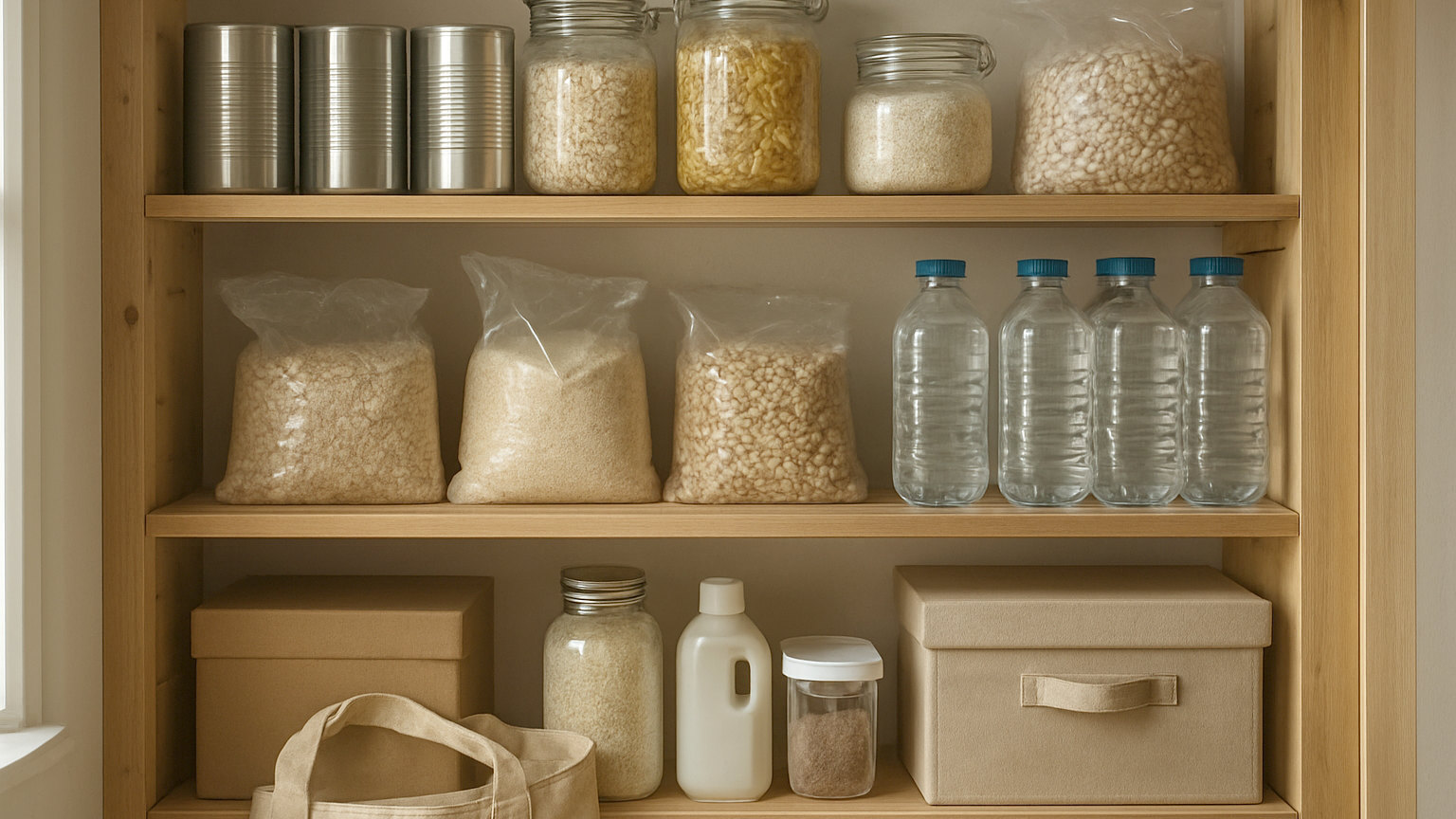
By intent and by method. An ordinary store is food you eat, bought slightly ahead and rotated through the cupboard, measured in weeks. A long term store is a sealed reserve you set aside and do not touch, measured in years, packed using oxygen barriers and absorbers so that the contents are effectively inert. One is a deeper pantry, the other is an archive.
What does the packing achieve?
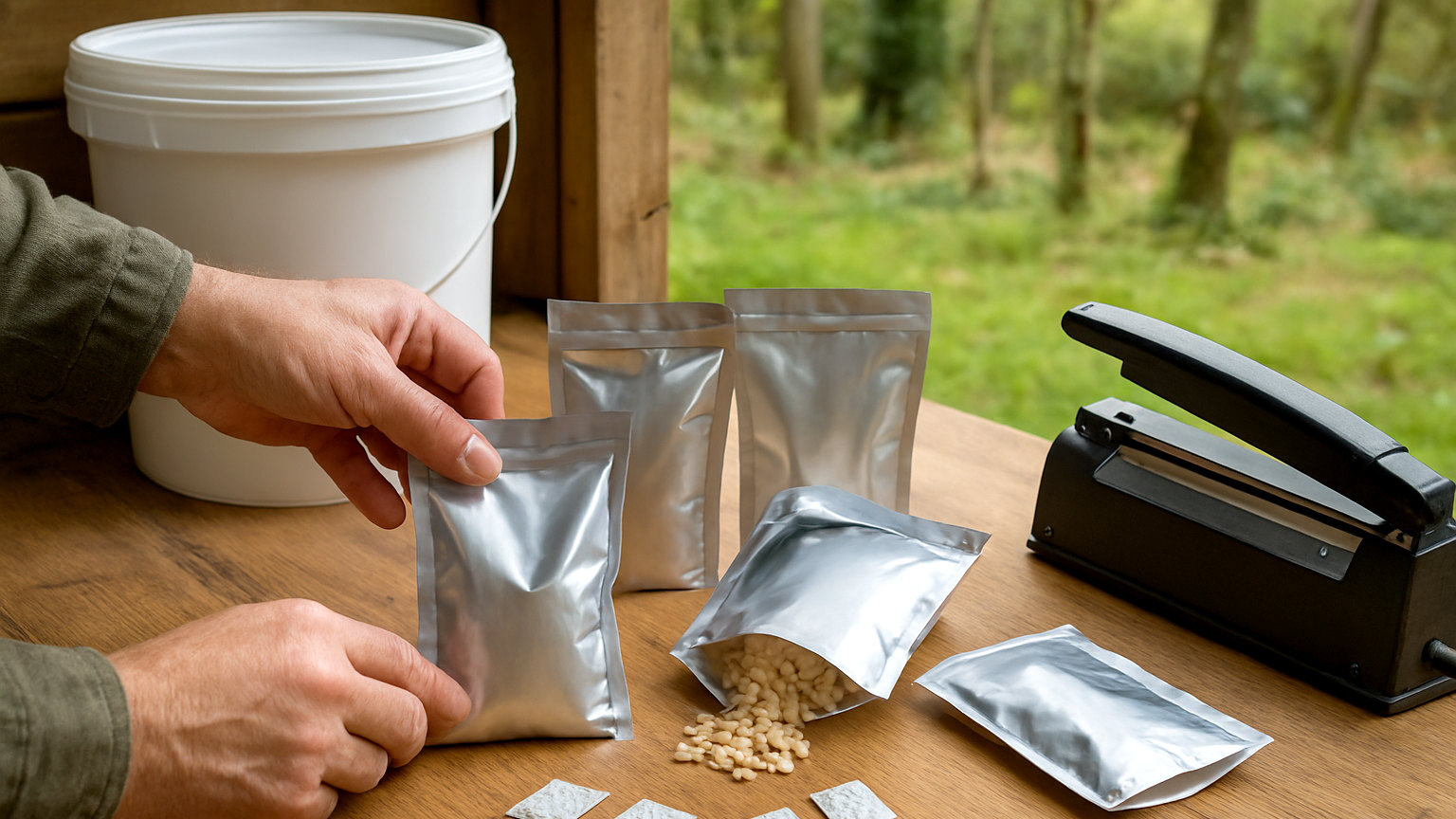
Removal of oxygen, moisture and light. Oxygen drives the oxidation that turns fats rancid and allows insect eggs to hatch and moulds to grow. Moisture allows both microbial growth and chemical change. Light degrades vitamins and fats. Removing all three, and keeping the temperature down, is what turns a two year shelf life into a twenty five year one.
- Dry staples only, below around ten percent moisture
- Mylar bags as the oxygen and light barrier
- Oxygen absorbers to remove the air inside
- Food grade buckets for physical and pest protection
- Cool, dark, stable storage above all else
- Clear labelling, since nothing is opened for years
Which foods suit it?
Dry, low fat staples. White rice, wheat, dried pasta, dried beans and pulses, rolled oats, sugar, salt, dried milk powder and dried potato. These are cheap, calorie dense and genuinely stable for decades when packed properly. Anything with meaningful fat content, such as brown rice, nuts or wholemeal flour, has a much shorter life because the oils go rancid regardless of oxygen removal.
Who is it actually for?
People with a specific reason. Households in genuinely remote locations with unreliable supply. Anyone with a dietary requirement that is difficult to source. People who want a set aside reserve they accept will never rotate. And, honestly, people who find the activity interesting, which is a legitimate reason provided it does not displace the more useful work of keeping a normal week of food.
Who does not need it?
Most British households. The realistic disruption is a power cut or a supply interruption measured in days, and a week of ordinary food in the cupboard covers it completely for a fraction of the cost and effort. Building a twenty five year store before you have a week of tins and a written plan is the wrong order.
What does it cost?
Less than the marketing suggests if you do the packing yourself. Bulk rice, pasta and pulses are inexpensive, and mylar bags, absorbers and buckets add a modest amount per unit. Buying prepacked long term food from specialist suppliers costs several times more per calorie. The labour is a few hours for a substantial quantity.
What is the biggest determinant of actual life?
Temperature, by a wide margin. Every rating quoted assumes cool stable storage. A store held at ten degrees will comfortably outlast the same food at twenty five, and a loft reaching thirty five in summer will not achieve anything close to the headline figure. Packing technique matters and where you put it matters more.
What is the honest summary?
It is a real technique that works, applied to a narrow range of foods, of genuine value to a minority of households, and frequently sold to people who would be better served by a fortnight of tins. Understand what it does before deciding whether you need it.
Does it replace an ordinary store?
No, and treating it as a replacement is the most common structural mistake. A sealed reserve of rice cannot be opened for a two day power cut without committing you to fifteen kilograms of it, and it contains nothing you would want for breakfast on the second morning. The two exist at different timescales and serve different events, so the deep store sits behind a rotating cupboard rather than instead of one.
Pack dry low fat staples in mylar with absorbers, store them cool and dark, and build an ordinary week of food first.