
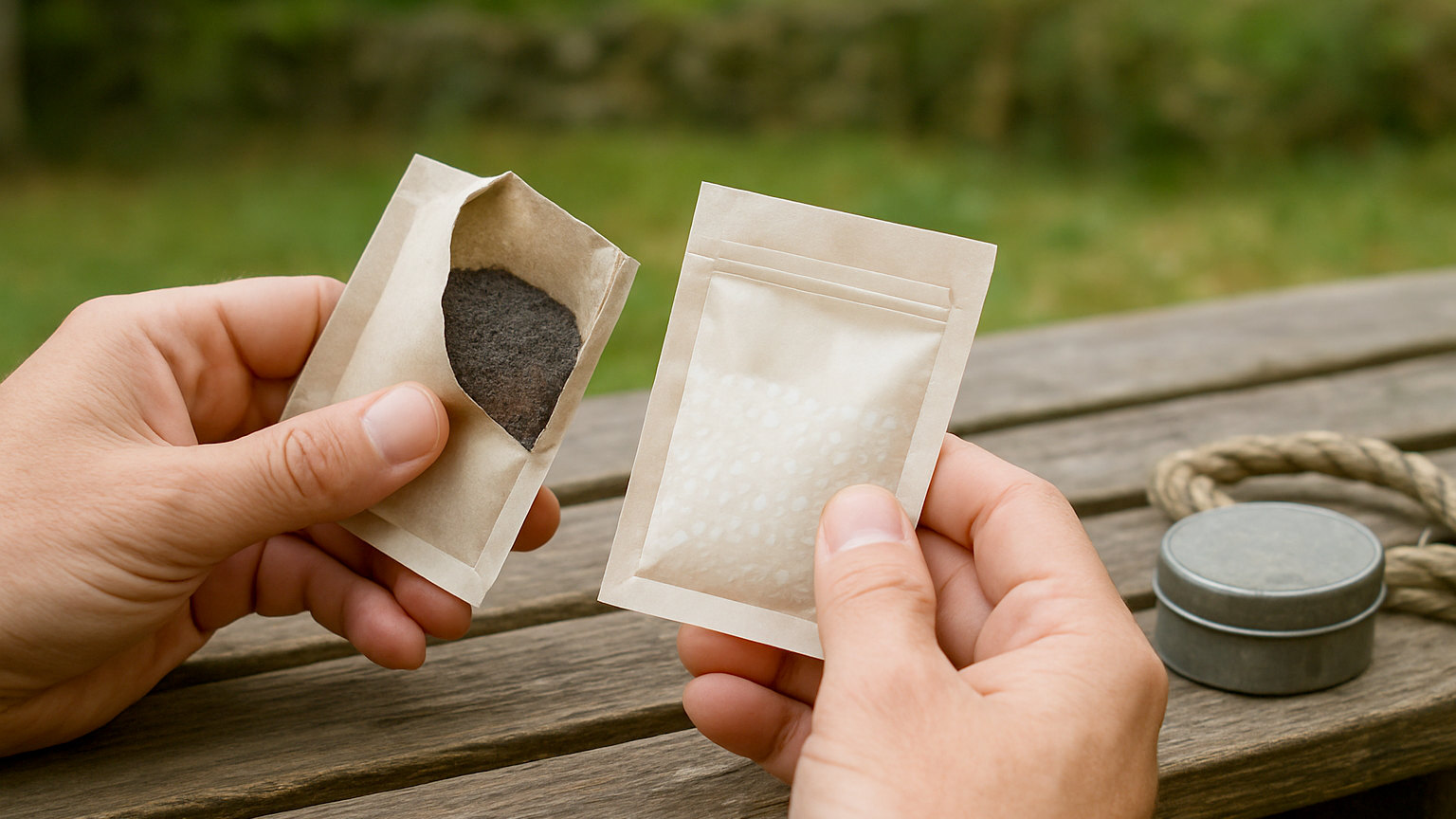
Both arrive as small sachets tucked into packaging and they do entirely different things. Confusing them is common and produces a store that has not been protected in the way you assumed.
What does an oxygen absorber do?
Removes oxygen, using iron powder that oxidises inside a permeable sachet. It reduces the oxygen in a sealed container to a fraction of one percent, which prevents oxidation and rancidity, stops mould growth and means any insect eggs present cannot hatch. It does nothing whatever about moisture already in the food or the container.
What does a desiccant do?
Removes moisture, usually using silica gel, which adsorbs water vapour onto its enormous internal surface area. It keeps the atmosphere inside a container dry, preventing clumping, softening and the conditions that allow mould. It does nothing about oxygen, so food packed with desiccant alone will still oxidise and go rancid over years.
- Oxygen absorbers remove oxygen, not moisture
- Desiccants remove moisture, not oxygen
- Dry staples usually need an absorber and no desiccant
- Never use an absorber with moist food, because of botulism risk
- Silica gel sachets are the common desiccant, and are not edible
- Salt and sugar harden badly with absorbers and need neither
Which do you actually need?
An oxygen absorber, for almost all long term food storage. Dry staples such as rice, pasta and pulses are already below the moisture level that causes problems, so there is nothing for a desiccant to remove, and the threat is oxidation over decades. Adding a desiccant is generally unnecessary and can over dry some foods.
When would you use a desiccant?
Where residual moisture is a genuine risk, such as home dried foods, in very humid storage conditions, or in containers opened and resealed frequently. It is also used with non food items, which is where most people encounter silica gel sachets. If you are unsure whether a food is dry enough for an absorber, the correct answer is not to add a desiccant but to dry the food further or store it differently.
Why is the moisture question a safety matter?
Because removing oxygen from a moist food creates the exact conditions in which Clostridium botulinum produces toxin. That organism thrives in low oxygen environments with sufficient moisture, and botulinum toxin cannot be detected by smell, appearance or taste. This is why oxygen absorbers are only used with genuinely dry goods, below around ten percent moisture, and never with anything damp, home canned, or of uncertain dryness.
What about salt and sugar?
Neither needs an absorber and both are harmed by one. Salt and sugar do not support microbial growth and do not go rancid, so they keep indefinitely in any airtight container. Adding an oxygen absorber draws them into a solid brick that has to be broken up with a hammer, which is a well known and entirely avoidable annoyance. Store them airtight and dry and leave them alone.
Can you tell if an absorber has been used?
Usually by feel. A fresh absorber contains loose powder and feels soft and granular. A spent one becomes hard and clumped as the iron oxidises. Many packets include an indicator tablet that changes colour. If in doubt, use a fresh one, since an exhausted absorber provides no protection while looking identical from outside the bag.
How should you store spares?
In a small glass jar with a tight lid, sealed immediately. Absorbers begin working the moment the packet is opened, so any you do not use within twenty minutes must be sealed away or they will be spent. A canning jar works well. Vacuum sealing them is better still if you have the equipment.
Are the sachets in food packaging the same thing?
Sometimes, and the two get confused constantly. The sachets in seaweed snacks and shoe boxes are usually silica gel desiccant, marked do not eat. Those in packets of jerky or cured meat are frequently oxygen absorbers, sometimes marked with an iron symbol. Neither should be eaten, and neither should be reused, since both are largely spent by the time the packet reaches you.
Use oxygen absorbers for dry staples, desiccants only for genuine moisture problems, never absorbers with moist food, and neither with salt or sugar.


