Buckets are the standard outer container for long term stores and are frequently misunderstood as the barrier. They provide structure, stacking and protection, and the sealing job belongs to what goes inside them.
Why is a bucket not enough on its own?
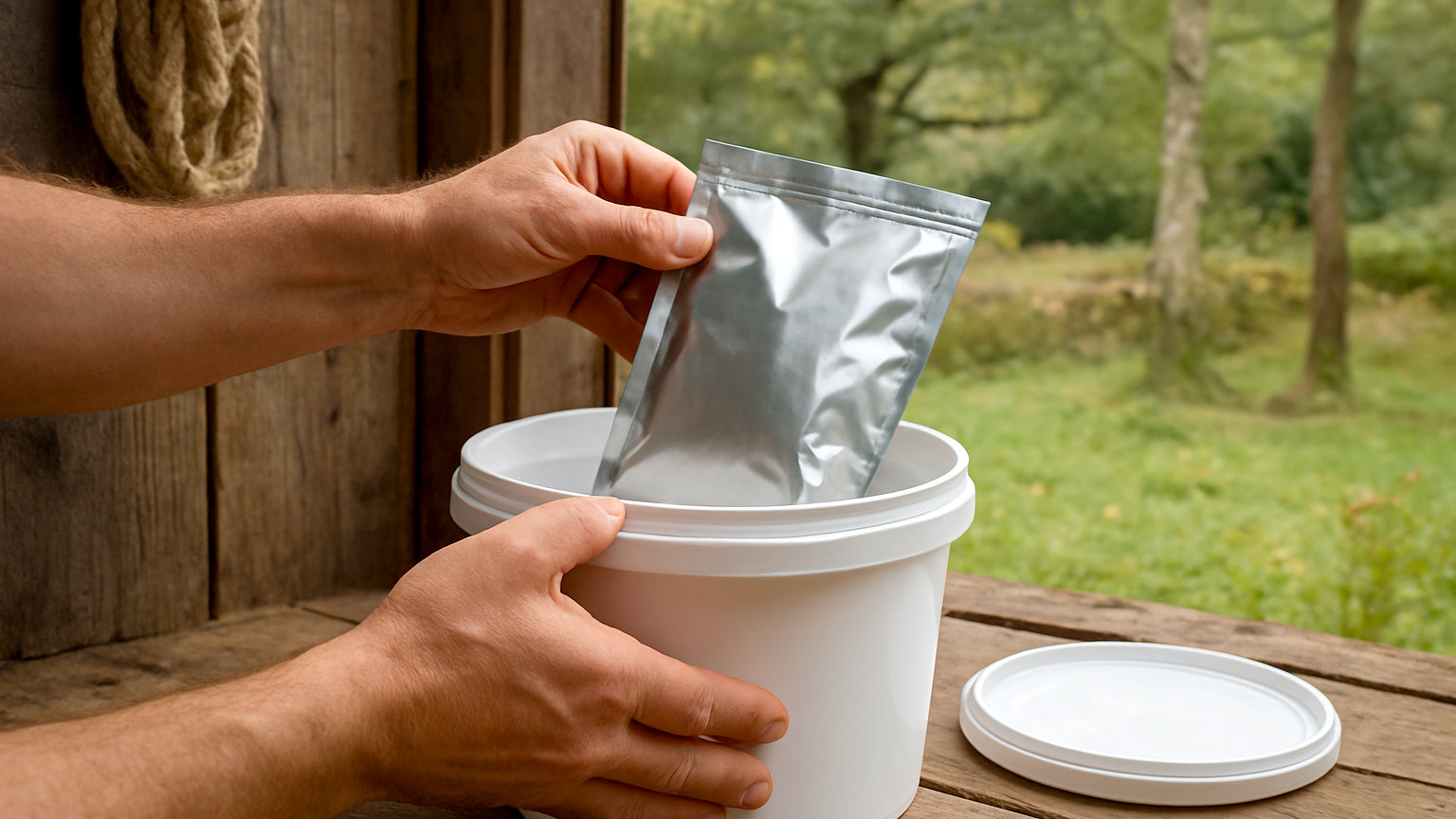
Because polyethylene is slowly permeable to oxygen and the lid seal is not perfect over decades. Food sealed in a bucket alone will slowly oxidise, and while that is fine for a year or two it does not deliver decade scale storage. The standard arrangement is a mylar bag with oxygen absorbers inside a food grade bucket, where the bag does the sealing and the bucket does the protecting.
What does the bucket contribute?
Physical protection, structure and pest resistance. Mylar bags puncture easily and tear at the corners, and a bucket prevents that. Buckets stack, which makes efficient use of floor space. And they present a meaningful barrier to rodents, which chew through mylar without difficulty and can get through a bucket eventually but rarely bother when easier options exist.
- Use a mylar bag with absorbers inside the bucket
- Check the plastic is food grade, usually HDPE code two
- Never use a bucket that held chemicals or detergent
- Gamma seal lids allow repeated opening without a tool
- Standard lids need a bucket wrench and reseal poorly
- Label the outside clearly, since you cannot see the contents
How do you identify food grade plastic?
By the marking and by the history. Food grade buckets are usually high density polyethylene marked with recycling code two, and often carry a cup and fork symbol indicating suitability for food contact. Buckets sold for building or industrial use may be the same plastic and may have been made with additives or handled in ways that make them unsuitable. Buy from a food supplier or a bakery, and never use one that held detergent, paint or chemicals.
Why can you not clean a chemical bucket?
Because plastics absorb and retain compounds from their contents and release them slowly afterwards. A bucket that held cleaning product will taint food stored in it years later, regardless of how thoroughly it was washed. This is the same permeability that makes plain buckets unsuitable as long term oxygen barriers, working against you in the other direction.
What is a gamma seal lid?
A two part lid with a threaded collar that snaps onto the bucket rim and a screw in centre section. It allows the bucket to be opened and resealed by hand repeatedly, which standard lids do not, since they require a lever and seal progressively worse each time. For anything you will open periodically, gamma lids are worth the additional cost. For a sealed reserve you will not touch, standard lids are fine.
What size should you use?
Twenty litres is the common size and is heavy when full, around fifteen kilograms of rice. Ten or twelve litre buckets are considerably easier to move and stack, and are worth considering if anyone lifting them would struggle. Splitting a store across smaller buckets also means opening one does not expose a large quantity to air.
How should you stack them?
Off the floor, no more than a few high, and with the labels visible. Concrete transfers cold and moisture, so a pallet or a board underneath is worth the effort. Stacking too high risks deforming the lower lids and makes access awkward. Leave the oldest at the front and record what is in each one, since a stack of identical buckets is otherwise a guessing game.
Where do you get them?
Bakeries, restaurants and catering suppliers frequently give away buckets that held icing, sauce or similar food products, which are genuinely food grade and only need thorough washing. New buckets from food packaging suppliers cost more and remove any doubt about history. Both are far cheaper than prepacked long term food.
Put a mylar bag inside a food grade bucket, check the plastic and the history, use gamma lids if you will open it, and stack off the floor.