
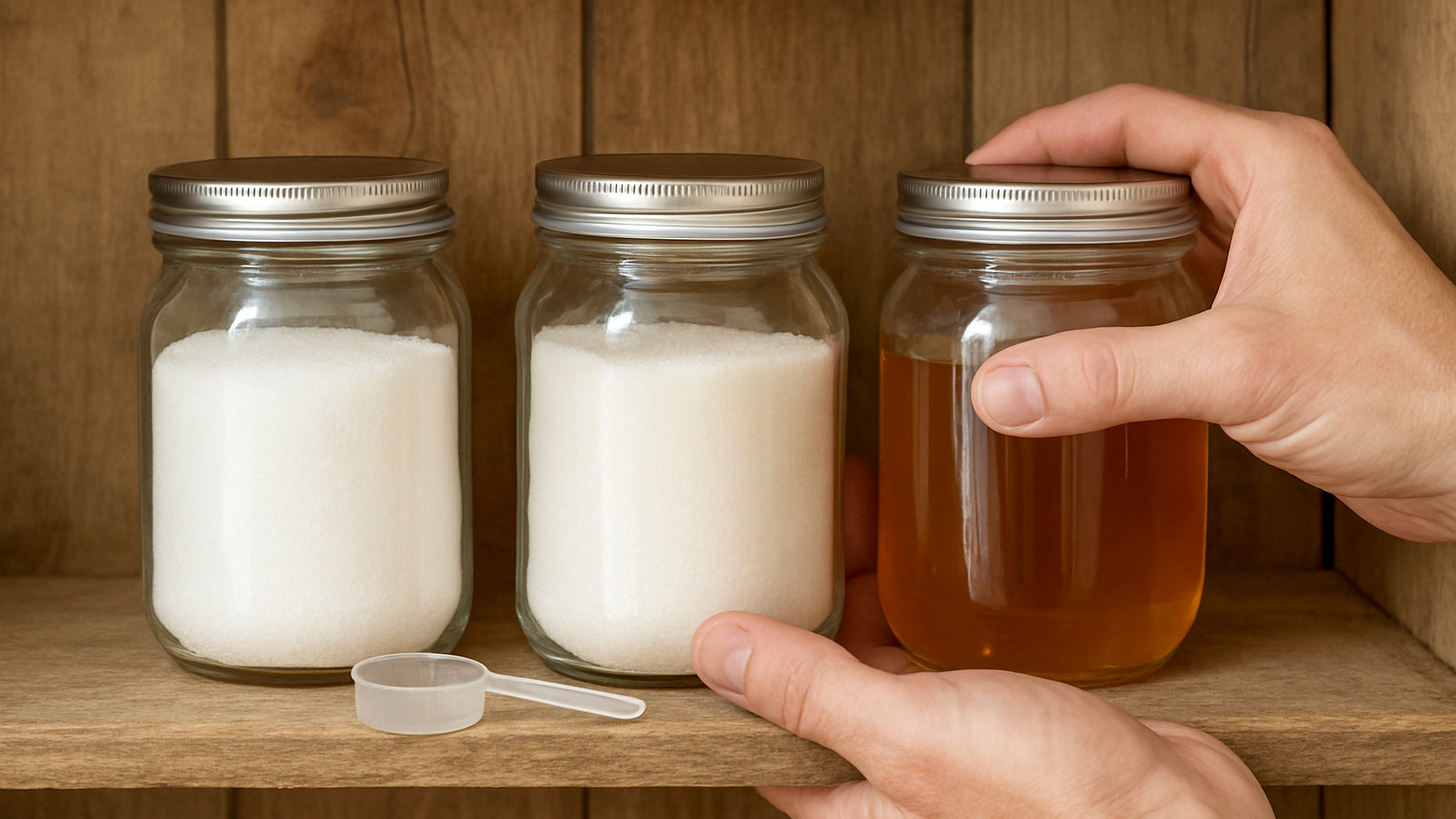
These three are the easiest items in any long term store and the ones most often handled wrongly, because the standard technique used for grain is actively harmful to them.
Why do they keep indefinitely?
Because none of them supports microbial growth. Salt is a mineral and does not degrade. Sugar and honey are hygroscopic and so concentrated that they draw water out of any organism attempting to live in them, which is precisely why both have been used as preservatives for centuries. Honey recovered from ancient tombs has been found still edible.
Why should you not use an oxygen absorber?
Because it hardens them. Salt and sugar packed with an oxygen absorber draw together into a solid block that has to be broken up with a hammer or a chisel, which is a well known and entirely avoidable outcome. There is nothing for the absorber to protect against in the first place, since neither oxidises nor supports growth. Airtight and dry is the whole requirement.
- Store airtight and dry, with no oxygen absorber
- Salt and sugar keep indefinitely if kept from moisture
- Honey keeps indefinitely and crystallises rather than spoiling
- Warm crystallised honey gently to restore it
- Never give honey to infants under one year old
- Buy plain salt rather than iodised for very long storage
What is the actual enemy?
Moisture. All three absorb water from humid air, which causes salt and sugar to clump and can eventually allow fermentation in honey if enough water is taken up. Sealed containers in a dry place solve it entirely. A rigid airtight container with a gasket, or a mylar bag without an absorber, both work well.
Does crystallised honey mean it has gone off?
No, and it is the most common misunderstanding about honey. Crystallisation is a natural process where the glucose comes out of solution, and it happens faster in some varieties and at cooler temperatures. The honey is entirely unaffected. Standing the jar in warm water, well below boiling, restores it to liquid without harming it. Repeated overheating degrades flavour and beneficial compounds.
Should you buy iodised salt?
Plain salt for very long storage, iodised for eating. Iodine content declines over time and can affect the appearance of stored salt, so plain rock or sea salt is preferred for a decades long reserve. Iodine is a genuine dietary requirement, so a store consisting only of plain salt should be paired with other iodine sources or a supplement over a long period.
What about brown sugar?
It hardens rather than spoiling, and it needs a little moisture rather than none. Brown sugar contains molasses which dries out, turning the sugar into a solid lump. It remains perfectly usable and can be softened by adding a slice of apple or a damp cloth in a sealed container for a day. White sugar has no such problem.
How much is worth storing?
More salt than you think and a reasonable quantity of sugar. Salt is essential physiologically, is used for preserving as well as seasoning, costs almost nothing, and stores indefinitely, which makes it among the best value items in any store. Sugar provides quick energy and is central to preserving fruit. Honey is expensive per calorie and valuable for morale and for its keeping qualities.
What is the safety point about honey?
It must never be given to infants under twelve months. Honey can contain Clostridium botulinum spores, which are harmless to older children and adults but can germinate in an infant gut and cause infant botulism. This applies to all honey including pasteurised, and it is worth knowing in a household storing it in quantity.
What other uses do they have?
More than their calorie content suggests, which is part of why they earn space. Salt preserves meat and fish, makes brines, and is used for cleaning and for treating ice. Sugar preserves fruit as jam and syrup and drives fermentation. Honey has genuine antibacterial properties and has been used on wounds, though modern dressings are preferable where available. All three are trade goods in any prolonged shortage.
Store all three airtight and dry with no absorber, warm crystallised honey gently, buy plain salt for depth, and never give honey to a baby.


