Grain and white rice are the foundation of any long term store because they are cheap, calorie dense and genuinely stable for decades. The packing process is straightforward and takes an afternoon.
What should you store?
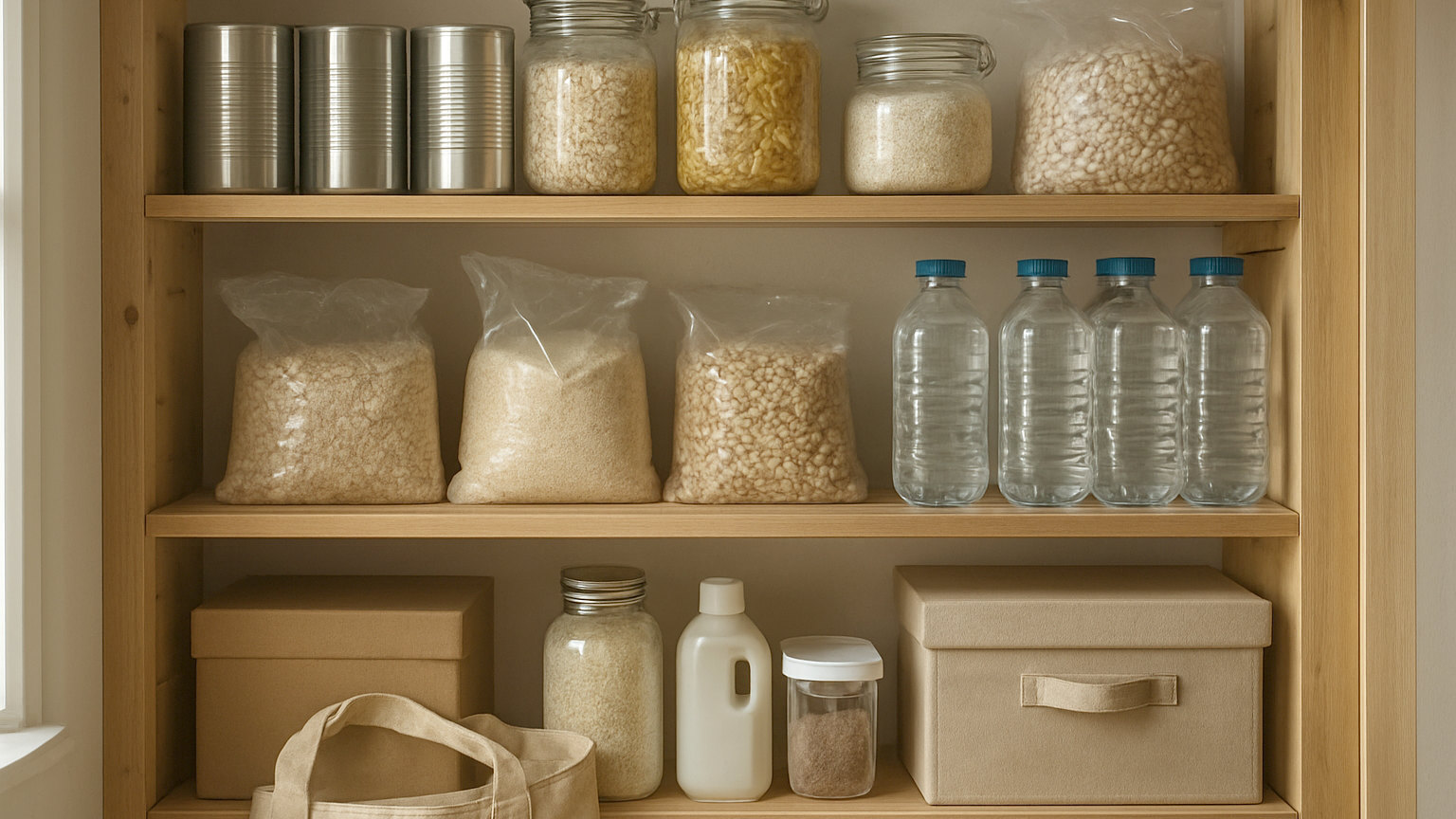
White rice, whole wheat berries, dried pasta and dried pulses. Avoid brown rice, which contains oils in the bran and keeps only months to a couple of years. Whole wheat berries keep far longer than flour and need a mill to use, which is an additional commitment worth considering before buying a hundred kilograms of them.
Why freeze it first?
To kill insect eggs. Grain products routinely contain pantry moth and weevil eggs when purchased, introduced during processing and storage, and sealing them in with the food guarantees a problem later. Seventy two hours in a domestic freezer kills eggs and larvae. Let the bags return to room temperature before opening so condensation forms outside rather than inside, then pack.
- Freeze for seventy two hours to kill insect eggs
- Return to room temperature before opening the bag
- Fill a mylar bag inside the bucket for support
- Add the correctly sized oxygen absorber last
- Heat seal immediately, expelling excess air by hand
- Label with contents, weight and date before fitting the lid
What is the packing sequence?
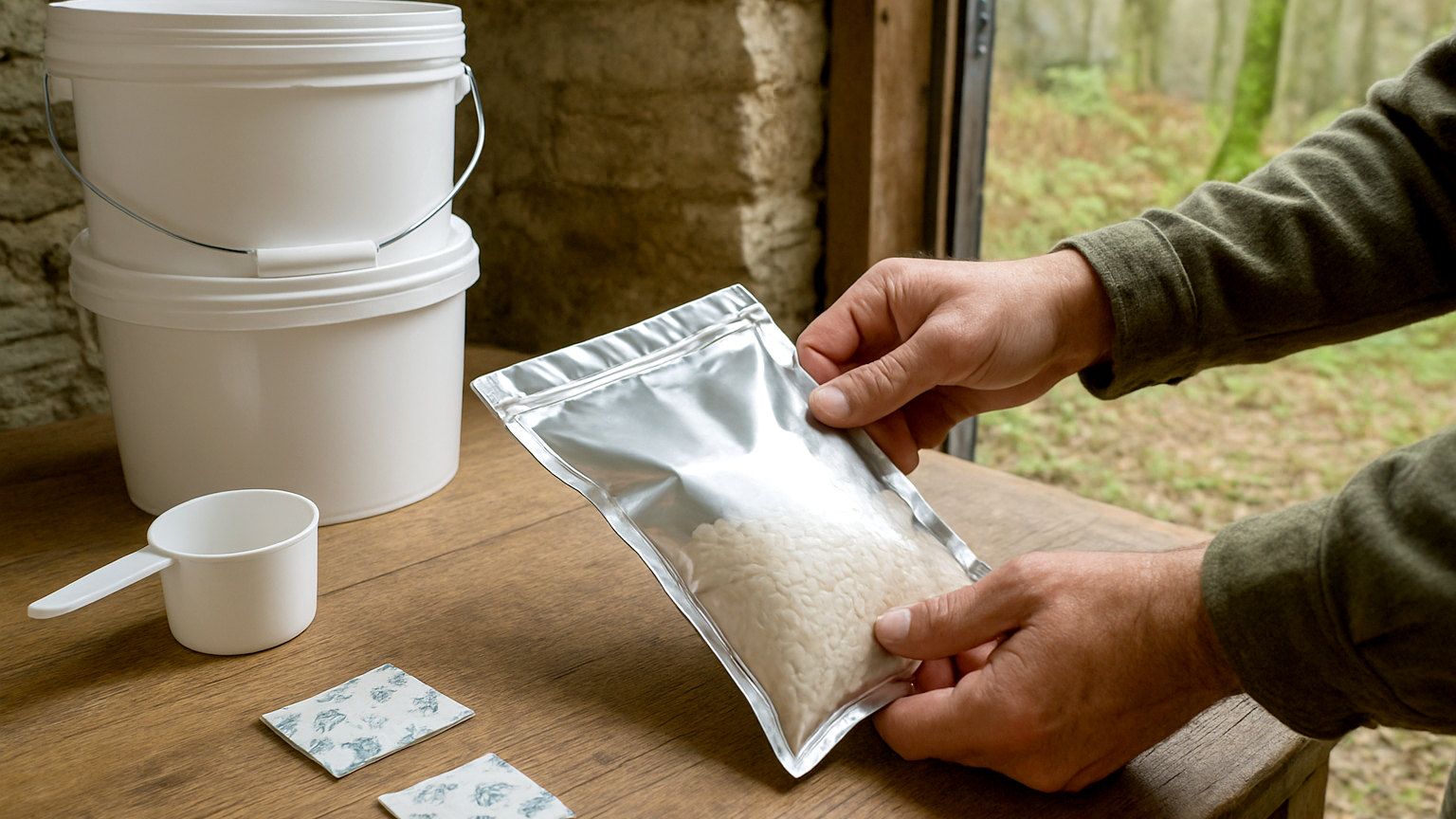
Line the bucket with the mylar bag so it supports the sides. Pour in the grain, leaving a few centimetres at the top for sealing. Squeeze out obvious excess air by hand. Drop in the oxygen absorber, sized to the container volume rather than the food weight, which for a twenty litre bucket means around two thousand cubic centimetres. Seal the bag immediately with heat, label it, and fit the lid.
How quickly must you work?
Within fifteen or twenty minutes of opening the absorber packet. Absorbers begin consuming oxygen on contact with room air, so prepare all the bags first, fill them all, then open the absorbers and work through the whole batch in one go. Seal any leftover absorbers into a glass jar immediately, since they will otherwise be spent.
How do you know it worked?
The bag draws in tight. Within a day or two the absorber will have consumed the oxygen and a bag of rice becomes noticeably firm, almost brick like, with the mylar drawn down around the grains. A bag still loose after several days has a leak or insufficient absorber, and should be opened, checked and resealed with a fresh absorber.
Where should it go?
Somewhere cool, dark and stable, off a concrete floor. This matters more than the packing, since every quoted shelf life assumes moderate temperature. An interior cupboard, under a bed or a dry cellar all work well. A garage is acceptable if dry and away from fuel and chemicals, and a loft is not, because summer temperatures shorten storage life dramatically.
What quantities are sensible?
Enough that you would genuinely use it, in units you can lift. A twenty litre bucket holds around fifteen kilograms of rice, which is a great many meals, and opening one commits you to using it within a reasonable period once the seal is broken. Packing in smaller bags within the bucket lets you open a portion without exposing the lot.
What about the rest of the diet?
Grain alone is calories without much else. A store built entirely on rice provides energy and very little protein, fat, or micronutrients. Pair it with dried pulses, which store equally well and provide protein, and keep a rotating store of tins and other food alongside. Storing thirty years of rice and nothing else is a common and unhelpful pattern.
How do you use it years later?
Check before committing to a meal. Open a bag, look for any off smell, discolouration, clumping or insect activity, and taste a small cooked portion before feeding it to the household. Well packed white rice a decade on should look and smell like new rice and cook normally. Old grain may need slightly longer cooking and a little more water, and dried beans stored for many years may need pressure cooking.
Freeze it, pack it in mylar inside a bucket with the right absorber, seal within twenty minutes, label it, and store it cool and off the floor.