
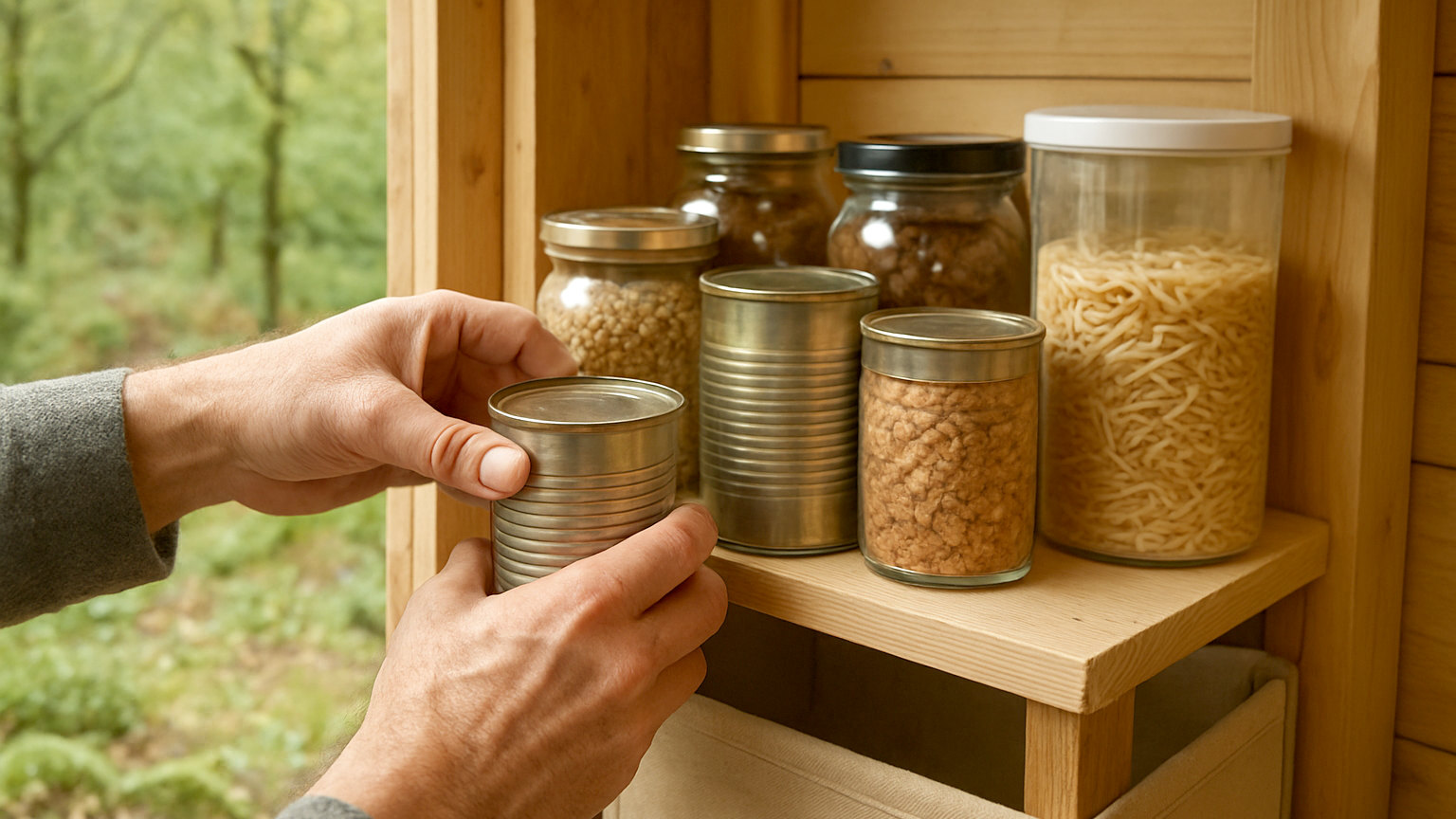
Rotation is straightforward for a week of tins and becomes genuinely difficult beyond a few months. The decision that matters is made at the start, and it is a decision about intent rather than technique.
What are the two approaches?
A rotating store, where everything is eaten and replaced on a cycle, so nothing ever ages far beyond its date. Or a set aside reserve, sealed and untouched, accepted as something you will probably never eat and are keeping for a situation that may not arise. Both are valid. Attempting both at once produces a store that is neither properly rotated nor properly sealed.
How deep can you genuinely rotate?
A month comfortably, three months with attention, and beyond that with difficulty. A household eats a certain amount, and rotation requires consuming and replacing everything within its life. Six months of rice will rotate, since rice keeps for years anyway, and six months of tinned food requires eating roughly one tin for every one you buy, indefinitely.
- Decide at the outset: rotating store or set aside reserve
- Rotate the cupboard food and seal the staples
- Keep an inventory sheet with the store
- Label everything with contents and date packed
- Open one sealed unit every few years to check condition
- Plan how the reserve would eventually be used
What is the sensible hybrid?
Rotate the ordinary food and seal the staples. Tins, pasta, cereal and everything else you eat normally lives in the cupboard and rotates through use. The mylar sealed rice, wheat and pulses sit separately as a reserve, untouched, with a shelf life long enough that rotation is not required. Each is handled appropriately and neither is compromised by the other.
How do you track it?
With a sheet, kept with the store. List what is in each bucket, the weight, the date packed and the absorber used. Note the earliest date, so a glance tells you the age of the oldest unit. Anything more elaborate tends not to be maintained, and anything less leaves you with unidentifiable containers in a decade.
What happens when you open a sealed unit?
The clock restarts. Once the mylar is cut and air enters, the contents behave like ordinary stored food, keeping for a year or two rather than decades. That means opening a twenty litre bucket commits you to using fifteen kilograms of rice within a reasonable period. Packing in smaller bags within the bucket avoids this, letting you take a portion at a time.
Should you check the store?
Periodically and without opening where possible. Look for bags that have relaxed, buckets that have been gnawed, and any sign of damp. Note the summer temperature in the location. Every few years, open one unit deliberately, inspect it and use the contents, which both verifies the method and provides a natural rotation point.
What if you never use it?
That is a legitimate outcome for a reserve and worth acknowledging honestly at the outset. Insurance is bought and not claimed on. The failure is not going unused, it is being thrown away by someone clearing a house because nobody knew what it was or whether it was still good. Labelling and an inventory prevent that.
How do you eventually eat it?
Deliberately, over a period. A household that decides to work through a reserve can substitute stored rice, pasta and pulses for shop bought over several months, replacing them fresh as they go. That turns a decade old reserve into current stock without waste, and it is worth doing once every ten years or so simply to confirm the whole system works.
Does the shop cupboard count as rotation?
It does, and it is the part people overlook. A household that keeps a genuinely deep cupboard, buying two of everything and using the older one, is rotating a month or more of food without any system at all. That is a more useful form of depth than sealed buckets for most people, since it is current, varied and eaten continuously. Sealed storage is what you add once the cupboard method has reached its practical limit.
Rotate the cupboard and seal the staples, keep an inventory, pack in portions you can use, and plan a deliberate changeover every decade.


