
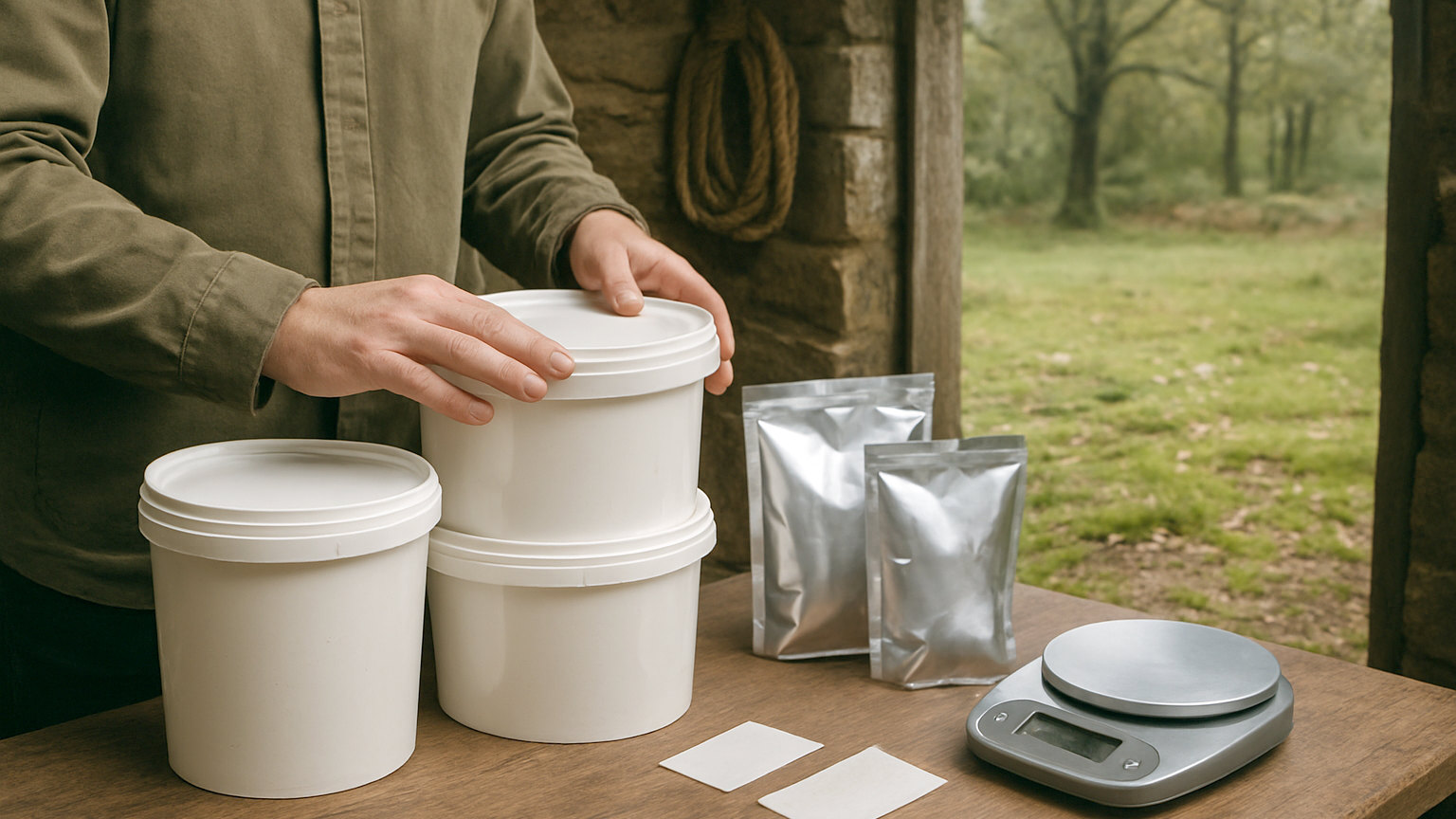
Labelling feels like an afterthought while packing and becomes the difference between a usable store and a row of anonymous buckets. It costs five minutes and it is the step most often skipped.
What should the label say?
Contents, weight or quantity, the date packed, and the absorber size used. Contents because identical grains and powders are indistinguishable later. Weight so you can plan without opening it. Date because everything is judged from it. Absorber size because if you ever question whether a bag was packed correctly, that is the number you need.
Where should it go?
On both the bag and the bucket. Buckets get moved, restacked and occasionally separated from their contents, and a label only on the outside is lost the moment the lid comes off. Write on the mylar with a permanent marker before sealing, and label the bucket lid and side so it is readable however it is stacked.
- Contents, weight, date packed and absorber size
- Label both the inner bag and the outer bucket
- Use permanent marker, since labels fall off over years
- Write on the lid and the side for stacked storage
- Keep an inventory sheet with the store and a copy elsewhere
- Note the earliest date so ageing is visible at a glance
Why not use printed labels?
Because adhesive fails over years, particularly in cool or slightly damp storage, and a bucket found with its label on the floor beside it is no better than an unlabelled one. Permanent marker directly on the plastic survives indefinitely. If you prefer printed labels for legibility, apply them and write the essentials in marker as well.
What should the inventory contain?
A simple list: item, quantity, date packed, location. A sheet of paper in a plastic sleeve kept with the store is sufficient, and a photograph of it on a phone gives you a copy elsewhere. Anything more elaborate tends not to be updated. The purpose is to know what you have without moving buckets, and to let someone else understand it.
Why does someone else matter?
Because a store frequently outlives the interest of the person who built it. Buckets of unmarked grain found by a family member or a house clearance are thrown away, which is the most common end for a long term store. A clear label and a sheet explaining what it is and when it was packed prevents that, and lets anyone assess it sensibly.
How do you track what you have opened?
Note it on the inventory when a unit is opened, with the date. Once the seal is broken the contents behave like ordinary stored food and should be used within a year or two, and that fact is easy to forget three months later. Recording it also builds a picture over time of how quickly the household actually consumes stored staples.
Should you record where it came from?
Usefully, yes. Noting the supplier and batch means that if you ever find a problem, such as an infestation or a quality issue, you can check whether other units from the same source are affected. It also helps if you are comparing suppliers over time, since bulk staples vary in quality more than people expect.
What is the minimum acceptable?
Contents and date, in marker, on the bucket. Everything else is refinement. A store labelled to that standard is usable by anyone who finds it, and a store with nothing on it is a gamble nobody will take.
What about non food items?
Label them to the same standard, since they age too. Batteries, matches, medication, water purification tablets, fuel and first aid consumables all have dates or degrade, and all end up in the same cupboards. Recording them on the same inventory sheet means one review covers everything, and it catches the items that are easiest to forget because they are not obviously perishable.
Write contents, weight, date and absorber size in permanent marker on both bag and bucket, keep an inventory sheet, and record what you open.


