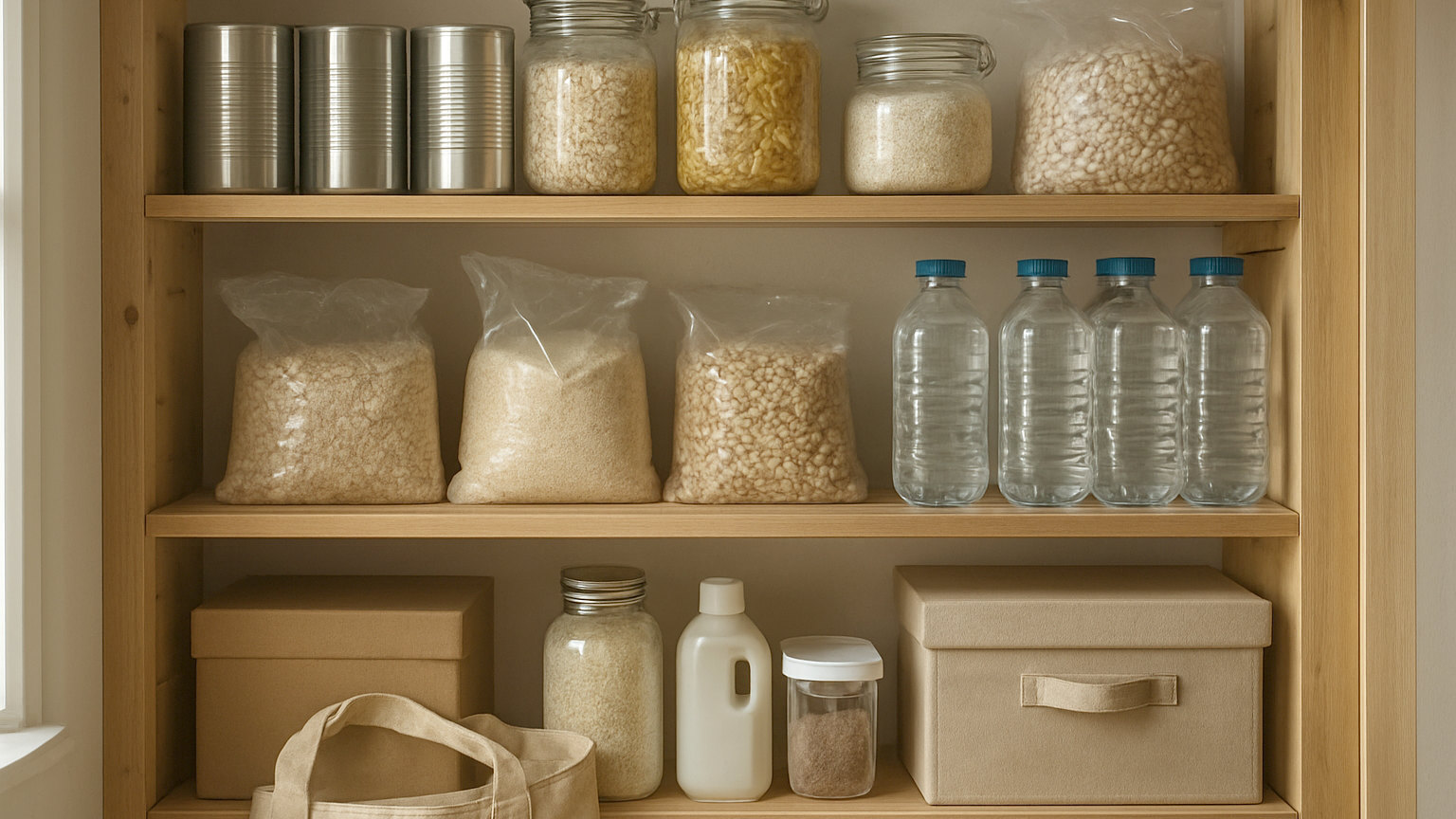
These two items do the whole job between them, and they work in different ways. Understanding both explains why they are used together and why neither alone is sufficient.
What is mylar?
A polyester film with a thin metallised layer, forming a barrier that oxygen, moisture and light effectively cannot cross. Ordinary plastic bags are slowly permeable to oxygen, which is why food in them ages even when sealed. A metallised bag stops that transfer almost completely, which is what makes decade scale storage possible.
What thickness do you need?
Around five mil or thicker for anything intended to last, which is roughly a hundred and twenty microns. Thinner bags of three mil are cheaper, more prone to pinholes and better suited to shorter storage inside a protective bucket. Thicker bags of seven mil resist punctures from rice and pasta edges and are worth the small extra cost for a store you will not inspect for years.
- Use five mil or thicker mylar for decade scale storage
- Size absorbers to the container volume, not the food weight
- Work quickly, since absorbers activate on contact with air
- Store spare absorbers in a sealed jar immediately
- Heat seal the bag fully, testing the seal before storing
- Only use with dry foods below around ten percent moisture
How do oxygen absorbers work?
Through iron powder that rusts. Sealed in a small permeable sachet, the iron oxidises on contact with the oxygen inside the container, consuming it and leaving essentially nitrogen. A correctly sized absorber reduces oxygen to a fraction of one percent, which stops oxidation, prevents mould growth and means insect eggs present in the grain cannot hatch.
How do you size them?
By the volume of the sealed container including the air gaps between the food, not by the weight of the contents. As a rough guide, a four litre bag needs around three hundred to five hundred cubic centimetres of absorber capacity, and a twenty litre bucket needs around two thousand. Using more than needed does no harm, and using too few leaves oxygen behind.
Why do you have to work quickly?
Because absorbers begin working the moment the packet is opened. Once exposed to room air they start consuming oxygen immediately, and a sachet left out for an hour is largely spent before it goes into a bag. Open the packet, distribute the absorbers into your prepared bags within fifteen or twenty minutes, and immediately seal any remainder into a small glass jar with a tight lid.
How do you seal the bag?
With heat. A purpose made impulse sealer is ideal, and a domestic iron on a hard edge or a pair of hair straighteners both work well for occasional use. Press firmly along the full width, leave no gaps, and let it cool before handling. Test by pressing the bag gently to check for escaping air, and reseal any doubtful section.
How do you know it worked?
The bag draws in. Within a day or two the absorber will have consumed the oxygen and the bag becomes noticeably firm and slightly vacuum packed around the contents, brick like with rice or grain. A bag that remains loose after several days has either a leak or insufficient absorber capacity and should be opened, checked and resealed with fresh absorbers.
What must you not use them with?
Moist or high fat foods, and this is a genuine safety point rather than a quality one. Removing oxygen from a moist food creates exactly the low oxygen environment in which Clostridium botulinum can produce toxin. Only use absorbers with dry goods below around ten percent moisture. High fat foods go rancid regardless and are unsuited to the method.
Do you need to remove air before sealing?
Squeeze out the obvious excess and do not attempt a vacuum. Pressing the bag down to expel loose air reduces the work the absorber has to do and means a smaller one will suffice, and the absorber handles the rest. Trying to vacuum a mylar bag with a domestic sealer generally fails, since the material is stiff and the seal channel struggles, and it is unnecessary given what the absorber does.
Use five mil mylar, size absorbers by container volume, work within twenty minutes, seal with heat, and never use them with moist food.