Container failures in long term storage are invisible for years and obvious when the store is opened. Avoiding the wrong ones costs nothing and is easier than diagnosing a problem a decade later.
What should never be used?
Anything that held chemicals, detergent, fuel, paint or industrial products. Plastics absorb and slowly release compounds from their previous contents, and no amount of washing removes them. A drum that held cleaning product will taint food years later. This applies even where the plastic type is nominally food safe, since the issue is what soaked into the material.
What about ordinary plastic bags?
Unsuitable for anything beyond a year or two. Polythene bags, freezer bags and even vacuum bags are slowly permeable to oxygen, so food inside them ages steadily regardless of how well they are sealed. They are also easily punctured by rice and pasta and offer no barrier to rodents or light. They belong in medium term storage rather than in a decades long store.
- Anything that held chemicals, fuel or cleaning products
- Non food grade plastic of unknown origin
- Ordinary polythene and freezer bags for long timescales
- Thin mylar under about three mil, which punctures easily
- Galvanised or plain steel containers, which corrode
- Cardboard and paper, which admit pests and moisture
How do you identify food grade plastic?
By the recycling code and the food contact symbol. High density polyethylene marked with code two is the standard for buckets, and PET marked code one is used for bottles. Many carry a cup and fork symbol indicating suitability for food. Codes three, six and seven are generally unsuitable for long term food contact. The symbol tells you the material and not the history, so provenance matters as much.
What about metal containers?
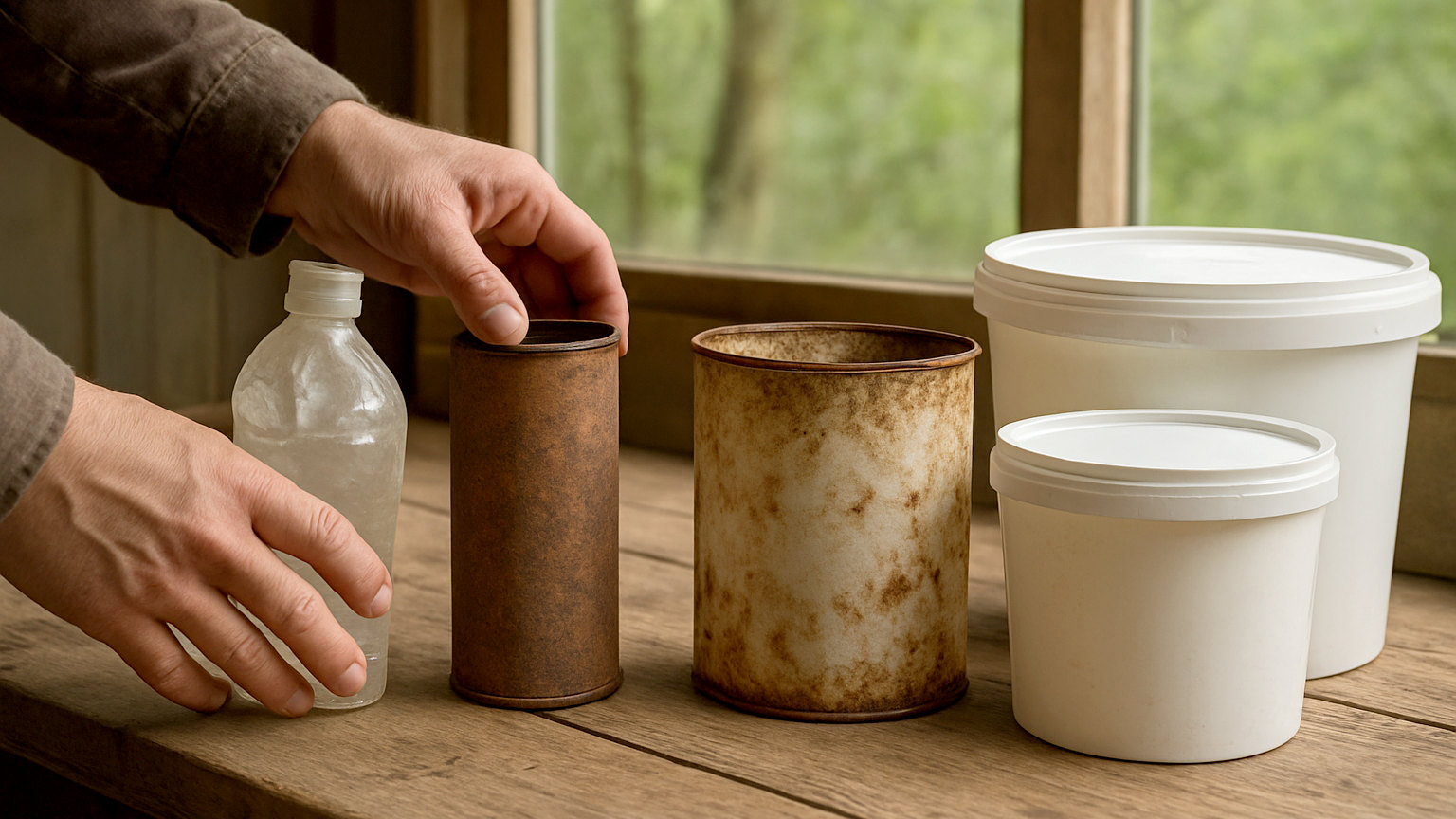
Only if designed for food. Purpose made steel cans with an internal lining, of the type used for commercial long life food, are excellent and effectively impermeable. Galvanised bins, ordinary steel drums and anything designed for fuel or industrial use either corrode, leach metals or retain residues. A galvanised dustbin makes a good rodent proof outer container and should never hold food directly.
Is glass suitable?
Chemically ideal and practically awkward. Glass is completely impermeable, does not taint contents and can be used with oxygen absorbers, which makes it excellent for smaller quantities. The problems are weight, breakage and light, so jars need storing in the dark and handling carefully. For a few kilograms of dry goods it works very well.
What about cardboard and paper?
Only as an outer layer, never as the container. Cardboard admits moisture, offers no oxygen barrier, is chewed through by rodents readily and softens in damp storage. Original supermarket packaging in cardboard or paper is designed for weeks on a shelf, not years in a cupboard, which is why decanting is the first step in any storage process.
Does thickness matter in mylar?
Considerably. Bags under about three mil are prone to pinholes and tear at the corners, particularly with sharp contents such as rice, pasta or dried beans. Five mil is a sensible minimum for anything intended to last, and seven mil for larger bags or where the store may be handled. A pinhole in a mylar bag defeats the whole method silently.
What is the correct arrangement?
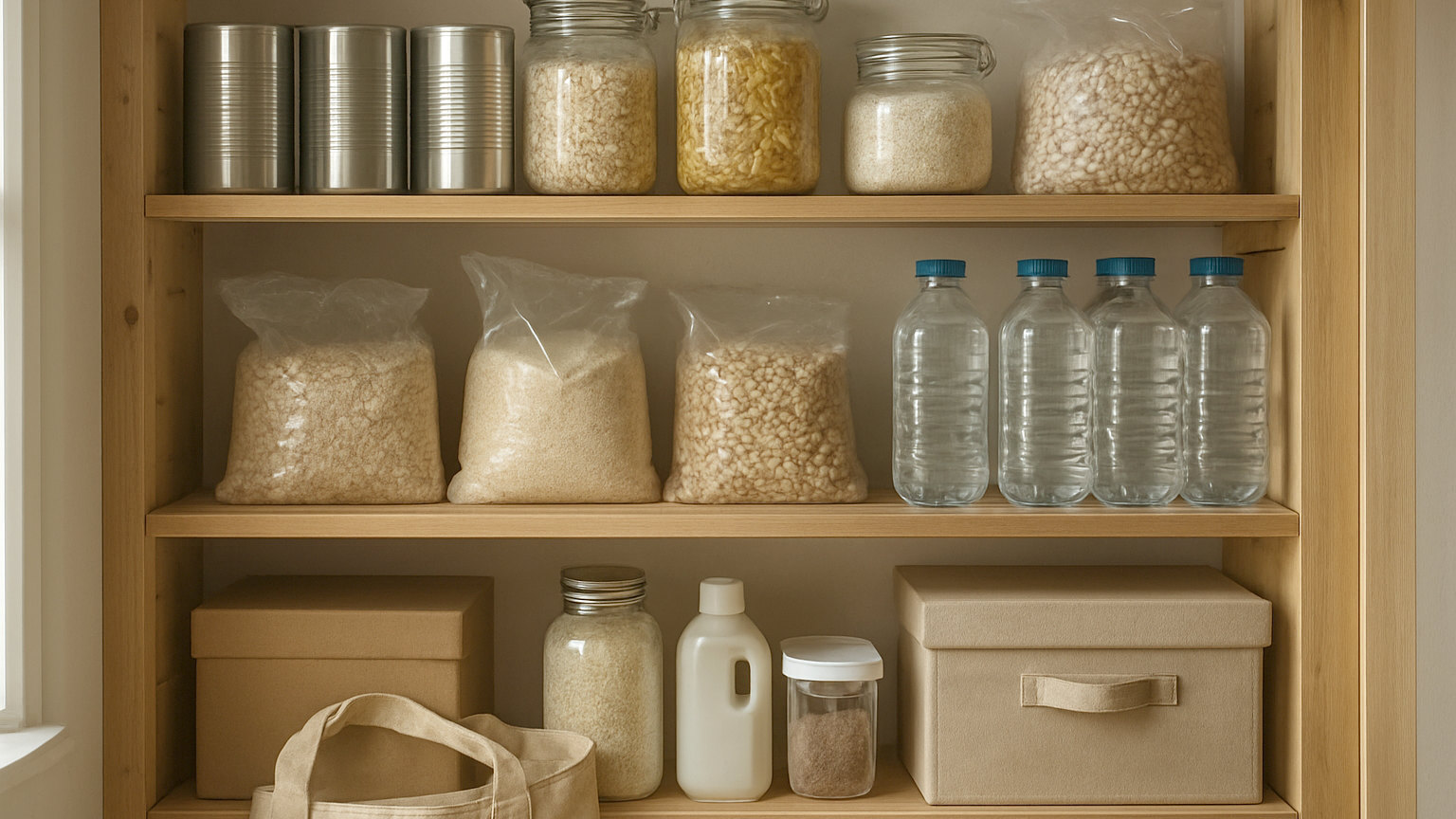
A five mil or thicker mylar bag with correctly sized oxygen absorbers, inside a food grade bucket with a sound lid, stored cool and dark off the floor. That combination handles oxygen, light, moisture, pests and physical damage, and it is the standard for good reason.
What about secondhand food containers?
Fine if the history is genuinely known, and worth refusing otherwise. Buckets from a bakery or a restaurant that held icing, sauce or pickles are ideal and free, and containers from a general yard or a farm may have held anything. Ask what was in it, look for residue or smell inside, and if the answer is uncertain, use it for water for the garden rather than for food.
Use thick mylar inside a food grade bucket, never reuse a chemical container, avoid ordinary bags and cardboard, and check the plastic code and history.