Where you put a food store matters as much as what is in it. The convenient spaces are frequently the worst ones, and the difference in shelf life between a good and a bad location can be several times over.
What makes a good location?
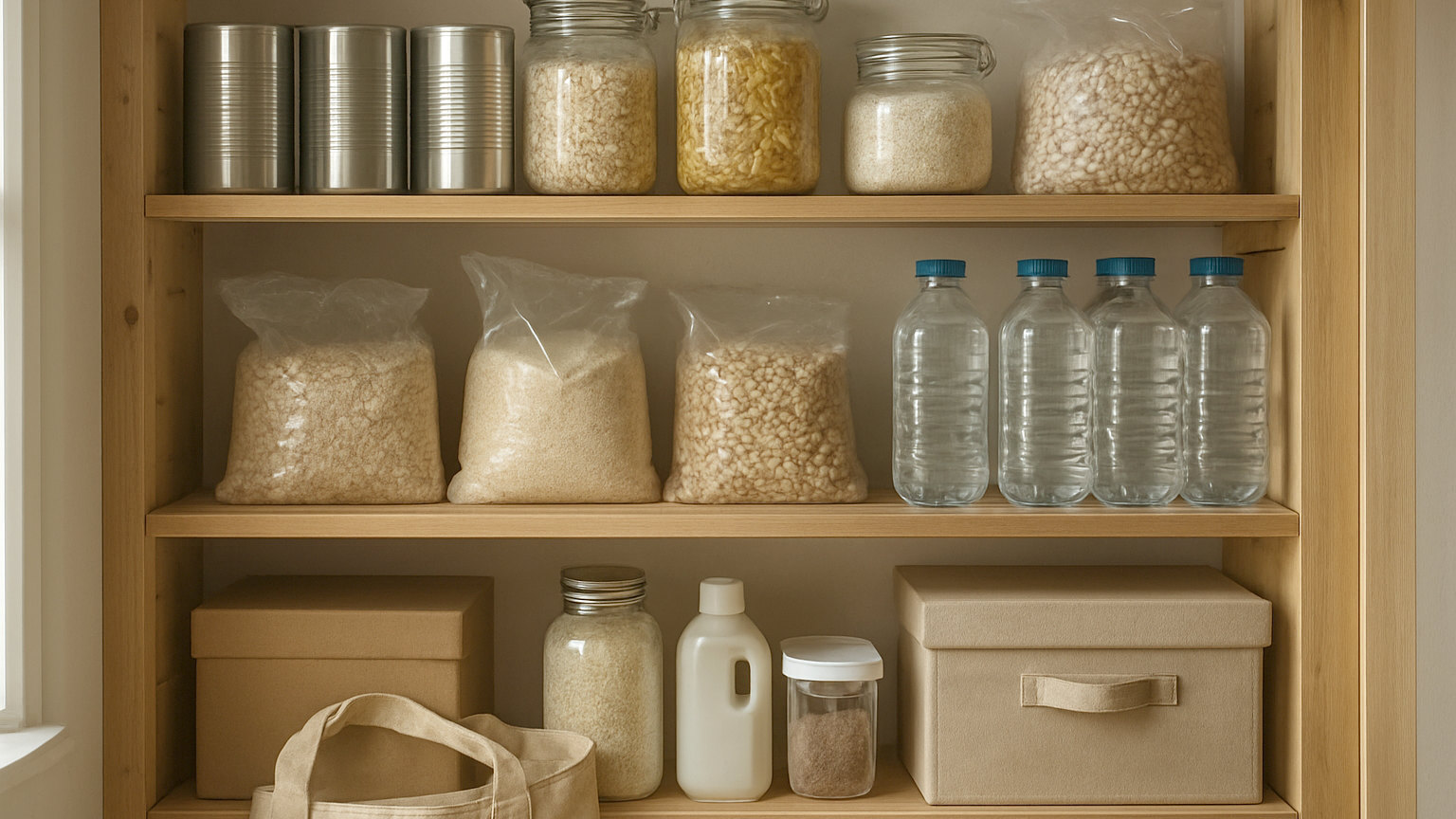
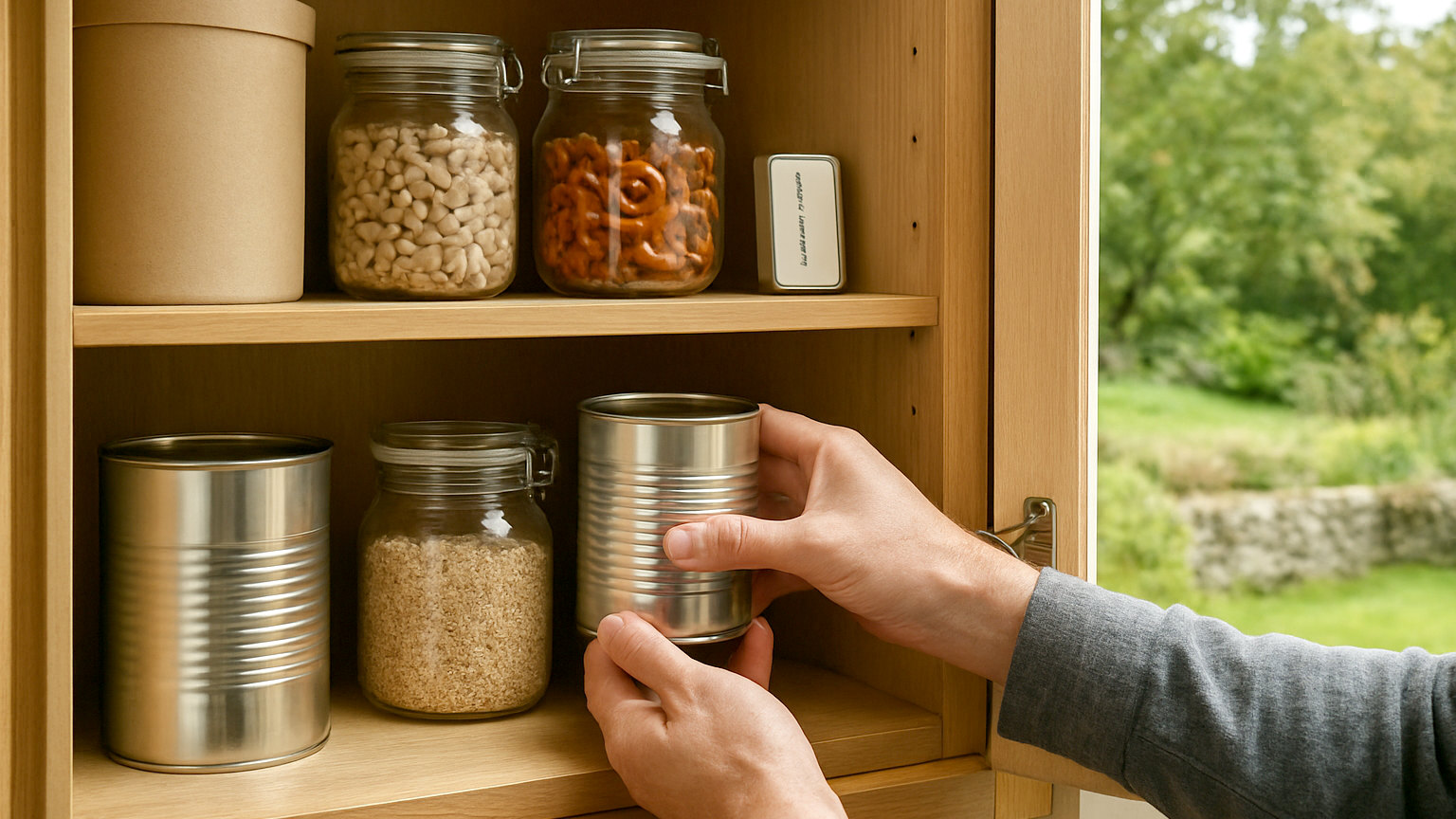
Cool, dark, dry, stable and accessible. Interior cupboards, a hall cupboard, the space under a bed, the bottom of a wardrobe and a cool pantry all work well. What they have in common is that they sit within the heated envelope of the house, so temperature stays within a narrow range, and they are dark and dry. Accessibility matters too, since a store you cannot reach easily will not be rotated.
Why is the garage a poor choice?
Because of temperature swings and damp. Garages track outdoor temperature, reaching near freezing in winter and well above twenty degrees in summer, and that cycling drives moisture in and out of packaging. Concrete floors are cold and damp, tins rust, cardboard softens, and the environment attracts rodents. Fuel, paint and chemicals stored alongside can taint food through some packaging.
- Best: interior cupboards, under beds, wardrobe bases
- Acceptable: a cool utility room or a genuinely dry cellar
- Poor: garages, sheds, conservatories
- Worst: lofts, under the sink, next to the boiler
- Never on bare concrete, always on a shelf or pallet
- Never alongside chemicals, fuel or cleaning products
What is wrong with the loft?
Heat, principally. Lofts routinely exceed thirty degrees in summer and can go considerably higher under a dark roof, which dramatically shortens shelf life, since deterioration roughly doubles for each ten degree rise. They also freeze in winter, are inaccessible, and are prone to leaks and rodents. A loft is suitable for equipment and unsuitable for anything edible.
Why not under the sink?
Damp, warmth from pipes, and chemicals. It is one of the most common food storage locations and one of the least suitable. Leaks are frequent and often go unnoticed, the cupboard is humid, and cleaning products sharing the space can contaminate food. Use it for cleaning materials and keep food elsewhere.
Does concrete really matter?
Yes, and it is easily solved. Concrete transfers cold and wicks moisture, so boxes and tins standing directly on a garage or cellar floor suffer damp, rust and label degradation. A wooden pallet, a plastic crate or a simple shelf lifts everything clear and costs almost nothing. This applies to water storage as much as to food.
What about a cellar?
Potentially excellent and frequently damp. A dry cellar is close to ideal, being cool, dark and stable, which is why they were used for exactly this purpose historically. A damp one is among the worst options, encouraging mould and corrosion. Test it with a cheap humidity meter over a few weeks before committing anything to it, and consider a dehumidifier if it is otherwise good.
Should you split the store?
Yes, across two or three locations. It spreads the risk of a leak, a pest problem or a flood affecting everything at once, and it makes use of the small spaces most houses have rather than requiring one large one. Keep the everyday rotating portion in the kitchen and the deeper reserve elsewhere.
What about flats and small homes?
Use the volume rather than the floor area. Under beds is the single most useful space, being cool, dark and out of the way, and it takes a surprising quantity in flat crates. The bottom of a wardrobe, the back of a hall cupboard and the space above kitchen units all work. Small spaces used well hold more than most people assume.
How do you protect against a leak?
By raising everything and splitting the store. Water from a burst pipe, a washing machine or a flood travels along floors and soaks cardboard within minutes, and a store sitting directly on the floor of one cupboard can be lost entirely. Keeping boxes on a low shelf or a pallet, using sealed plastic crates rather than cardboard, and holding a portion of the store in a second location upstairs all address it cheaply.
Interior cupboards and under beds, off the floor, away from chemicals, and nothing edible in the loft or the garage.