Losing refrigeration is the most common food storage problem a British household will face, and it has a clear structure: what stays safe, for how long, and in what order to eat things.
How long does a fridge stay safe?
Around four hours with the door kept shut. That figure assumes a reasonably full fridge starting at the correct temperature and a door that stays closed. Each opening loses a large proportion of the cold air and costs a meaningful share of the remaining time. Food held above five degrees for more than a couple of hours enters the range where bacteria multiply rapidly.
What is the eating order?
Most perishable first. Use fridge contents in the first few hours while they remain cold, starting with anything already opened and anything with a use by date. Then move to freezer contents as they begin to soften. Only then start on the cupboard store, which is stable and can wait. Working in this order preserves the shelf stable food for later in the outage.
- Keep both fridge and freezer doors shut
- Eat fridge contents first, starting with opened items
- Move fridge items into the freezer if the outage looks long
- Use a thermometer rather than judging by feel
- Discard high risk food held above five degrees for four hours
- Never taste anything to test whether it is safe
What should you discard?
High risk foods that have been warm. Raw and cooked meat, poultry, fish, dairy, eggs out of shell, cooked rice and pasta, prepared salads and anything containing them. These support rapid bacterial growth and give no reliable warning through smell or appearance. Butter, hard cheese, unopened jars and most condiments tolerate warmth considerably better and can generally be kept.
How do you keep things cool without power?
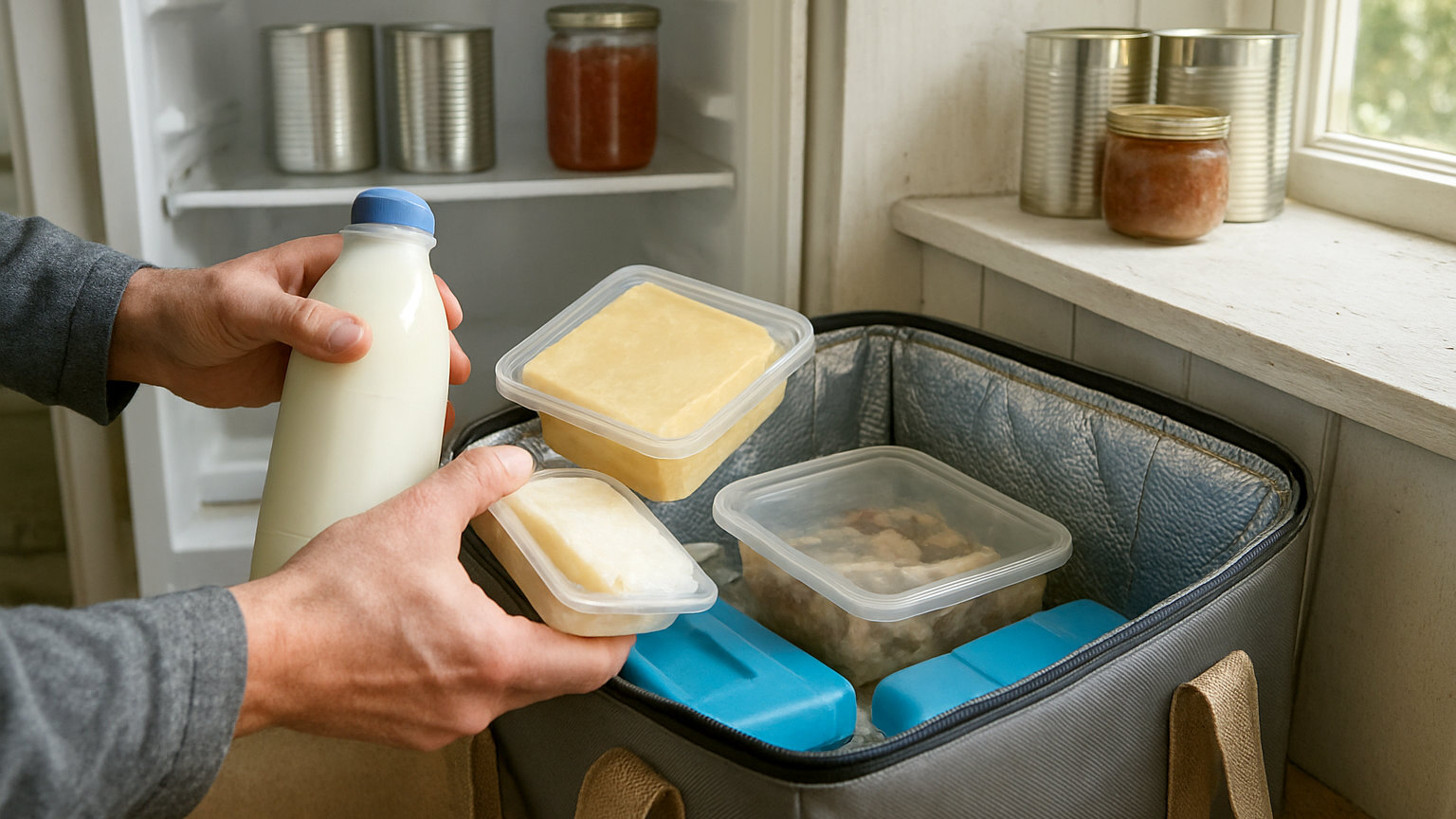
With thermal mass and shade. Bottles of frozen water moved from the freezer into the fridge extend its cold substantially. A cool box packed with ice packs holds a small quantity of essentials for a day or more. In winter, an unheated outbuilding or a shaded spot outside may be colder than the house, though it must be secure from animals and monitored, since outdoor temperature is not stable.
Why does a thermometer matter?
Because judgement by feel is unreliable and the consequences of getting it wrong are unpleasant. A cheap fridge and freezer thermometer tells you the actual temperature and removes the guesswork about whether contents crossed the threshold. Keeping one in each appliance permanently is worth doing regardless of emergencies, since fridges frequently run warmer than people assume.
What about medication?
Treat it separately and seriously. Insulin and some other medicines require refrigeration, and the tolerances vary by product. Ask your pharmacist in advance what range matters and how long the medicine tolerates being warmer, since some are more forgiving than assumed. A cool box with ice packs handles a short outage, and registering on the Priority Services Register brings priority reconnection.
What can you eat that needs no refrigeration?
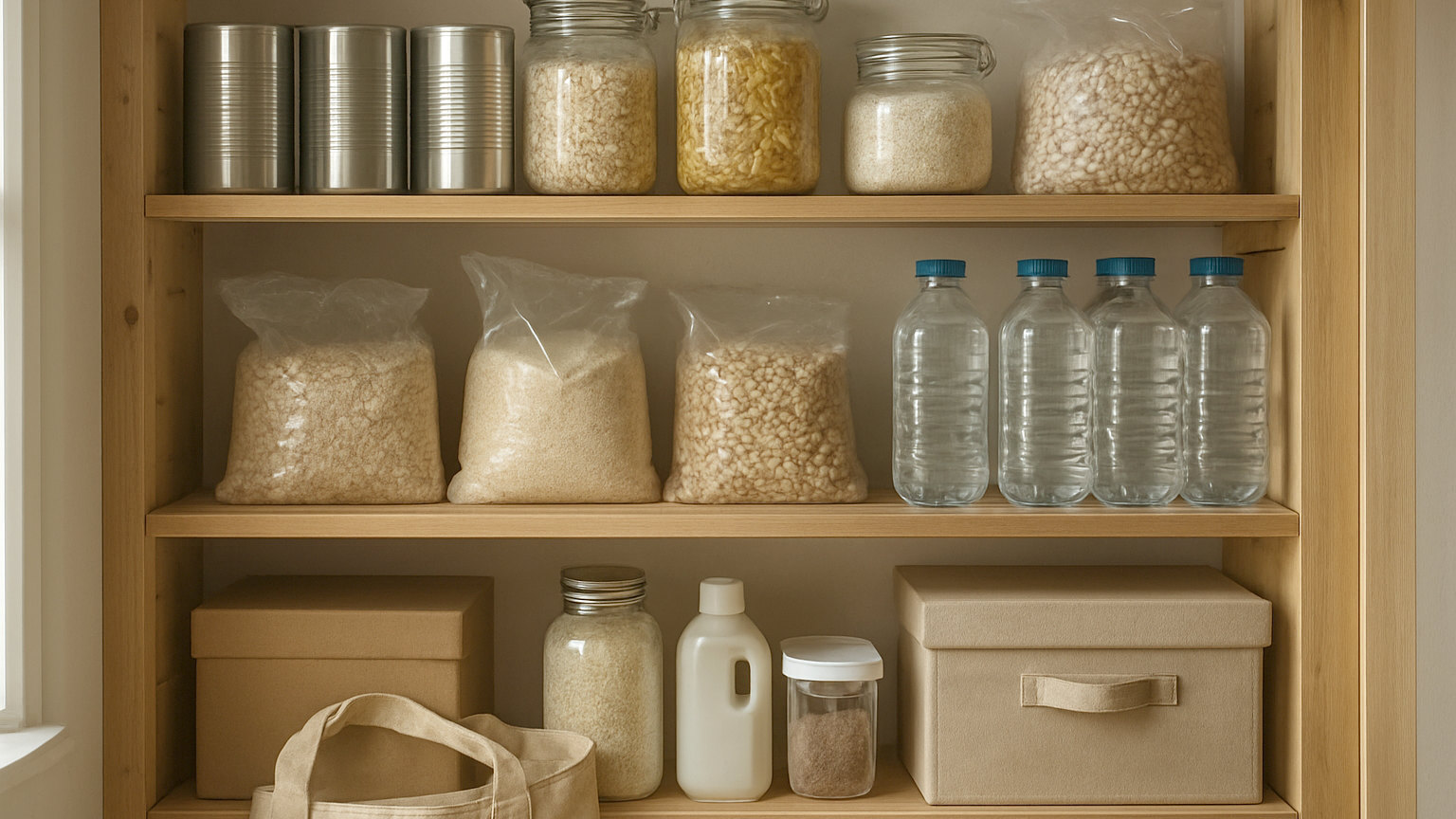
A great deal, which is the argument for a cupboard store. Tinned goods, dried staples, long life milk, cereal, biscuits, nuts, dried fruit, spreads, crackers and fruit that keeps at room temperature. Planning the first day around food needing neither cooking nor refrigeration removes the problem entirely for the period most outages last.
What should you do afterwards?
Assess before restocking. Check temperatures, discard anything doubtful, clean the appliance thoroughly before refilling, and note what you were missing. If the freezer thawed, a claim may be possible under home insurance, though excesses frequently exceed the value. Photograph anything discarded before disposing of it if you intend to claim.
What keeps perfectly well at room temperature?
More than people assume. Hard cheese, butter for a few days, unopened jars and bottles, most condiments, eggs, bread, and whole fruit and vegetables such as apples, oranges, onions, potatoes and carrots all tolerate a cool room without difficulty. Knowing which items in the fridge do not actually need to be there reduces both the panic during an outage and the amount discarded afterwards.
Keep the doors shut, eat fridge first and freezer second, use a thermometer, and discard high risk food that has been warm for four hours.