Assessing older stored food is a routine part of keeping a store, and it follows a clear order: examine the container, then the contents, and never use taste as a test.
What should you check first?
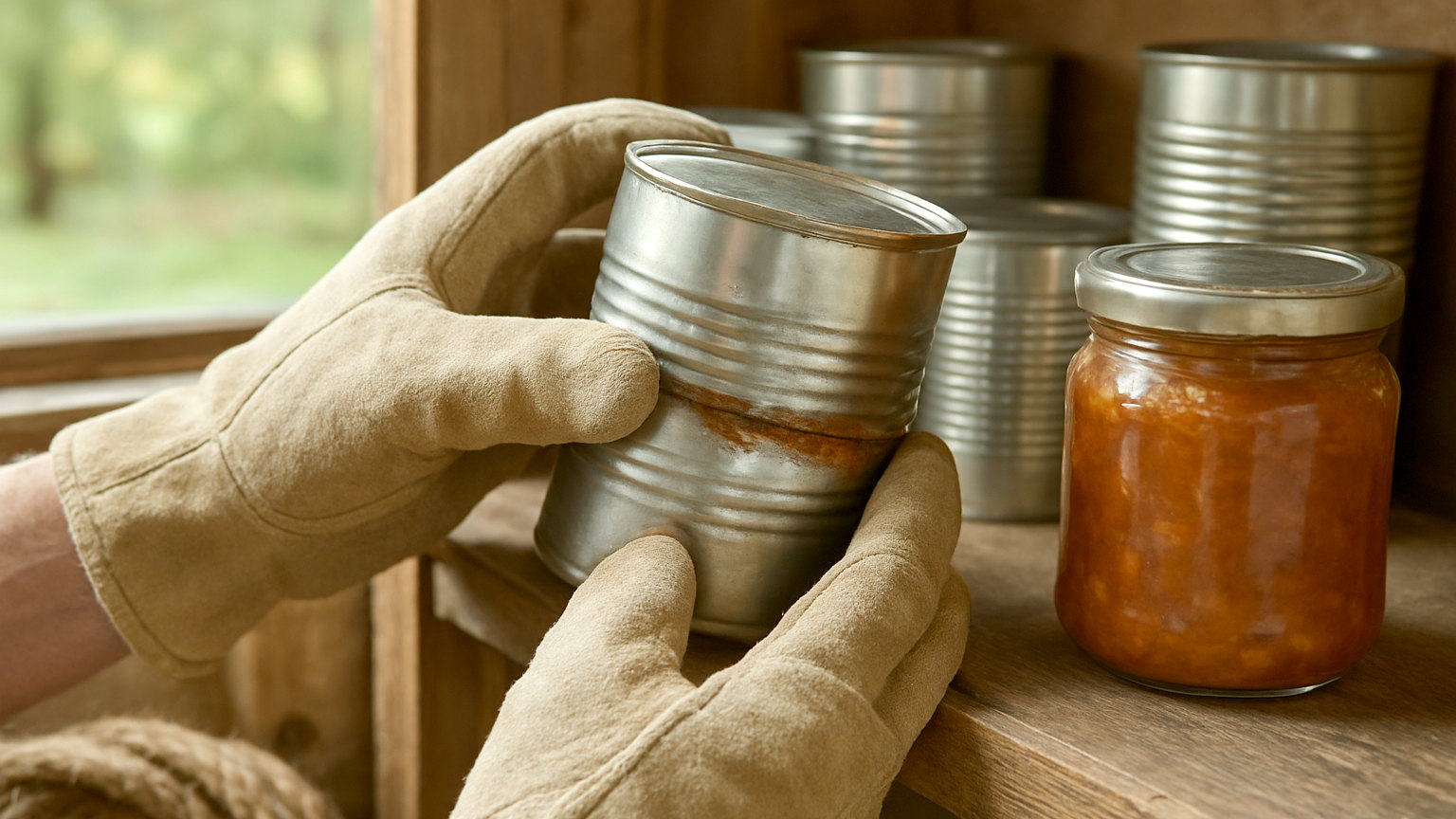
The packaging. A bulging or leaking tin, a jar with a lid that is not depressed in the centre, a swollen packet, or any container that has been chewed, punctured or rusted through tells you what you need to know without opening it. Packaging failure is both the most common problem and the most reliable indicator, and it can be assessed at a glance.
What are the warning signs in tins?
Bulging at either end, leaking, spurting on opening, rust that has penetrated the metal, and dents across a seam. Bulging in particular indicates gas produced by bacterial activity inside, which in low acid foods raises the possibility of Clostridium botulinum. Botulinum toxin cannot be detected by smell, appearance or taste, and the illness it causes is severe. Discard such tins unopened.
- Bulging, leaking or spurting tins, discarded unopened
- Jar lids that have lost their vacuum seal
- Mould of any colour, including on the surface only
- Rancid, sour, fermented or chemical smells
- Webbing, insects or droppings in dried goods
- Unusual colour, texture or bubbling
What does rancidity smell like?
Like old crayons, oil paint or stale nuts. It affects anything containing fat, including nuts, seeds, wholegrain flour, oats, cooking oil and crisps. Rancid food is generally not dangerous but is unpleasant and has lost nutritional value, and the fats have oxidised into compounds best avoided. Trust your nose on this one: if it smells wrong, it is.
Can you cut mould off?
Only on hard cheese and firm vegetables, where you can remove a generous margin around and below the visible growth. Soft foods, bread, cooked dishes, soft cheese, jam and anything with high moisture content should be discarded entirely, since mould sends invisible threads well beyond the visible patch and some species produce toxins. When in doubt with soft food, throw it out.
Why should you never taste it?
Because the most dangerous contamination gives no warning. Botulinum toxin, and many of the bacteria causing food poisoning, produce no detectable change in taste, smell or appearance, and a very small quantity is sufficient to cause serious illness. Tasting a suspect item to check whether it is safe defeats the purpose of checking at all.
What about dried goods?
Look for pests and moisture. Fine silk webbing indicates pantry moth larvae. Small dark beetles in flour or rice are weevils. Clumping, hardening or a musty smell indicates moisture has entered. Any of these means the packet should be discarded, and the surrounding cupboard checked and cleaned, since an infestation spreads readily to neighbouring containers.
What if it looks fine but is well past its date?
For best before items stored properly in intact packaging, it is generally fine and quality may have declined. For anything with a use by date, discard it regardless of appearance. That distinction is the single most useful rule in the subject, and it prevents both unnecessary waste and unnecessary risk.
How should you dispose of suspect food?
Sealed and out of reach. Bag anything you suspect of botulism contamination and dispose of it so that animals and children cannot reach it, and wash your hands and any surface it touched thoroughly. Do not put suspect food in a compost heap or feed it to pets or wildlife, since animals are affected by the same toxins.
When should you seek medical advice?
If someone becomes unwell after eating stored food, contact 111 for advice, or 999 for severe symptoms. Botulism specifically causes blurred or double vision, drooping eyelids, slurred speech and difficulty swallowing or breathing, typically within a day or two, and it is a medical emergency requiring immediate attention. Keep the packaging and any remaining food, since identifying the source directs treatment and may prevent others being affected.
Check the container first, discard bulging tins unopened, throw out soft mouldy food entirely, and never taste anything to test it.