
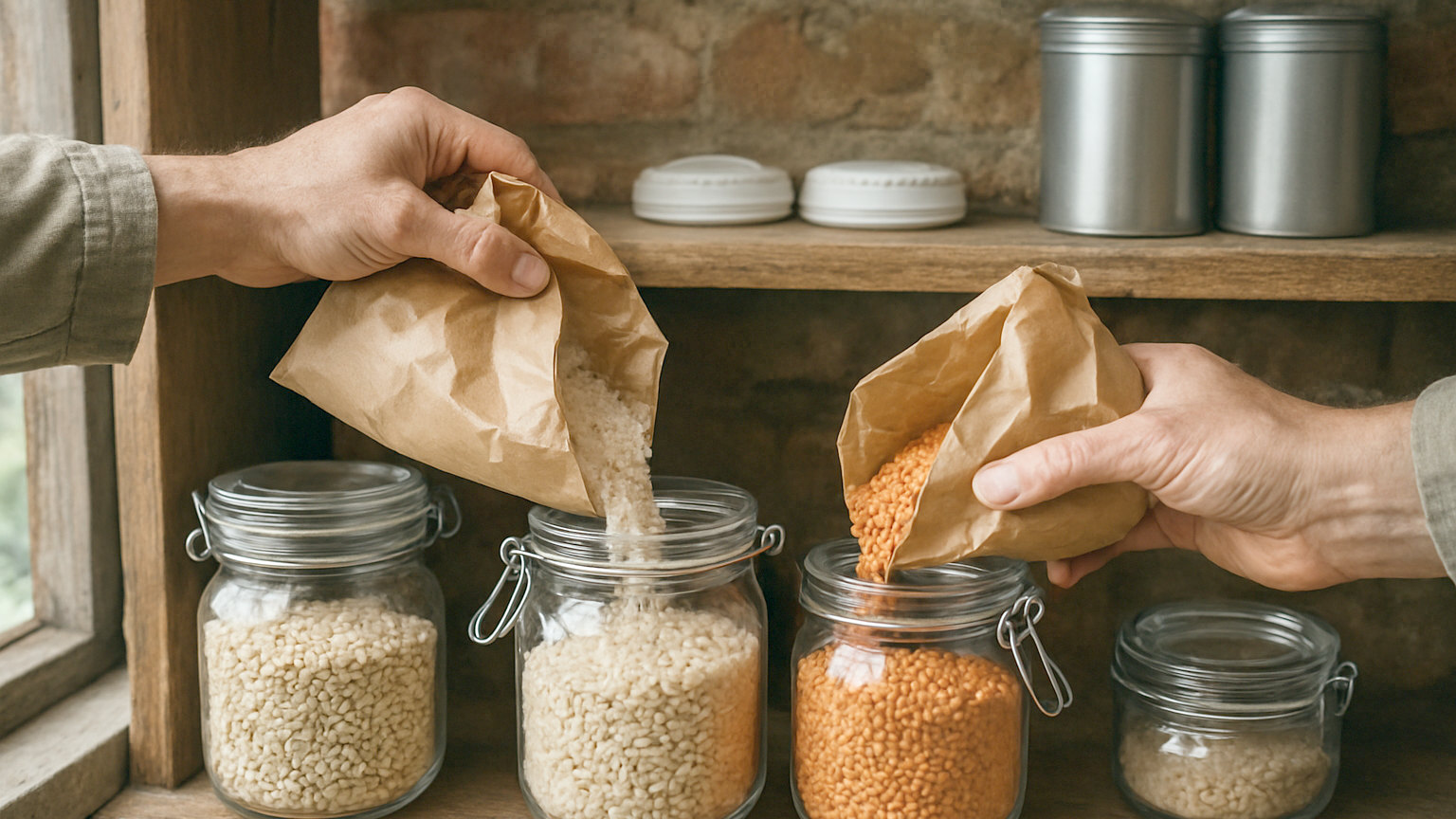
Dried staples provide the most calories per pound of any stored food and keep for years when handled properly. They also spoil readily through moisture, pests and rancidity if left in the packaging they arrive in.
Why decant them?
Because supermarket packaging is designed for transport and short term shelf display, not for storage. Paper and thin plastic admit moisture and air, tear easily, and offer no resistance to pantry moths or mice, which chew through them without difficulty. Transferring to airtight rigid containers addresses all of these at once and costs very little.
What containers work?
Glass jars with sealing lids, or food grade rigid plastic with a proper gasket. Both keep out moisture, air and pests. Glass has the advantage of being impermeable and easy to inspect, and the disadvantage of weight and breakage. Avoid soft plastic tubs with loose lids, which are neither airtight nor pest proof. Whatever you use, make sure it is food grade rather than a repurposed chemical container.
- Decant out of shop packaging into airtight rigid containers
- Freeze grain products for seventy two hours before storing
- Label everything with contents and the date
- Keep cool, dark and dry, well away from the cooker
- Add a food grade desiccant in humid conditions
- Store wholegrain products in smaller quantities and rotate faster
Which dried goods keep longest?
White rice, dried pasta, dried pulses, oats and plain flour, in roughly that order. White rice and dried beans keep for many years in good conditions. Plain white flour keeps around a year, and wholemeal considerably less, because the germ and bran contain oils that go rancid. Brown rice keeps only around six months for the same reason.
Why does moisture matter so much?
Because dried food is preserved by the absence of water, and any that gets in restarts spoilage. Even modest humidity allows mould to develop in flour and clumping in salt and sugar. Airtight containers prevent it, and in a genuinely humid location a food grade desiccant sachet adds further protection. Never store dried goods anywhere prone to condensation.
What about freezing first?
Worth doing for anything grain based. Seventy two hours in the freezer kills the moth and weevil eggs that are frequently present in flour, rice, oats, nuts and dried fruit when purchased. Allow the packet to return to room temperature before opening, so condensation forms on the outside rather than inside, then decant. This single step prevents most pantry infestations.
How should you label them?
Contents, and the date you stored it. A jar of white powder is ambiguous three months later, and flour, cornflour and icing sugar look alike. Writing the date allows rotation and tells you when something is due for use. A marker on masking tape is sufficient and can be changed when the container is refilled.
Where should they go?
Cool, dark and away from the cooker. Cupboards adjacent to an oven or above a hob experience repeated heating that shortens shelf life noticeably. Interior cupboards, a pantry, or under a bed all work. Keep containers off concrete floors, and avoid direct sunlight, which degrades both contents and some plastics.
How much is worth storing?
Enough to matter and not so much that it will not rotate. Several kilograms of rice and pasta and a few kilograms of pulses gives a household genuine depth for very little money and rotates comfortably through normal cooking. Larger quantities need proper long term methods rather than kitchen jars, and are a separate subject.
Does vacuum sealing help?
For some things, considerably. Removing air slows the oxidation that turns fats rancid, which extends the life of nuts, wholegrain flour and oats noticeably. It does less for already stable items such as white rice and pasta, where an ordinary airtight container is sufficient. Do not vacuum seal anything soft that would be crushed, and remember that vacuum sealing does not stop moisture already present in the food.
Freeze it, decant it into airtight containers, label it with the date, keep it cool and dark, and rotate the oily items faster.


