Rotation is the difference between a food store and a pile of expired tins. It requires no system beyond putting things in the right order, and it is the single habit that keeps a store alive over years.
What is first in first out?
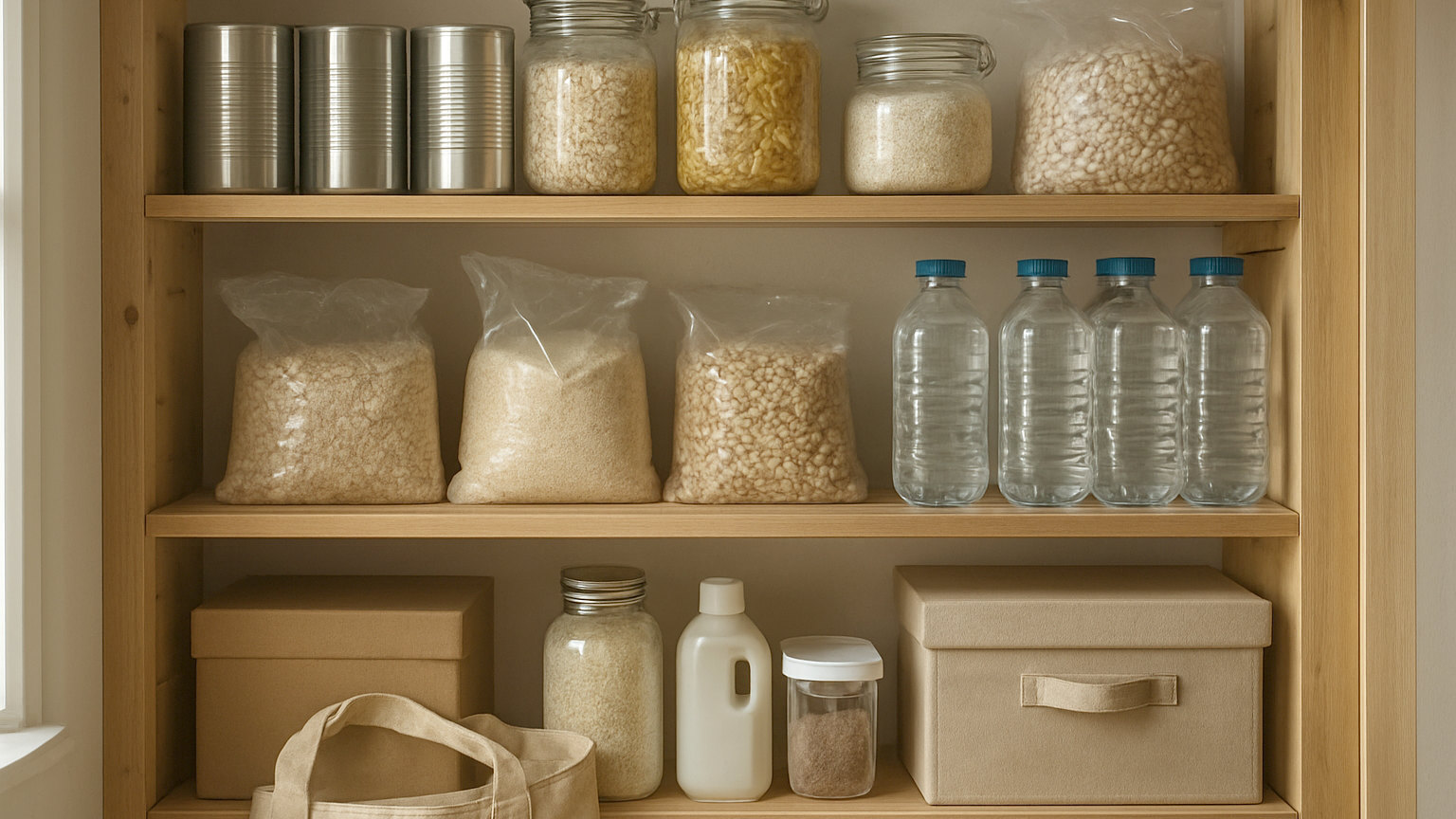
The principle that the oldest stock is used first, which is what every shop does. New purchases go behind existing ones, and you take from the front. Applied to a kitchen cupboard, it means nothing sits at the back for five years while newer items are consumed in front of it. It takes no additional time, only the discipline to load from the back.
How do you make it automatic?
By arranging the storage so the right behaviour is the easy one. Shelves loaded from behind, or a can rack where tins roll forward as one is removed, both handle it without thought. Where that is impractical, simply moving existing items forward before putting the shopping away takes seconds and achieves the same result.
- Load new purchases behind existing stock
- Write the purchase date on anything decanted
- Keep the store in the normal cupboard, not separately
- Check dates twice a year with the rest of the kit
- Move items approaching their date to the front for immediate use
- Keep a simple list of what is in the store
Why keep it in the normal cupboard?
Because separation is what kills rotation. A store kept apart, labelled for emergencies and mentally off limits will not be eaten from, and therefore will not be replaced, and therefore will expire. Integrating it means everything is in constant slow circulation, and the emergency capability is simply the depth of the cupboard rather than a distinct collection.
What about items you rarely eat?
Either stop storing them or find a use. If nobody in the house likes tinned stew, it will not rotate and will eventually be thrown away. Store what you actually eat. For the few genuinely long life items worth having despite infrequent use, such as long life milk, note the dates and plan to use them before they lapse rather than assuming you will notice.
How do you keep track?
With a list, not a spreadsheet. A sheet on the inside of the cupboard door listing what is in there and roughly how much prevents both duplication and forgotten items at the back. Some households note the earliest date in the store on the same sheet, so a glance tells you when the next check is needed. Anything more elaborate tends not to be maintained.
When should you check?
Twice a year, aligned with the rest of your preparedness review when the clocks change. Pull everything forward, check dates, move anything approaching its date to the front of the normal cupboard, and note what needs replacing. Twenty minutes covers it, and doing it alongside the smoke alarm test means it actually happens.
What do you do with things approaching their date?
Eat them. Move them to the front, build a couple of meals around them, and replace with fresh stock. Anything genuinely surplus and still well within date can go to a food bank, which many supermarkets have collection points for. Treating rotation as normal consumption rather than as disposal removes the reluctance that leaves expired items sitting in place.
How deep should the store be?
Deep enough to matter and shallow enough to rotate. A week of food for the household is a sensible target and rotates comfortably through normal use. A month is achievable and requires more attention. Beyond that, rotation becomes genuinely difficult and waste becomes likely, which is why very deep stores tend to fail rather than succeed.
Does the same apply to non food items?
Yes, and they are easier to forget. Batteries, medication, sun cream, cleaning products and water all have dates or degrade with age, and none of them naturally rotate through daily use in the way food does. Include them in the same twice yearly check, and where possible bring them into normal use, putting older batteries into remote controls and toys rather than leaving them to leak in a drawer.
Load from the back, keep it in the normal cupboard, list what is there, check twice a year, and eat what is nearing its date.