The cost objection to food storage comes from imagining it as a single purchase. Built through normal shopping over a couple of months, a week of food costs very little extra and none of it goes to waste, because it all gets eaten eventually.
What is the cheapest approach?
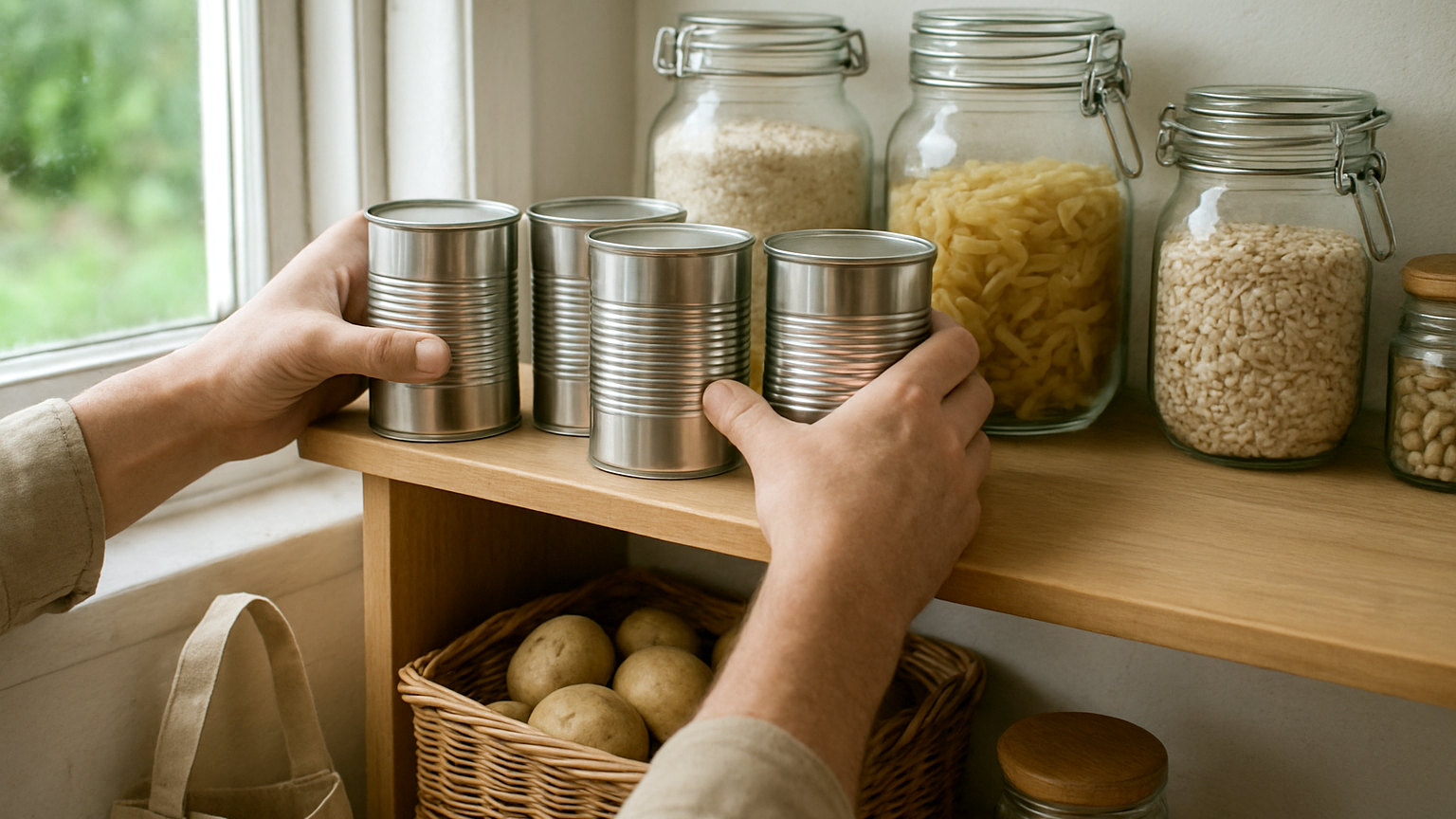
Buy one or two extra items of what you already eat on each shop. Four extra tins this week, a bag of rice and long life milk next week, a box of cereal after that. Over eight to ten weeks a household builds a full week of food at a few pounds at a time, which is far easier to absorb than a single order and produces exactly the same result.
Where is own brand fine?
Almost everywhere in this category. Tinned tomatoes, beans, vegetables, fish, rice, pasta, oats, flour, sugar and long life milk are commodity products where the branded version offers little that matters for storage. Value ranges are cheaper again and perfectly adequate for a store. The saving across a whole store is substantial and the difference in practice is minimal.
- Add one or two extra items to each normal shop
- Buy own brand or value ranges for staples
- Buy on offer and buy the largest sensible size
- Prioritise calories per pound rather than variety
- Avoid anything marketed for preparedness
- Check reduced sections for items that will store
What gives the most calories per pound?
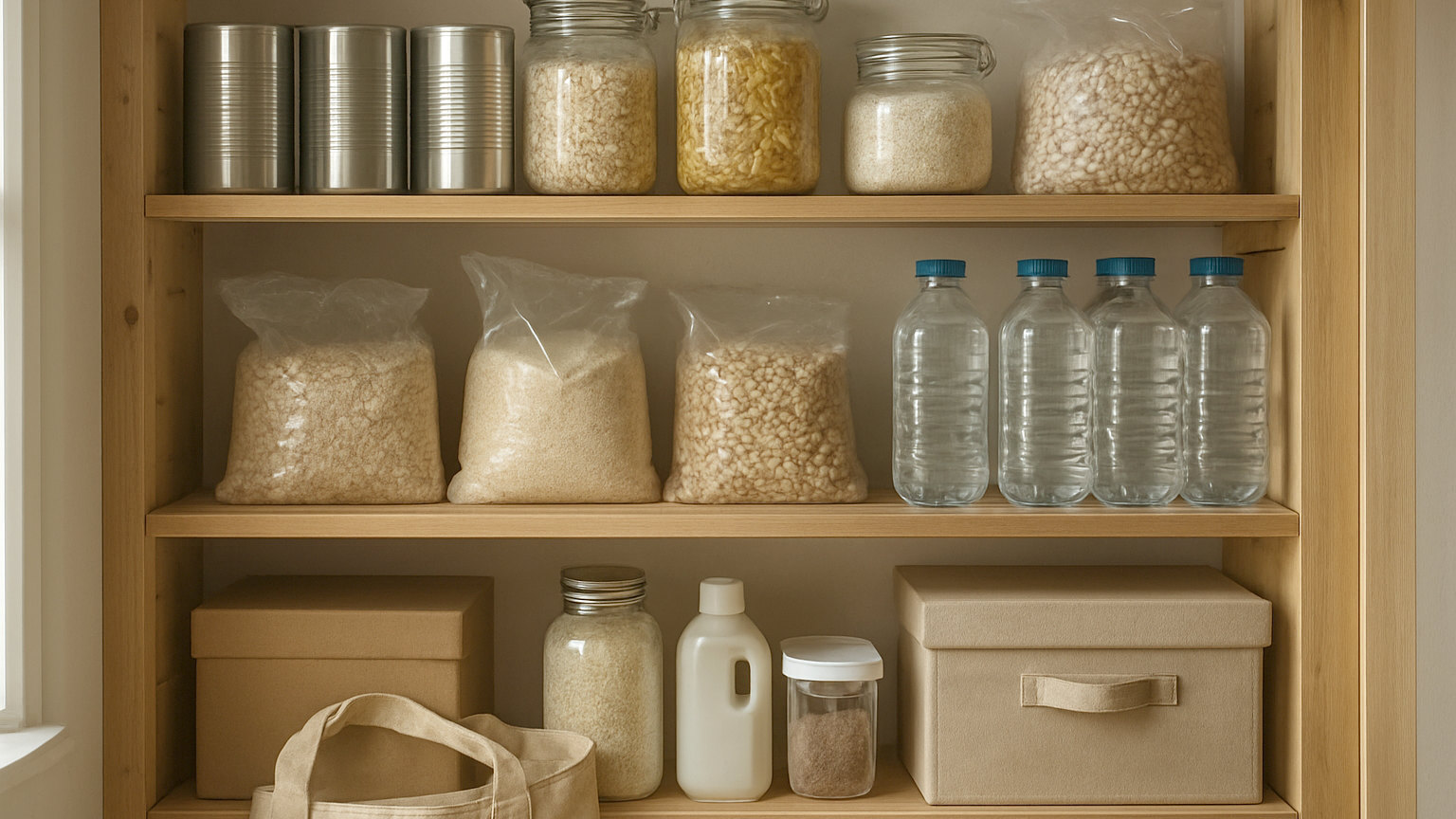
Rice, pasta, flour, oats, dried pulses, cooking oil and peanut butter. These deliver more energy per pound spent than almost anything else in a supermarket, store well, and are genuinely useful in normal cooking. A store built around them plus tinned protein and vegetables provides real depth for very little, and is nutritionally reasonable rather than merely cheap.
What should you avoid buying?
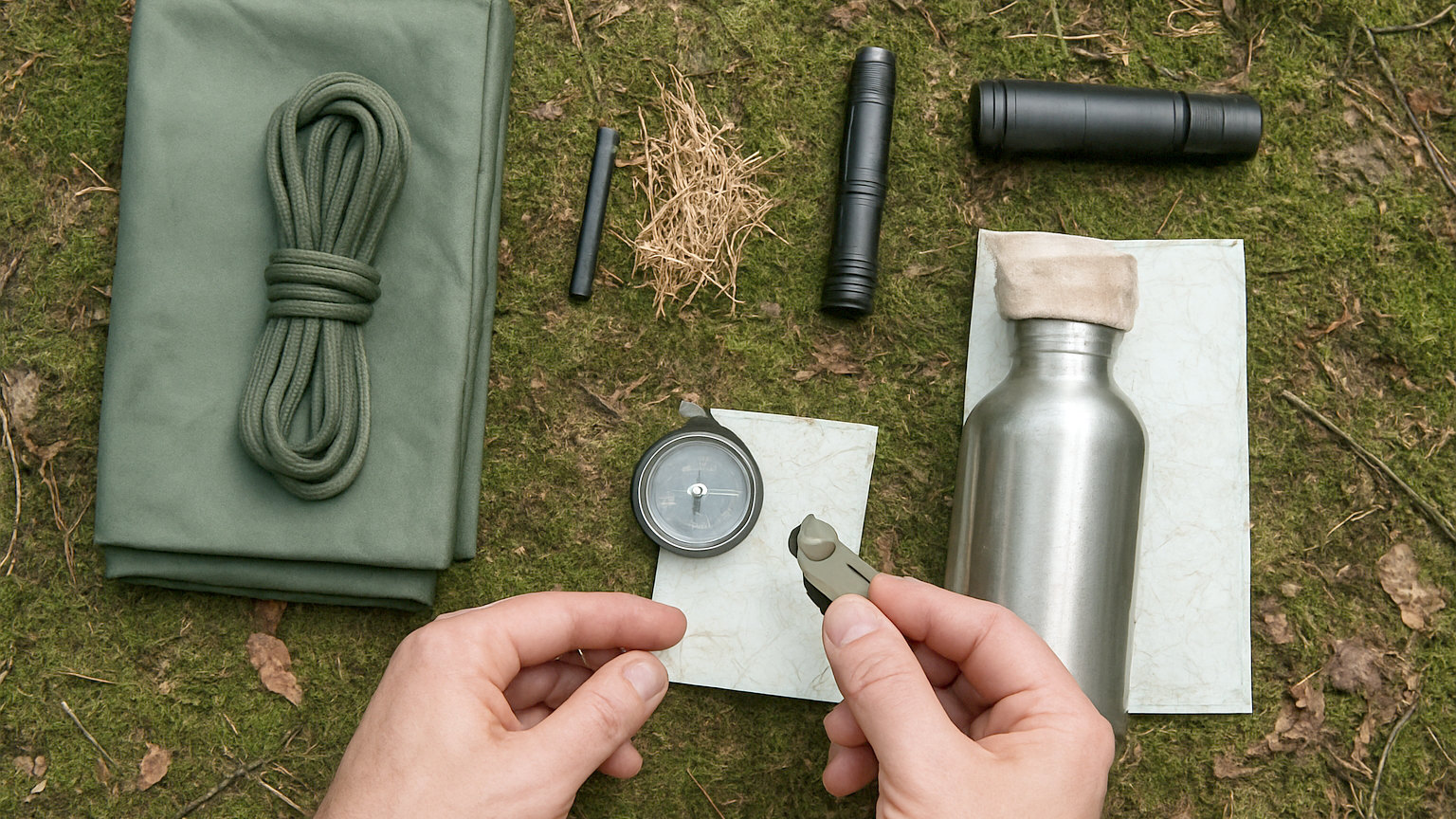
Anything sold specifically for emergencies. Ration packs and freeze dried meals cost many times the price per calorie of ordinary food, require water and heat to prepare, and are food nobody will choose to eat, which means they never rotate. Survival branded products in general carry a substantial premium for ordinary items. Ordinary shops sell better food more cheaply.
Does buying in bulk help?
Sometimes, and check the unit price rather than assuming. Larger bags of rice, pasta and flour are usually cheaper per kilogram and are worth buying if you have somewhere suitable to store them and will use them within their life. Bulk purchases of anything oily, such as nuts or wholemeal flour, are a false economy since they go rancid before you get through them.
What if money is genuinely tight?
Start with what is free or nearly free. Filling old bottles with tap water costs nothing and addresses the supply that runs out first. Then add a few tins at a time, prioritising cheap dense items. Even two or three days of food is a meaningful improvement on none, and the written plan, knowing where the stopcock is and exchanging numbers with neighbours all cost nothing at all.
Is there anything worth paying more for?
Storage containers, modestly. Good airtight jars or rigid containers protect dried goods from moisture and pests and prevent the loss of an entire cupboard to a moth infestation, which is a far larger cost than the containers. Beyond that, spend on quantity and dense staples rather than on premium versions of anything.
Does any of it get wasted?
Not if it is rotated. This is the argument that answers the cost objection completely: because the store is food you eat anyway, kept in the normal cupboard and used oldest first, the money is not spent on emergency supplies at all. It is simply shopping slightly further ahead than usual.
What about food banks and community schemes?
Worth knowing in both directions. If money is genuinely short, food banks exist for exactly that and using one is not a failure of preparedness. If you are building a store and rotating it, surplus items still well within date are welcome, and most supermarkets have a collection point. Community fridges and food sharing schemes also reduce waste and are a sensible destination for anything you have overbought.
Add a couple of items each shop, buy own brand and on offer, favour rice pasta and tins, and avoid anything sold as survival food.