
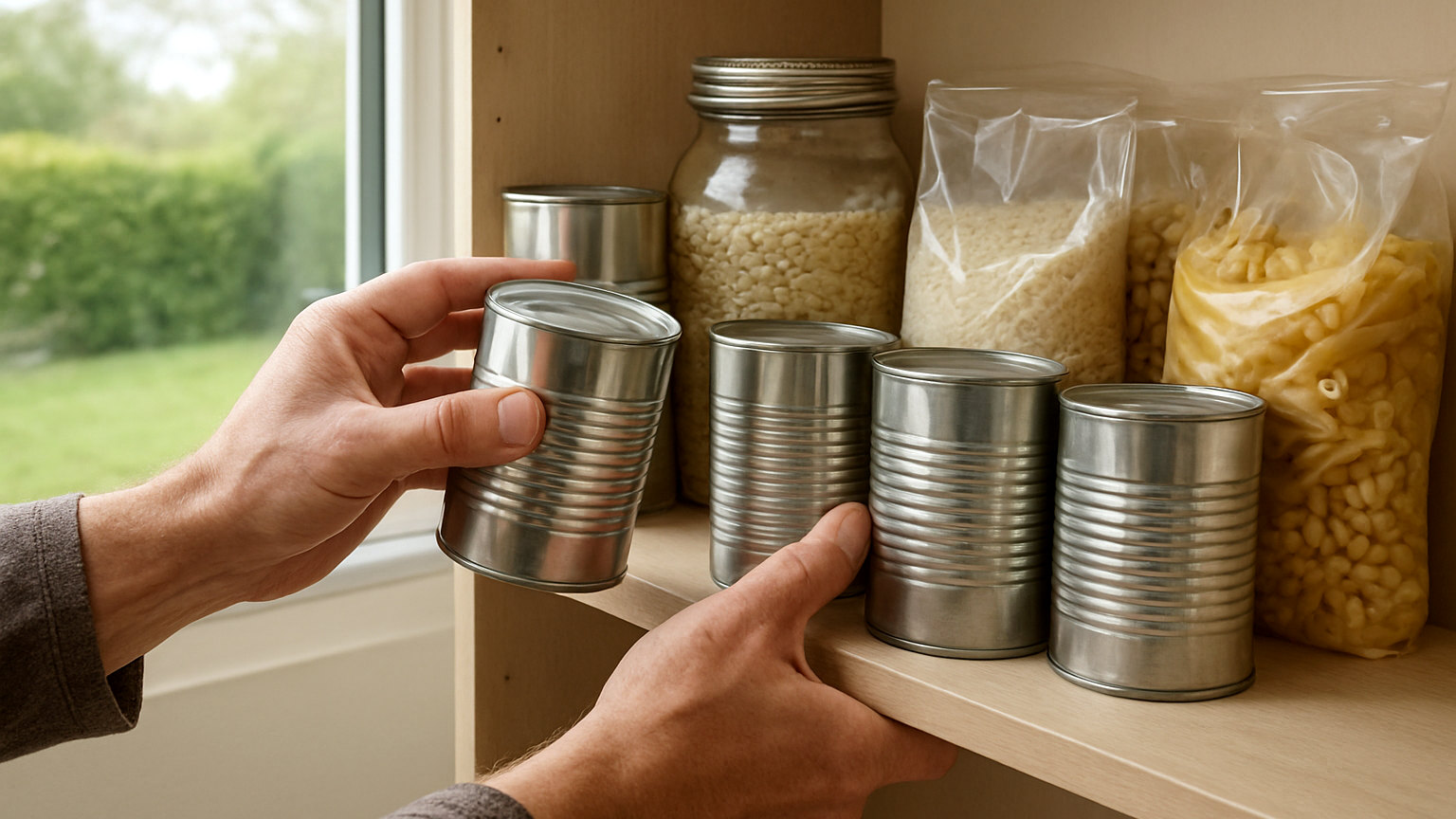
Emergency food storage is frequently presented as a separate discipline involving sealed buckets and decades long shelf lives. For almost every British household the better approach is simpler, cheaper and integrated with the way you already shop.
What are the four enemies?
Heat, light, moisture and air. Every one of them shortens shelf life, and controlling them accounts for most of what good storage means. Heat is the most significant, since chemical reactions roughly double in rate for every ten degree rise, so a store at twenty five degrees ages considerably faster than one at fifteen. Light degrades fats and vitamins. Moisture encourages mould and spoilage. Air oxidises fats and turns them rancid.
What conditions should you aim for?
Cool, dark, dry and stable. Somewhere between ten and twenty degrees is ideal, with low humidity and no direct sunlight. Stability matters as much as the absolute figure, since repeated warming and cooling drives moisture in and out of packaging and accelerates deterioration. A cupboard in the main house is usually better than a garage or a loft for exactly this reason.
- Keep it cool, ideally between ten and twenty degrees
- Keep it dark, since light degrades fats and vitamins
- Keep it dry, with low humidity and no condensation
- Keep it airtight once packets are opened
- Keep it off bare concrete floors
- Rotate it through normal use rather than isolating it
Why integrate it with normal shopping?
Because a separate store is a store that expires unnoticed. Keeping emergency food in the ordinary cupboard, buying a little extra of what you already eat, and using the oldest first means nothing goes to waste and the store stays current without any special effort. The alternative, a sealed box opened once a decade, produces both waste and food nobody wants to eat.
What should the store contain?
Food that needs no refrigeration, keeps for months or years, and requires little or no cooking. Tinned protein and vegetables, dried staples, long life milk, cereals, biscuits, nuts, dried fruit and spreads. Include things people actually like, since morale matters and children in particular will refuse unfamiliar food when anxious.
How do you organise it?
By date, with the oldest at the front. This is the first in first out approach shops use, and it requires only that new purchases go behind old ones. Label anything decanted into containers with the date. Keep a simple list on the cupboard door of what is in there, which prevents both duplication and forgotten items at the back.
Where should it not go?
Garages, lofts, sheds and under the sink. Garages and sheds are damp and swing widely in temperature, rusting tins and softening packaging. Lofts reach high temperatures in summer that dramatically shorten shelf life. Under the sink is damp and shares space with cleaning chemicals. None of these are suitable for anything you intend to eat.
Does packaging matter?
A great deal once opened. Original sealed packaging is designed for the job, and the moment it is opened the clock speeds up. Decant opened dried goods into airtight containers, preferably glass or hard plastic rather than bags, which also keeps out pests. Tins and jars need no help until opened, at which point contents should be transferred to a container and refrigerated.
How much effort is this really?
Very little once set up. Buying a few extra tins a week for a couple of months builds the store. Putting new items behind old ones takes no time at all. A twice yearly check for anything approaching its date, aligned with the rest of your preparedness review, keeps it healthy. It is among the least demanding parts of household preparedness.
What should you avoid storing altogether?
Anything nobody in the house will eat, and anything needing refrigeration. A store of tinned food chosen because it keeps well rather than because anyone likes it will still be there in five years, expired and wasted. The same applies to unfamiliar items bought for their shelf life. Buy what you cook with, since the store only works when it is part of normal consumption rather than a separate collection nobody touches.
Cool, dark, dry, airtight and rotated through normal use. That covers almost everything, and the cupboard beats the garage.


