Emergency food advice is written for a household with no dietary restrictions, and it fails completely for anyone who cannot eat what it recommends. Restricted diets need their own provision, planned deliberately.
Why does a general store not work?
Because substitution is not possible. Someone with coeliac disease cannot eat the pasta and bread that form the backbone of a standard store. Someone with a nut allergy cannot rely on the nuts and peanut butter recommended for calorie density. A diabetic needs predictable carbohydrate. In each case the general advice provides food that is either useless or dangerous.
What should you store separately?
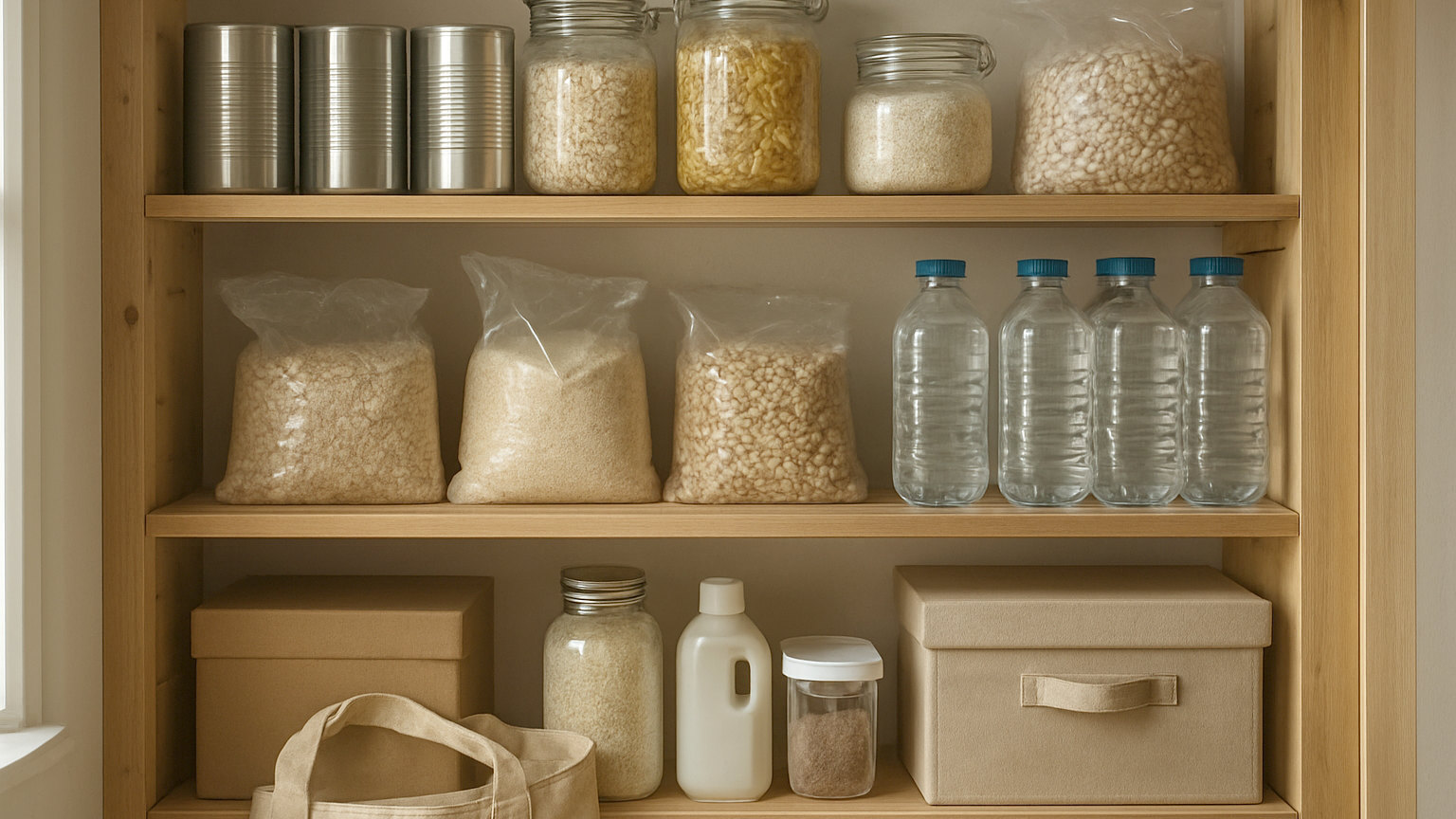
Enough safe food for the same period as everyone else, chosen from products the person already eats and tolerates. Gluten free pasta, bread and flour for coeliac disease. Nut free spreads and snacks. Dairy free milk alternatives, which come in long life cartons and store well. Low sugar options where relevant. Keep it in the same depth as the main store rather than as a token gesture.
- Store safe food to the same depth as the general store
- Segregate physically to prevent cross contamination
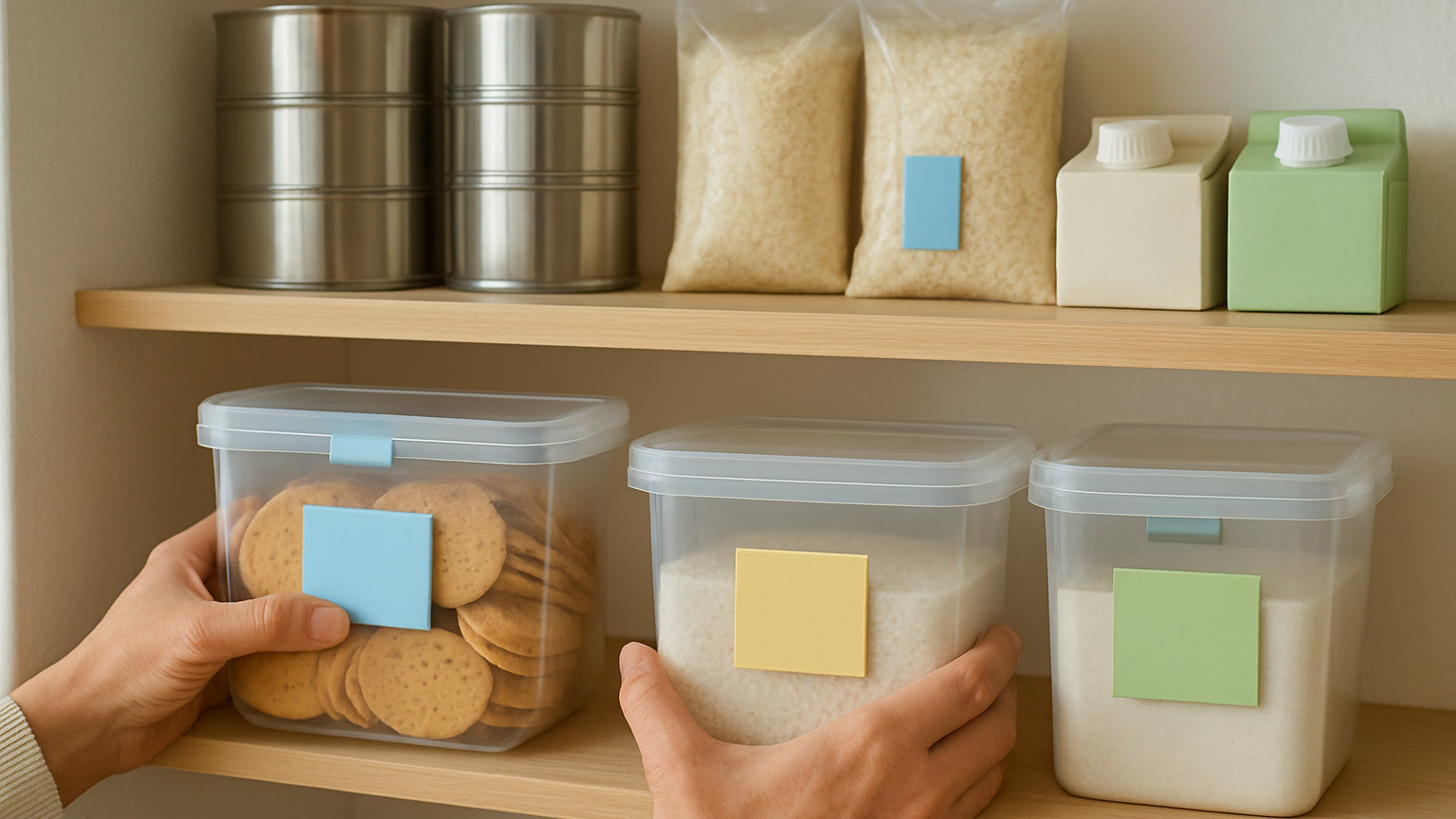
- Label clearly, including for anyone else who might serve it
- Choose products the person already eats and tolerates
- Keep antihistamines and any adrenaline auto injector accessible
- Rotate it alongside everything else
How do you prevent cross contamination?
By separating physically and labelling clearly. Keep allergen free items in their own sealed containers on a separate shelf or in a separate box, ideally above rather than below other items so nothing can spill down into them. Use dedicated utensils where the allergy is severe. In an emergency, food may be prepared by someone unfamiliar with the household, which is exactly when clear labelling matters most.
What should be written down?
The allergy or requirement, its severity, what to avoid, and what to do in a reaction. Put it in the household plan and in the grab bag, and make sure more than one person knows. Include the location and use of any adrenaline auto injector. A rest centre, a relative or a neighbour helping out needs this information in writing rather than in someone memory.
Can rest centres cater for restricted diets?
Sometimes, and not reliably at short notice. Rest centres provide basic catering and will do their best, and complex or severe requirements are difficult to accommodate in the first hours. This is a strong argument for carrying safe food in the grab bag rather than assuming it will be available. Tell staff on arrival so arrangements can be made.
What about medication?
It belongs alongside the food provision. Antihistamines, adrenaline auto injectors, insulin and enzyme supplements should all be in the grab bag and stocked at home. Anything requiring refrigeration needs its own plan, since a power cut removes that. Ask the pharmacist what temperature range matters and how long the medicine tolerates being warmer.
What about babies and formula?
Specialist formulas for allergies or medical conditions are frequently harder to obtain and cannot be substituted, so a deeper reserve is justified. Ready to feed cartons requiring no water are particularly valuable, since they work during a power cut or a boil water notice. Speak to a health visitor or dietitian about maintaining a sensible buffer.
How do you keep it current?
By rotating it with everything else, twice a year. Specialist products frequently have shorter shelf lives and are more expensive, which makes waste more painful and rotation more important. Buying slightly ahead through normal shopping rather than making special purchases keeps it fresh at no additional cost.
What about religious and ethical requirements?
They deserve the same deliberate provision. Halal, kosher, vegetarian and vegan requirements are straightforward to stock for, since suitable tinned and dried products are widely available, and they should be part of the planned store rather than an afterthought. As with allergies, the point is that generic emergency provision will not reliably meet the requirement, and carrying your own removes any dependence on what happens to be offered.
Store safe food to the same depth, segregate and label it clearly, write the requirement down, and carry safe food rather than relying on provision.