Tinned food is the backbone of most emergency stores, and the printed date causes a great deal of unnecessary waste. Understanding what the date means and what actually determines safety makes a store considerably more useful.
What does the date on a tin mean?
Quality, not safety. Tins carry best before dates, indicating when the contents are at their best in terms of flavour, texture, colour and nutritional value. Provided the tin is undamaged and has been stored properly, the contents remain safe well beyond that date. The canning process sterilises the contents and the sealed tin keeps them that way.
How long do they actually keep?
It depends on acidity. Low acid contents such as vegetables, beans, meat, fish and soup commonly remain good for several years past the date, sometimes considerably longer. High acid contents such as tomatoes, fruit, and anything in vinegar deteriorate sooner, typically within one to two years, because the acid slowly reacts with the tin lining, softening texture and dulling flavour. Neither change makes the food unsafe.
- Low acid tins: vegetables, meat, fish, beans, several years
- High acid tins: tomatoes, fruit, one to two years for best quality
- Discard any bulging, leaking or badly rusted tin unopened
- Discard tins with dents on a seam or a sharp crease
- Surface rust that wipes off is usually harmless
- Never taste the contents of a suspect tin
Which tins must be discarded?
Any that is bulging or swollen at either end, leaking, spurting when opened, badly rusted through, or dented across a seam. A bulge indicates gas produced by bacterial growth inside, which in low acid foods can mean Clostridium botulinum. Botulinum toxin is extremely dangerous and cannot be detected by smell or taste. Discard such tins without opening, do not taste anything, and wash your hands after handling.
Does a dent matter?
It depends where. A shallow dent on the body of a tin is generally harmless. A dent on a seam, or one sharp enough to have creased the metal, can compromise the seal and allow bacteria in, which makes the tin unsafe regardless of the date. Dented tins sold cheaply are worth avoiding for a store, however tempting the price.
What about rust?
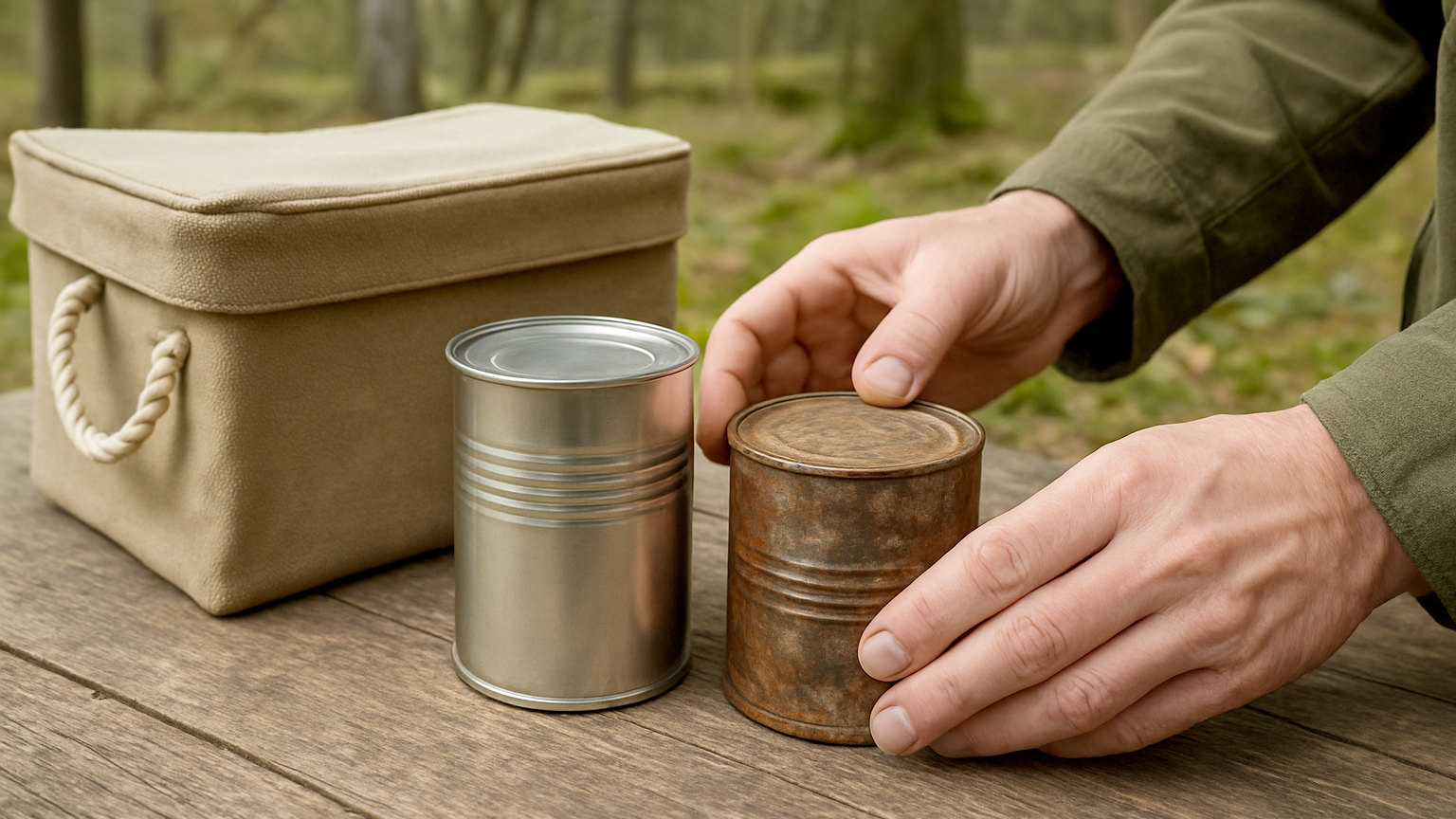
Light surface rust that wipes away leaving sound metal is not a problem. Rust that has pitted the surface, flakes away leaving rough metal, or has penetrated the tin means it should be discarded. This is the main reason not to store tins in a garage or a shed, where damp causes rusting within a season or two.
Does the quality decline noticeably?
Gradually. Vegetables soften, colours dull, and vitamin content declines slowly over years. Texture is usually the first thing to go. The food remains nutritious in terms of calories, protein and minerals long after it stops being at its best. For emergency purposes this is entirely acceptable, which is why tins remain such a good foundation.
How should you store them?
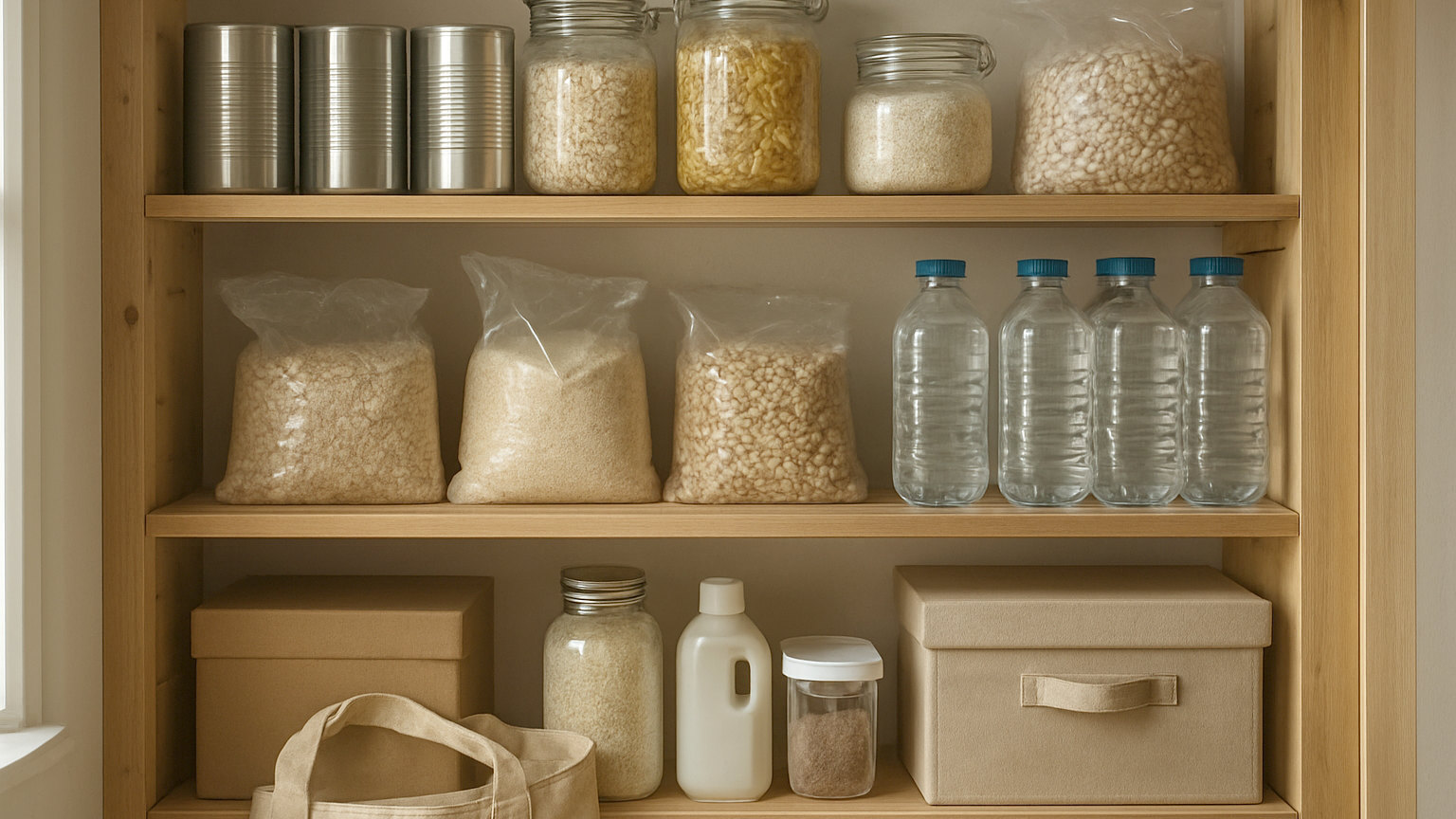
Cool, dry and off the floor. Between ten and twenty degrees, away from damp and temperature swings, and on a shelf rather than on concrete. Under a bed or in a hall cupboard is ideal. Keep labels intact or write the contents and date on the lid with a marker, since labels fall off over years and an unmarked tin is a lottery.
What is the practical approach?
Rotate normally, do not panic about dates, and inspect the tin rather than the label. A tin from the back of a cupboard that is three years past its date and physically sound is fine. A tin within date that is bulging is not. That ordering of priorities is the whole subject.
What about jars and pouches?
Similar principles with different failure signs. A jar lid should be slightly concave and should pop when first opened, and a lid that is already domed or that does not pop has lost its seal and should be discarded. Retort pouches, used increasingly for fish, rice and ready meals, keep well but are vulnerable to punctures and abrasion, so check for pinholes and avoid stacking anything heavy on them.
Judge the tin, not the date. Discard anything bulging, leaking, seam dented or rusted through, and store them cool and off the floor.