
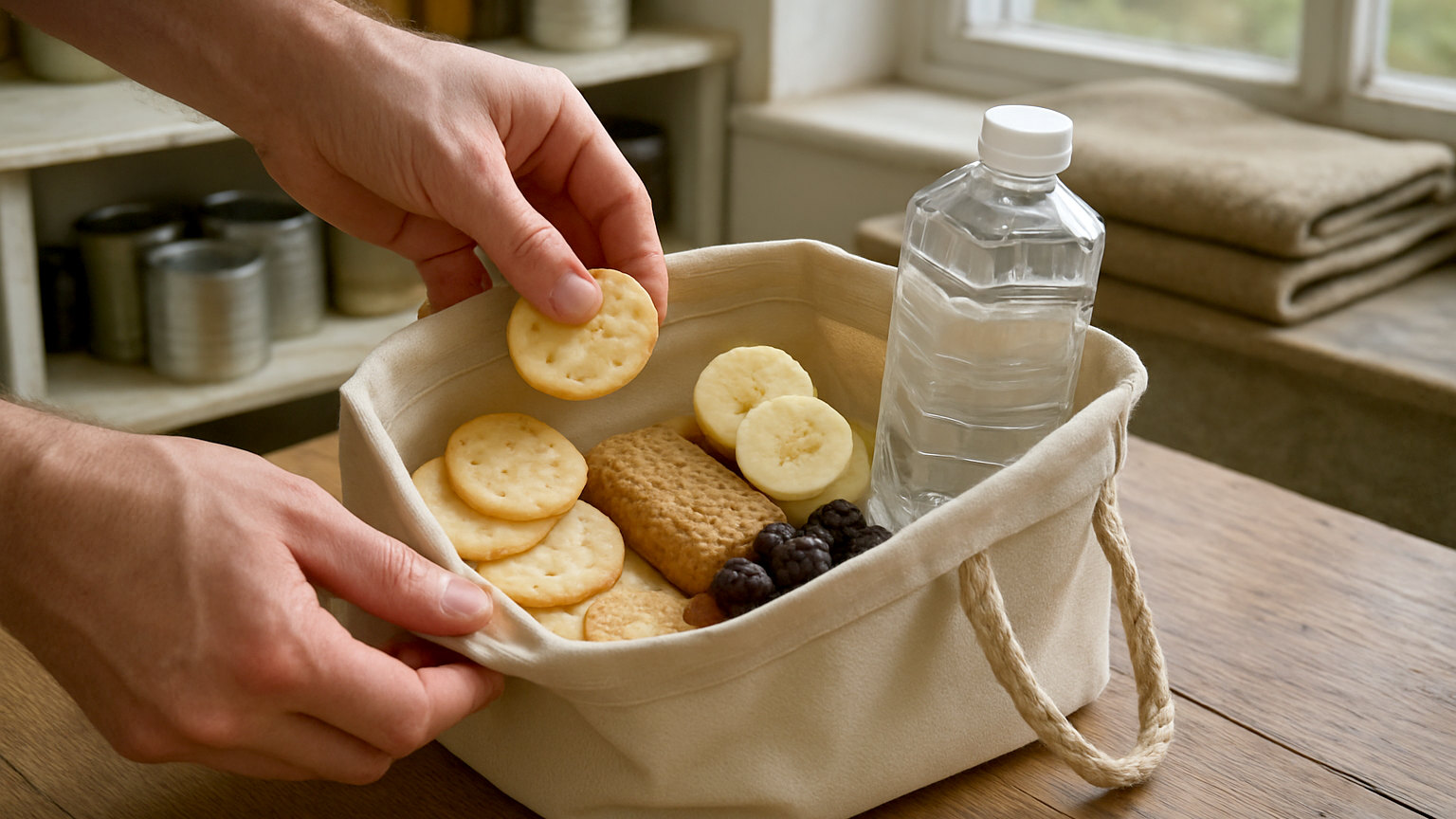
Children eat differently under stress, and planning for that is more useful than planning for what they ought to eat. The food that works is the food they already like.
Why does familiarity matter so much?
Because anxious children reject unfamiliar food, reliably and without negotiation. This is a normal response and not something to be reasoned away, and a parent trying to persuade a frightened child to try tinned stew is spending energy neither of them has. A store containing food they already eat removes the problem entirely, even where that food is not what you would choose nutritionally.
What should you stock?
The things they eat now. Their usual cereal, their preferred bread or crackers, the pasta shapes they like, the yoghurt style pouches that keep at room temperature, familiar snack bars, dried fruit and biscuits. Add long life milk, which many children will drink happily and which supplies protein and calcium when little else does.
- Cereal, bread, crackers and pasta they already eat
- Long life milk and shelf stable yoghurt pouches
- Familiar snacks, bars and dried fruit
- Smaller portions offered more frequently
- Plenty to drink, since children dehydrate quickly
- A few specific treats held in reserve
How should you time meals?
Small and often. Disrupted children eat less at a sitting and graze more readily, so offering something every couple of hours works better than three large meals they will refuse. Keep the timing roughly normal where you can, since routine is reassuring, and do not make an issue of a missed meal provided they are drinking.
Why is drinking more important than eating?
Because children dehydrate considerably faster than adults, having a higher surface area relative to body mass. A child who is off their food for a day is fine. A child who is not drinking needs attention. Offer drinks frequently and in small amounts, and watch for reduced wet nappies or trips to the toilet, dry lips, unusual drowsiness or irritability.
What about babies?
They need specific and non negotiable provision. Ready to feed formula cartons are the most valuable item in any household with a formula fed baby, because they need no water, no sterilising and no measuring, which matters during a power cut or a boil water notice. Powdered formula must be made with water hot enough to kill bacteria in the powder, which is difficult without a kettle.
What about breastfeeding?
It is the most resilient option available, requiring nothing external, and supporting the mother is what protects it. Stress and dehydration can affect supply, so priority should go to keeping her warm, fed, hydrated and rested. A hand pump needing no power is worth having if expressing is part of the routine, since electric pumps stop working.
What about weaning age children?
Pouches and jars of baby food need no preparation and keep well, which makes them well suited to a store. Keep a reasonable quantity in the flavours the child accepts, rotate them through normal use, and check dates at every review since they turn over quickly. Plain options such as rice cereal mixed with formula or long life milk are useful fallbacks.
How do you keep it calm?
By making mealtimes as ordinary as possible. Sitting together, keeping the usual order of the day, and letting children help where they can all reduce anxiety. Avoid discussing the situation over food. If a child is refusing to eat, offer something they like and move on rather than turning it into a confrontation.
What if they refuse everything?
Concentrate on fluids and let the food follow. A child who drinks and eats almost nothing for a day is not in difficulty, whereas one who is not drinking is. Offer milk, which supplies both fluid and calories, and small amounts of whatever they will accept without turning it into a negotiation. Appetite returns as the situation settles, and pressure at the table generally delays that rather than helping.
Stock what they already eat, offer small amounts often, prioritise drinking over eating, and keep ready to feed formula for any baby.


