
Illness during a disruption compounds everything. Someone with a stomach upset loses fluid at the moment clean water may be scarce, and the household loses whoever would otherwise be organising things.
What matters most?
Fluid, not food. A person with vomiting or diarrhoea can lose several litres a day, and dehydration is what makes people seriously unwell rather than the infection itself. Someone who is not eating for a day or two is fine. Someone who is not drinking needs attention, and children and older people deteriorate considerably faster than healthy adults.
What should you keep for it?
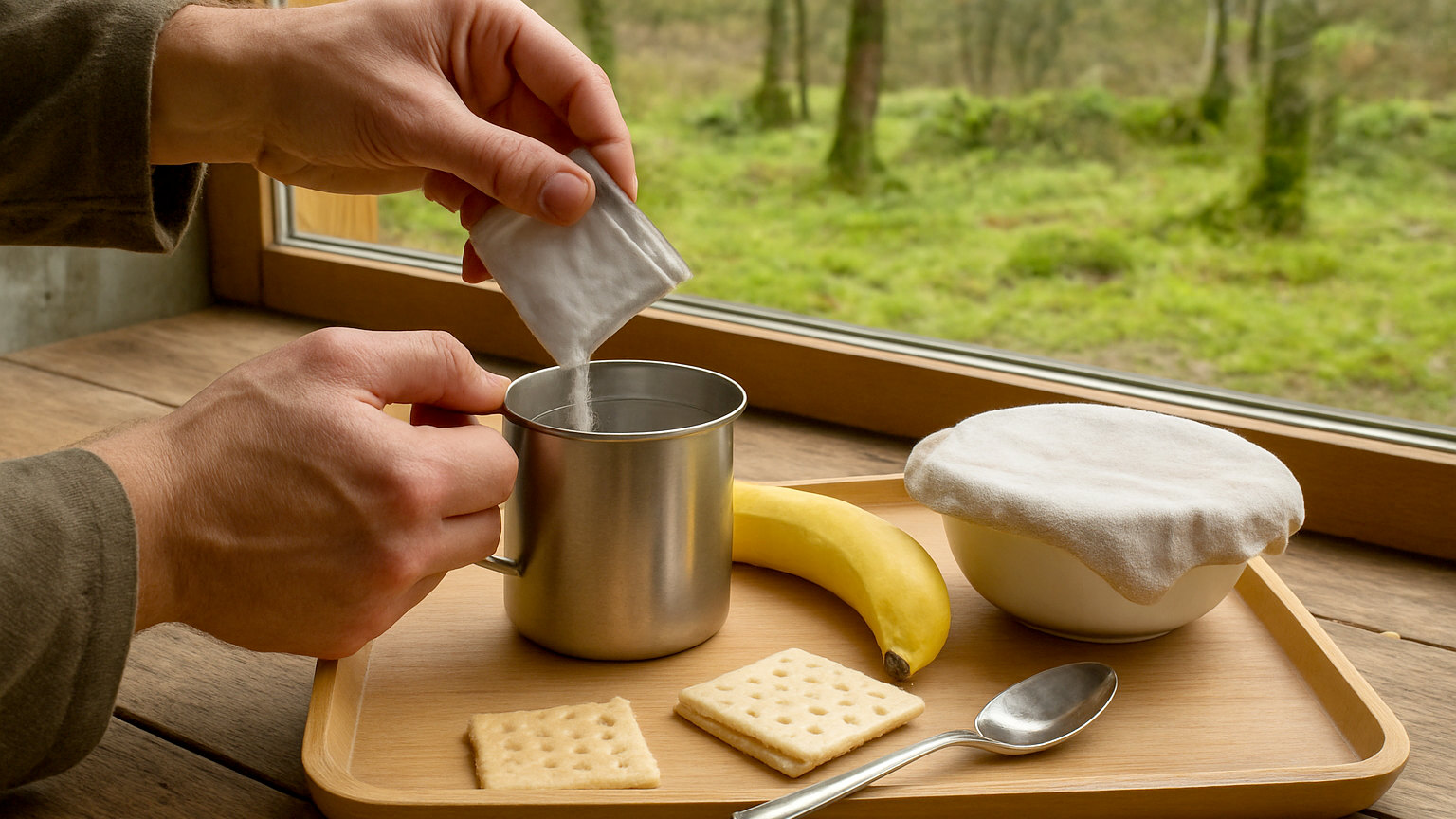
Oral rehydration sachets, which are cheap, keep for years, weigh nothing and are almost never in the cupboard when needed. They contain the correct balance of salts and sugar to help the gut absorb water, which plain water alone does less effectively when someone is losing fluid rapidly. A box of them is among the highest value items in any household store.
- Oral rehydration sachets, the single most useful item
- Plain fluids: water, weak squash, clear soup
- Bland starchy food: toast, crackers, plain rice, bananas
- Paracetamol for fever and discomfort
- Small frequent sips rather than large drinks
- Extra clean water, since illness raises the requirement
How should fluids be given?
Small amounts, frequently. Someone who is vomiting will bring up a large drink and keep down repeated small sips, so a teaspoon or a mouthful every few minutes works far better than a glass every hour. Persist, since it feels ineffective and adds up substantially over an hour. Cool fluids are usually tolerated better than warm ones.
What food is tolerated?
Bland, starchy and simple, once they can keep fluids down. Toast, plain crackers, plain rice, boiled potato, bananas and plain biscuits are the traditional options and remain reasonable. Reintroduce normal food as appetite returns rather than restricting for long, since prolonged bland diets are no longer recommended and slow recovery. Avoid very fatty, spicy or heavily seasoned food initially.
What about a cold or flu?
Fluids, warmth and whatever they will eat. Hot drinks, soup and honey are comforting and do no harm. Paracetamol manages fever and aches. There is no need to force food, and a day or two of poor appetite matters very little. What matters is that they keep drinking and stay warm, particularly in a house with no heating.
When should you seek help?
Contact 111 for advice if symptoms persist beyond a few days, if there is blood, if fluids cannot be kept down at all, if there is a high fever, or if the person becomes drowsy or confused. Call 999 for severe symptoms. Reduced urination, dry mouth, sunken eyes and unusual drowsiness all indicate significant dehydration and warrant medical advice, particularly in children and older people.
How do you stop it spreading?
Hand washing with soap and water, which matters more than anything else and is not replaced by alcohol gel for some organisms. Keep the ill person to one room and one bathroom where possible, do not share towels, and wash their laundry separately at a high temperature. This is harder during a water interruption, which is a reason to reserve some clean water specifically for hygiene.
What does the household need?
More clean water than the standard calculation suggests. Illness raises fluid requirement sharply, adds laundry, and demands more hand washing. A household planning three litres per person per day should hold more where anyone is unwell, and should treat rehydration sachets as an essential rather than an optional extra.
Can you improvise rehydration solution?
You can, and commercial sachets are considerably better. The World Health Organization publishes a formulation based on salt and sugar in clean water, and getting the proportions wrong makes it less effective or, if too concentrated, actively worse. Given that sachets cost very little, keep for years and remove the risk of measuring incorrectly while stressed and tired, they are the sensible thing to have and improvisation should be the fallback rather than the plan.
Keep rehydration sachets, give small frequent sips, offer bland starchy food when tolerated, and hold extra water for illness and hygiene.


