
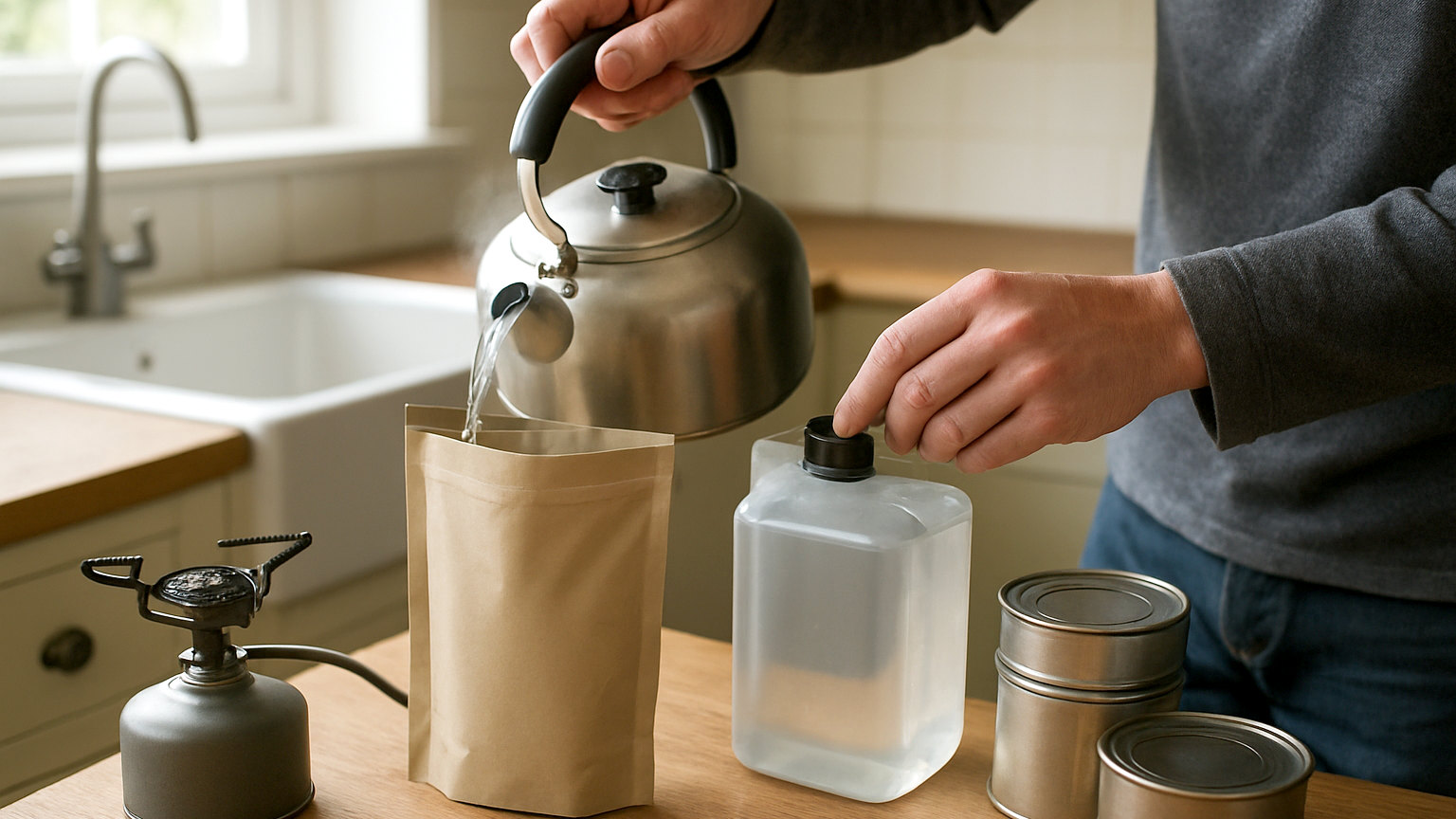
Freeze dried food is heavily marketed to the preparedness audience on the strength of a twenty five year shelf life. It is a genuinely impressive technology with one characteristic that undermines it for household emergency use.
What is it?
Food frozen and then placed under vacuum so that the ice sublimates directly to vapour, removing almost all moisture while leaving the structure intact. The result is very light, keeps for decades in sealed packaging, and rehydrates in minutes with hot water. It is the technology behind most backpacking meals and long shelf life emergency food buckets.
What is the problem for household use?
It needs water and heat, and both may be exactly what you are short of. A power cut removes the kettle, and a burst main or boil water notice removes the water. Food requiring three hundred millilitres of boiling water per portion is a poor choice when water is being rationed and the hob does not work. Ordinary tinned food, which arrives with its own liquid and needs nothing, is better suited to the likely scenario.
- Very light, which matters for carrying and not for cupboards
- Shelf life of decades in sealed packaging
- Requires both water and heat to prepare
- Expensive per calorie compared with tinned and dried food
- Excellent for backpacking and expeditions
- Poor fit for the typical British household disruption
How does the cost compare?
Poorly, for building depth. Per thousand calories, freeze dried meals cost substantially more than rice, pasta, tinned goods and oil. A household aiming for a week of food will spend several times as much going down this route, and will end up with food nobody eats in normal circumstances, which means it sits unrotated until it expires.
Where is it genuinely the right answer?
Where weight and volume are the binding constraints. Backpacking, expeditions, mountaineering, sailing and any situation where you carry everything. Also for a very long term reserve that you accept will not rotate, where the decades long shelf life is the point. In those contexts it is excellent and nothing else does the job.
Does it really last twenty five years?
In ideal conditions and sealed packaging, the manufacturers make that claim and it is broadly credible for properly processed products stored cool. In practice, storage conditions matter enormously, and a bucket kept in a loft reaching thirty five degrees will not achieve anything like it. Quality also declines gradually even where safety does not.
What about dehydrated food generally?
Similar considerations at lower cost. Dried pasta, rice, pulses, dried milk, dried vegetables and instant mash are all dehydrated and all need water, but they are cheap, familiar and rotate through normal cooking. They occupy the sensible middle ground: much of the weight and shelf life benefit at a fraction of the price, and food you will actually eat.
What should a household buy instead?
Tins, dried staples, long life milk and oil, which together give a week of food for a modest sum and rotate naturally. Add a small quantity of freeze dried or ration pack meals for the grab bag, where weight matters and preparation constraints are different. That combination covers both the likely and the unlikely without wasting money.
Is there a case for a long term reserve?
For some households, yes. Anyone genuinely remote, anyone with a dietary requirement that is hard to source, or anyone who simply wants a set aside reserve they will never rotate can reasonably buy a quantity and forget about it. Just be clear that it is a reserve behind the working store rather than a substitute for one.
How should you store it if you buy it?
Cool and dark, and sealed until use. The long shelf life claims assume stable moderate temperatures, so a loft or a garage undermines the main reason for buying it. Once a pouch or a tin is opened the contents deteriorate quickly, since the technology depends on the absence of both moisture and air, so buy portion sizes matching how you would actually use them rather than the largest available.
Excellent for carrying, poor value for a cupboard, and unsuited to an emergency where water and heat are the things you are short of.


