Stored food is chosen for shelf life rather than flavour, and a week of it unadorned is genuinely dispiriting. The remedy costs very little, weighs almost nothing and keeps for a long time.
What are the essentials?
Salt, black pepper, stock cubes, cooking oil and a handful of dried herbs and spices. These five between them lift almost anything. Salt in particular is transformative and is the thing most often missing, since people store food and forget that unsalted tinned vegetables and plain rice taste of very little.
Why do stock cubes matter so much?
Because they turn water into a base. A stock cube converts plain boiled rice, pasta or lentils into something that tastes deliberate, and it makes a soup out of whatever vegetables remain. They are cheap, keep for a long time, take almost no space and are among the highest value items per gram in any store. Keep both vegetable and meat versions if the household eats both.
- Salt and black pepper, the foundation
- Stock cubes, which turn water into a base
- Cooking oil, for both flavour and calories
- Dried herbs: mixed herbs, oregano, bay
- Spices: chilli, paprika, cumin, curry powder
- Vinegar, soy sauce and hot sauce for sharpness
What does oil contribute?
Flavour, texture and calories, in a very small volume. A spoonful of oil makes tinned pulses palatable and adds around a hundred calories, which matters when energy is needed. It also allows frying, which develops flavour in a way boiling cannot. Keep a modest bottle and rotate it, since oil goes rancid within a year or so.
Which spices earn their place?
Chilli, paprika, cumin, curry powder and mixed herbs cover most cuisines and most stored ingredients. Ground spices lose potency within a year or two and remain usable, so rotation is worthwhile but not urgent. A small selection is far more useful than a large one, since a week of disruption is not the moment to be balancing a complex spice blend.
What adds sharpness?
Vinegar, lemon juice in a bottle, soy sauce, mustard, hot sauce and pickles. Stored food tends toward the soft, sweet and bland, and acidity cuts through that. A splash of vinegar in a lentil soup or hot sauce on tinned beans makes a considerable difference for almost no weight. These also keep more or less indefinitely.
How do you build flavour without fresh ingredients?
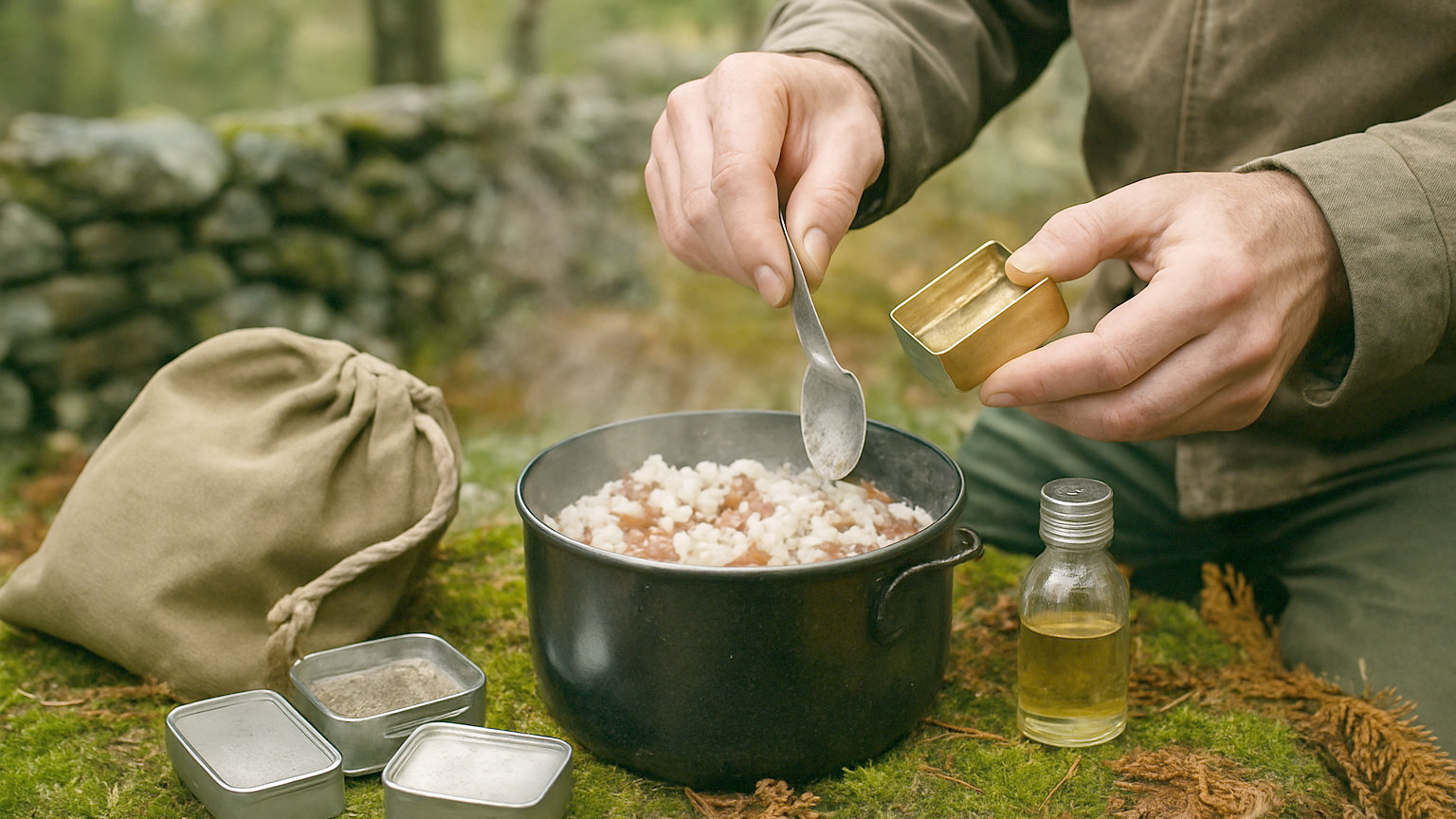
Layer what you have. Fry onion in oil if you have it, since onions keep for weeks and are the base of most savoury cooking. Add garlic, dried or fresh. Add spices and let them cook briefly in the oil, which develops them far more than adding at the end. Then the tinned or dried element and stock. That sequence produces something recognisable from very little.
What about texture?
It matters as much as flavour and is easily overlooked. A week of soft food is wearing, so crackers, oatcakes, nuts and crisp items provide contrast that makes meals more satisfying. Toasting bread or frying a slice of stale loaf transforms it. Small textural variations do a surprising amount for how a repetitive diet feels.
What should you keep in a grab bag?
A tiny version of the same: a few salt and pepper sachets, a couple of stock cubes and a small bottle of hot sauce weigh nothing and improve a rest centre meal or a ration pack considerably. Sachets from takeaways serve well and cost nothing.
How long do seasonings keep?
Salt and sugar effectively forever, and everything else on a slower clock than people assume. Dried herbs and ground spices lose potency over one to two years rather than becoming unsafe, so an older jar simply needs using more generously. Stock cubes keep for a year or two. Oil is the exception and goes rancid, so it should be rotated annually and kept away from light and heat.
Stock salt, pepper, stock cubes, oil and five spices, keep onions and vinegar, and fry the aromatics before anything else.