
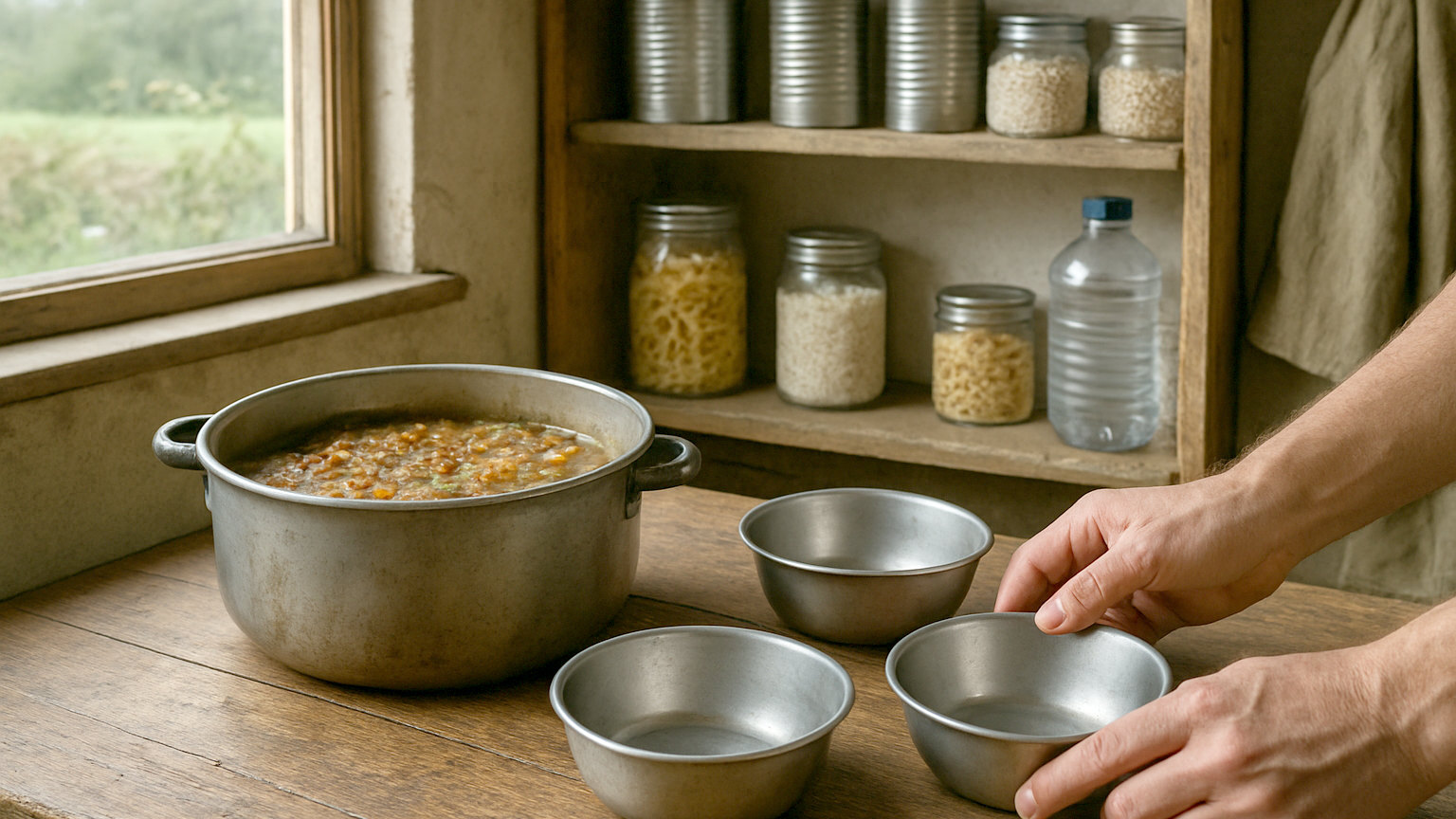
Emergency food planning usually assumes the household stays the same size. In practice disruptions redistribute people, and the household with supplies frequently becomes the one with visitors.
Why does the household grow?
Because other people lose their homes or cannot get to them. A neighbour whose house floods. A relative whose power is out when yours is not. Adult children who come home. Friends stranded by closed roads. Someone whose gas has been cut off. In each case the sensible response is to take them in, and that immediately changes the arithmetic of your store.
How much slack should you build in?
Enough for a couple of extra people for a few days, which is modest. If your target is a week for four, aiming for something closer to a week for five or six costs relatively little and removes the awkward calculation. Slack is cheap when the store is built from ordinary food that gets eaten anyway.
- Plan for a couple of extra people for several days
- Favour bulk staples that stretch, such as rice and pasta
- Keep stock cubes, tinned tomatoes and pulses for volume
- Store extra bedding and warmth as well as food
- Agree with neighbours in advance who would host whom
- Remember extra water, which runs short faster than food
Which foods stretch furthest?
Grains and pulses. Rice, pasta, lentils and beans expand considerably when cooked, cost very little and turn a small amount of protein into a meal for several people. A tin of tuna feeds one as a salad and four in a pasta dish. Stock cubes, tinned tomatoes and onions convert almost anything into a shared pot.
What runs short fastest?
Water, not food. Extra people raise the drinking requirement immediately and add to washing, cooking and lavatory use. A store of a hundred litres sized for four covers six for considerably less than a week. If you take people in during a water interruption, that becomes the binding constraint long before the cupboard does.
What else do extra people need?
Warmth and somewhere to sleep, which are frequently harder than food. Spare blankets, sleeping bags and roll mats take up little space and make hosting practical. In a house without heating, more bodies in one room is genuinely helpful, and a household that has thought about where three extra people would sleep manages far better than one that has not.
Should you agree this in advance?
It helps a great deal. A conversation with immediate neighbours about who would host whom, and who has space, gas cooking, a generator or a spare room, turns an awkward doorstep decision into a plan. It also works in your favour, since you may be the one displaced. This is the same reciprocal arrangement that covers keys and post.
What about sharing supplies?
Generously and sensibly. A street where a few households have supplies and share them fares better than one where everyone hoards, and the social benefit outlasts the incident. Keep enough for your own household, offer what you can spare, and be honest about limits. Pooling cooking, in particular, saves fuel and is far more sociable.
How do you keep track?
Reassess when the numbers change. A store sized for a week for four is three or four days for six. Recalculating early, rather than discovering it on day four, gives time to shop if that is still possible, to ask for help, or to make the food go further. Extending meals with grains from the start is easier than rationing later.
What if you are the one arriving?
Bring what you can and say what you have. Arriving with your grab bag, some food from your own cupboard and any medication makes you considerably easier to accommodate, and it is the difference between being a guest and being a burden on a household that may itself be stretched. Be direct about how long you expect to stay and what you need, since the awkwardness of not asking causes more problems than asking does.
Build in slack for two extra people, favour grains and pulses that stretch, remember the water first, and agree with neighbours in advance.


