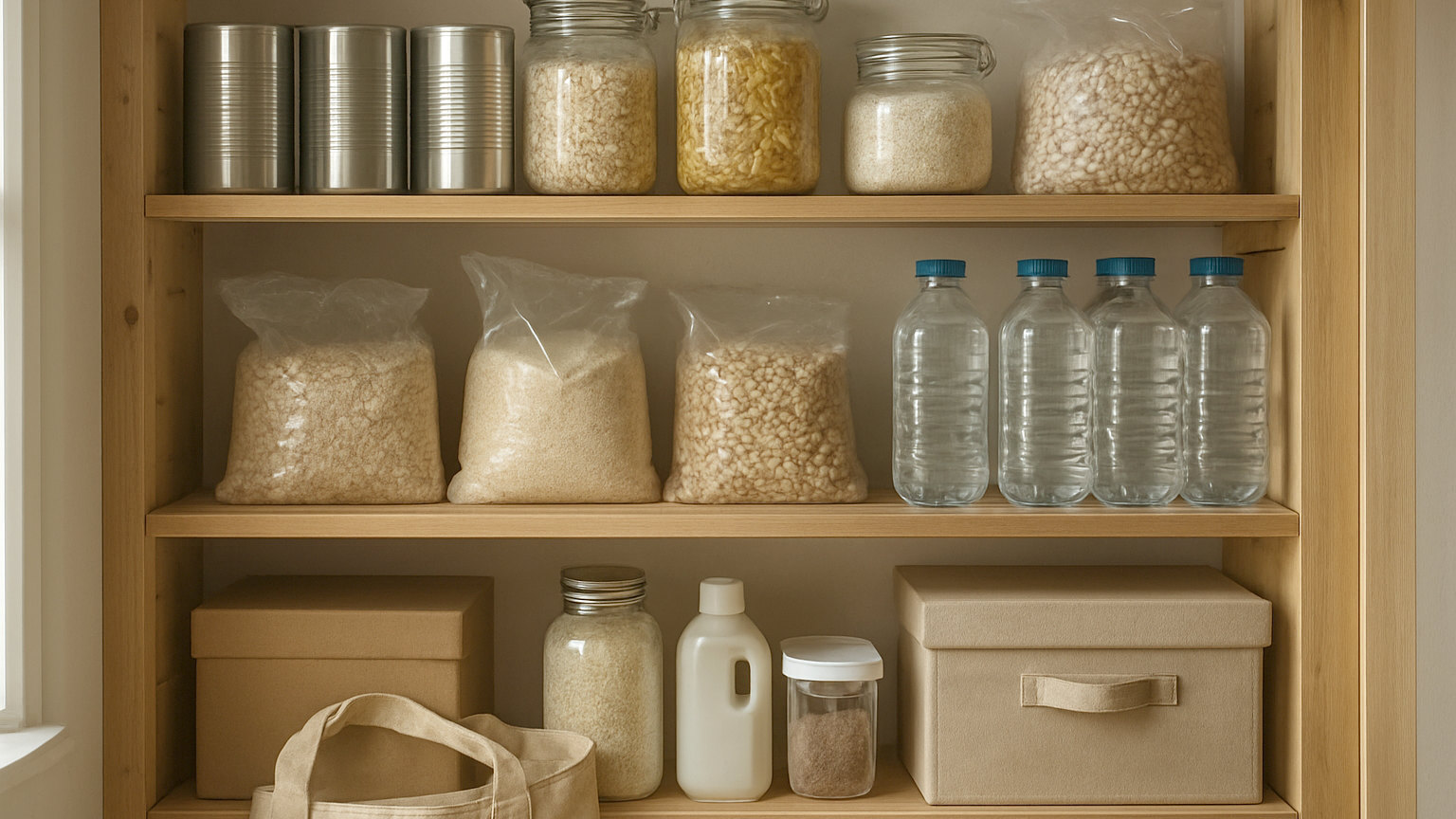
A store built from rice, pasta and biscuits provides plenty of calories and very little protein. Correcting that is inexpensive and worth doing, since protein affects how well people function over a longer disruption.
How much do you actually need?
Around fifty to sixty grams a day for an average adult as a general guide, more for larger or more active people. Over a few days a shortfall matters very little, since the body has reserves. Over a week or more it begins to affect energy, healing and immune function, which is why a store intended for any length of time should include it deliberately.
What are the shelf stable sources?
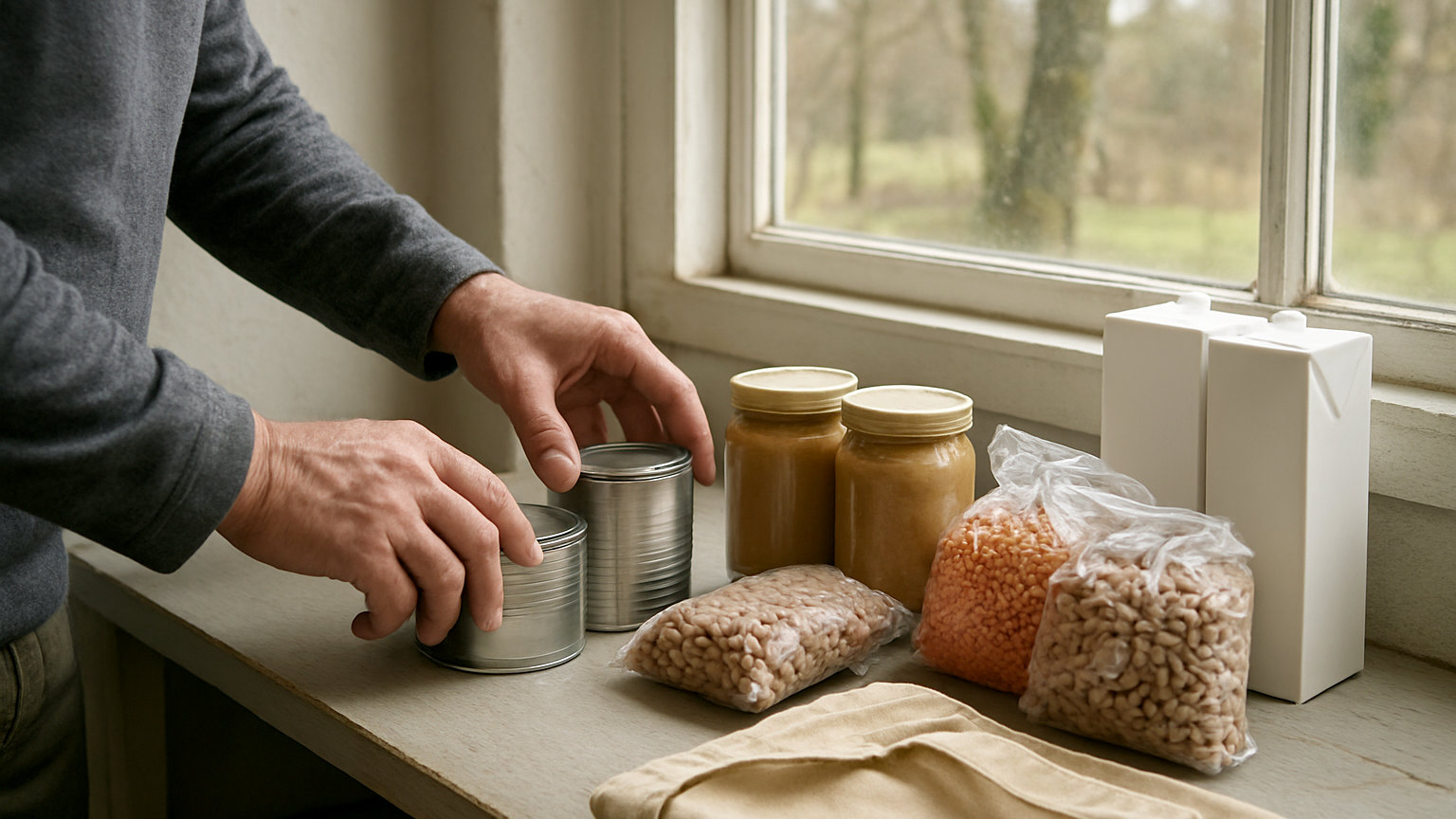
Tinned fish, which is the standout: tuna, salmon, sardines and mackerel are cheap, keep for years, need no cooking, and provide substantial protein plus useful fats. Tinned and dried pulses, meaning beans, chickpeas and lentils. Tinned meat and pate. Peanut butter and other nut butters. Nuts and seeds. Long life and dried milk. Dried and tinned eggs, which are available though less common.
- Tinned fish, high in protein and needing no cooking
- Tinned and dried beans, chickpeas and lentils
- Peanut butter and other nut butters
- Long life milk and dried milk powder
- Nuts and seeds, rotated faster since they go rancid
- Tinned meat and pate for variety
What is the cheapest source?
Dried pulses, by a wide margin. Dried lentils, split peas, chickpeas and beans cost very little per kilogram, keep for years, and are dense in protein. The drawback is that most need soaking and prolonged cooking, which uses both water and fuel. Lentils and split peas are the exception, cooking in twenty to thirty minutes without soaking, which makes them the most practical dried pulse for emergency use.
What about tinned versus dried?
Tinned pulses cost more per portion and need no water, no soaking and no cooking, which is a substantial advantage in exactly the circumstances that matter. A store holding both covers different situations: tins for the first days when fuel and water are uncertain, dried for depth and value once you can cook again.
Does protein quality matter?
Somewhat, over longer periods. Animal sources provide complete protein containing all essential amino acids, while most plant sources are individually incomplete. Combining pulses with grains, such as beans with rice or lentils with bread, provides the full range, which is why those combinations appear in traditional cooking worldwide. Over a week this is a refinement rather than a concern.
What about vegetarian and vegan households?
Well served by the same list minus the animal products. Pulses, nuts, nut butters, seeds, soya products and fortified plant milks in long life cartons all store well. Tofu in shelf stable packaging keeps unopened for months. Textured vegetable protein is very light, cheap and keeps for a long time, and needs only water to rehydrate.
Is protein powder worth keeping?
As a supplement rather than a foundation. It is compact, keeps reasonably well and needs only water or milk, which suits a grab bag. It is expensive per gram of protein compared with tinned fish or dried pulses, and it is not food anyone will build meals around. A tub does no harm and should not replace real sources.
What is the simple answer?
Keep a stack of tinned fish and tinned pulses. Between them they cost very little, require nothing to prepare, keep for years, and transform a carbohydrate heavy store into a balanced one. Add peanut butter and long life milk and the protein question is largely settled.
Does protein matter more in the cold?
Energy matters more, and protein still helps. A cold house raises calorie requirements noticeably as the body works to maintain temperature, so the first priority is simply eating enough. Protein contributes to that and supports repair and immune function over a longer disruption. The practical conclusion is the same: eat properly rather than sparingly, and make sure some of what you eat is not purely carbohydrate.
Stock tinned fish and tinned pulses first, add peanut butter and long life milk, and keep dried lentils for cheap depth.