A single burner will feed a household perfectly well, provided the meals are designed around it. The constraints are fuel, water and the fact that you have one pan, and all three are manageable with a little planning.
Where should you use it?
Outdoors, or with genuine ventilation. Camping stoves produce carbon monoxide, which is colourless, odourless and kills people every year in tents, caravans, porches and kitchens with the window shut. Outdoors under cover is the safest arrangement. If you must cook inside, open a window properly and never leave it unattended, and never use a barbecue indoors under any circumstances.
How do you make the fuel last?
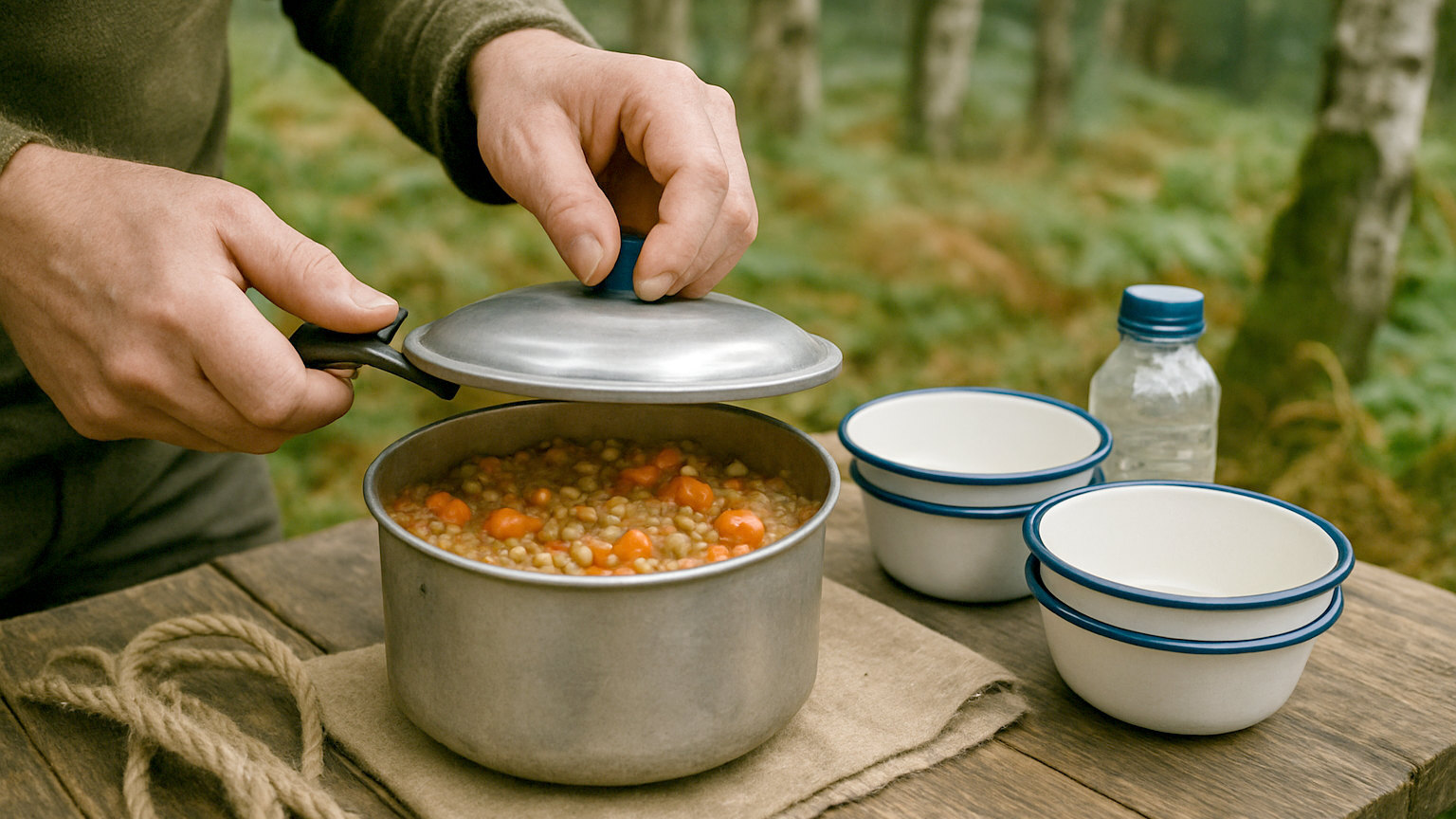
Lids, low flame and preparation. A lid on a pan cuts boiling time substantially, and simmering rather than boiling hard uses far less gas for the same result. Shelter the stove from wind, which steals an enormous amount of heat. Measure water rather than filling the pan, and turn the stove off the moment you are finished rather than leaving it running between tasks.
- Always use a lid, which cuts fuel use substantially
- Shelter from wind, which wastes more heat than anything else
- Simmer rather than boil hard once up to temperature
- Measure water rather than filling the pan
- Cook one pot meals to save fuel, water and washing up
- Soak pasta and pulses beforehand to shorten cooking
What meals suit a single burner?
One pot dishes where everything cooks together. Pasta with a tin of tomatoes and tuna, cooked in just enough water that none is drained. Rice cooked by absorption with tinned vegetables and stock. Lentil soup. Porridge. Tinned stew heated through. Anything requiring an oven, or two pans at once, is the wrong choice.
How do you save water?
By choosing methods that absorb it rather than discard it. Cooking pasta in a large pan and draining it wastes over a litre. Cooking it in just enough water, or using ready to eat pouches, saves that entirely. The absorption method for rice uses roughly twice the volume of the rice and leaves nothing to pour away. Where water is short, this matters as much as fuel.
What about washing up?
Minimise it, since it consumes water and fuel. One pot meals leave one pan. Wipe out with kitchen paper before washing. Line pans with foil where practical. Eat from the pan where acceptable. Disposable plates have a place if water is genuinely scarce, though they create waste that may not be collected during a disruption.
What stove should you have?
A simple gas stove using screw on canisters or a portable butane stove of the type used at buffets, both of which are inexpensive and widely available. Keep more fuel than you think you need, since fuel consumption is the thing people most underestimate. Store canisters outdoors or in a shed rather than in the house, and never near a heat source.
How much fuel is a week?
More than one canister for a household. A typical canister boils perhaps a dozen litres of water depending on conditions, and a household making drinks and one hot meal a day gets through that quickly. Two or three canisters is a sensible reserve for a week, and butane performs poorly in the cold, which matters for a winter outage.
What should you cook first?
A hot drink, before anything else. It takes very little fuel, it improves everyone immediately, and it demonstrates that the stove works and you know how to use it. Practise once in the garden before you need to, since a stove nobody has lit is an assumption rather than a capability.
What should you cook in?
One decent pan with a lid, and a kettle if you have space. A wide shallow pan heats faster and more evenly on a small burner than a tall narrow one, and a lid is worth more than any other feature. Avoid anything with a plastic handle that will not tolerate a naked flame, and check the pan is stable on the burner, since a small stove with a large pan on top is easily knocked over.
Cook outdoors, always use a lid, choose one pot meals that absorb their water, and keep more fuel than you expect to need.