Most emergency food advice assumes water is available. When a main bursts or a boil water notice is in force, a store built around rice, pasta and dried pulses suddenly requires the one thing you are rationing.
Why does this matter?
Because water and power frequently fail together, and because cooking water competes directly with drinking water. A litre used to boil pasta is a litre not available to drink, and during a boil notice all cooking water must be boiled first, which consumes fuel as well. A store containing items needing no water at all removes that competition entirely for the first days.
What needs no water?
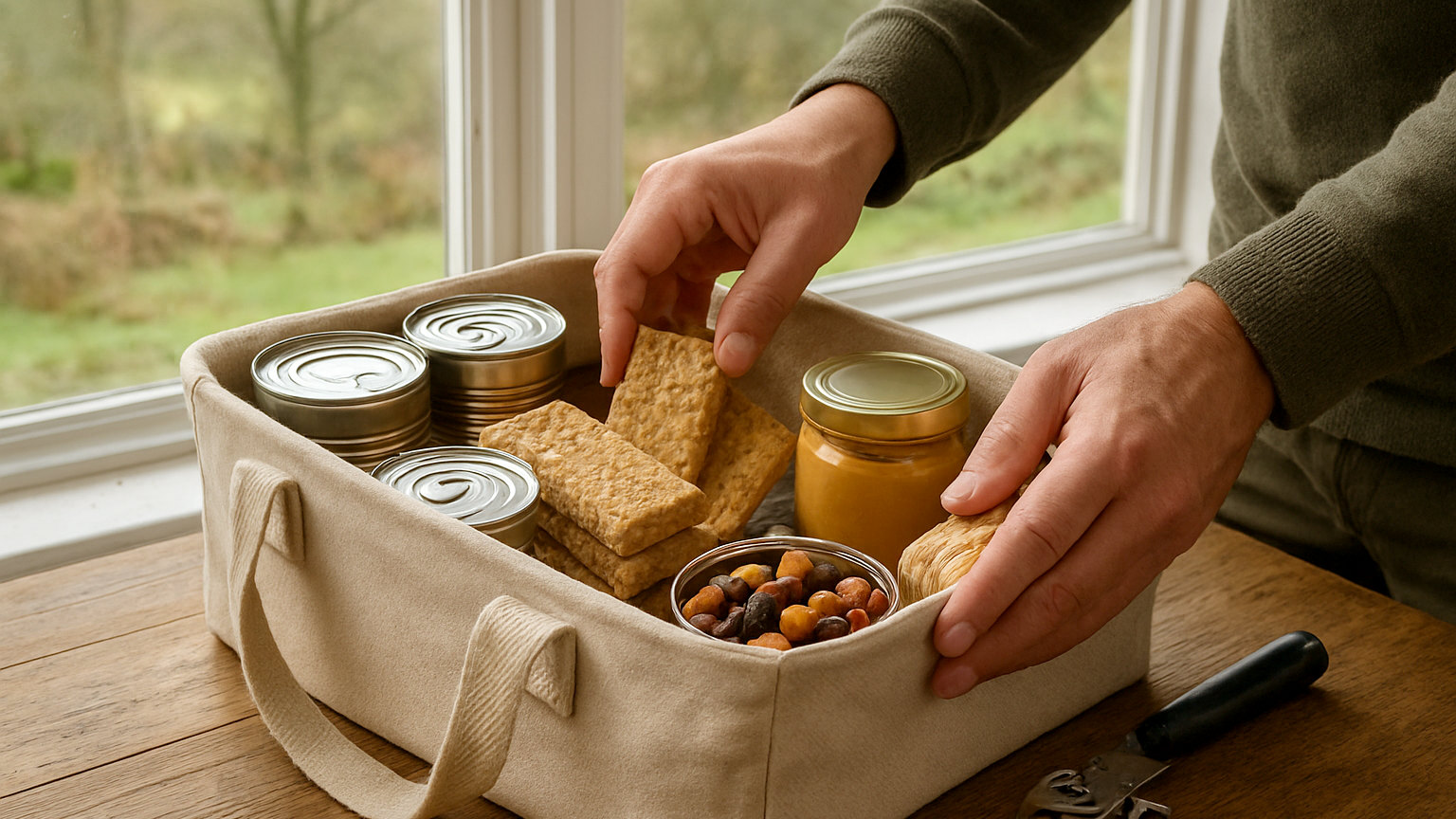
Anything tinned in its own liquid, which covers fish, meat, beans, vegetables, soup and fruit. Ready to eat pouches of rice, grains and lentils. Bread, crackers, oatcakes and biscuits. Peanut butter and spreads. Cheese and cured meats for the first days. Nuts, dried fruit and chocolate. Long life milk and juice, which supply fluid as well as calories.
- Tinned food in its own liquid, eaten cold or warmed through
- Ready to eat rice and grain pouches
- Bread, crackers, oatcakes and biscuits
- Peanut butter, spreads, honey and jam
- Long life milk and juice, which also supply fluid
- Tinned fruit, which is largely water by weight
What should you avoid relying on?
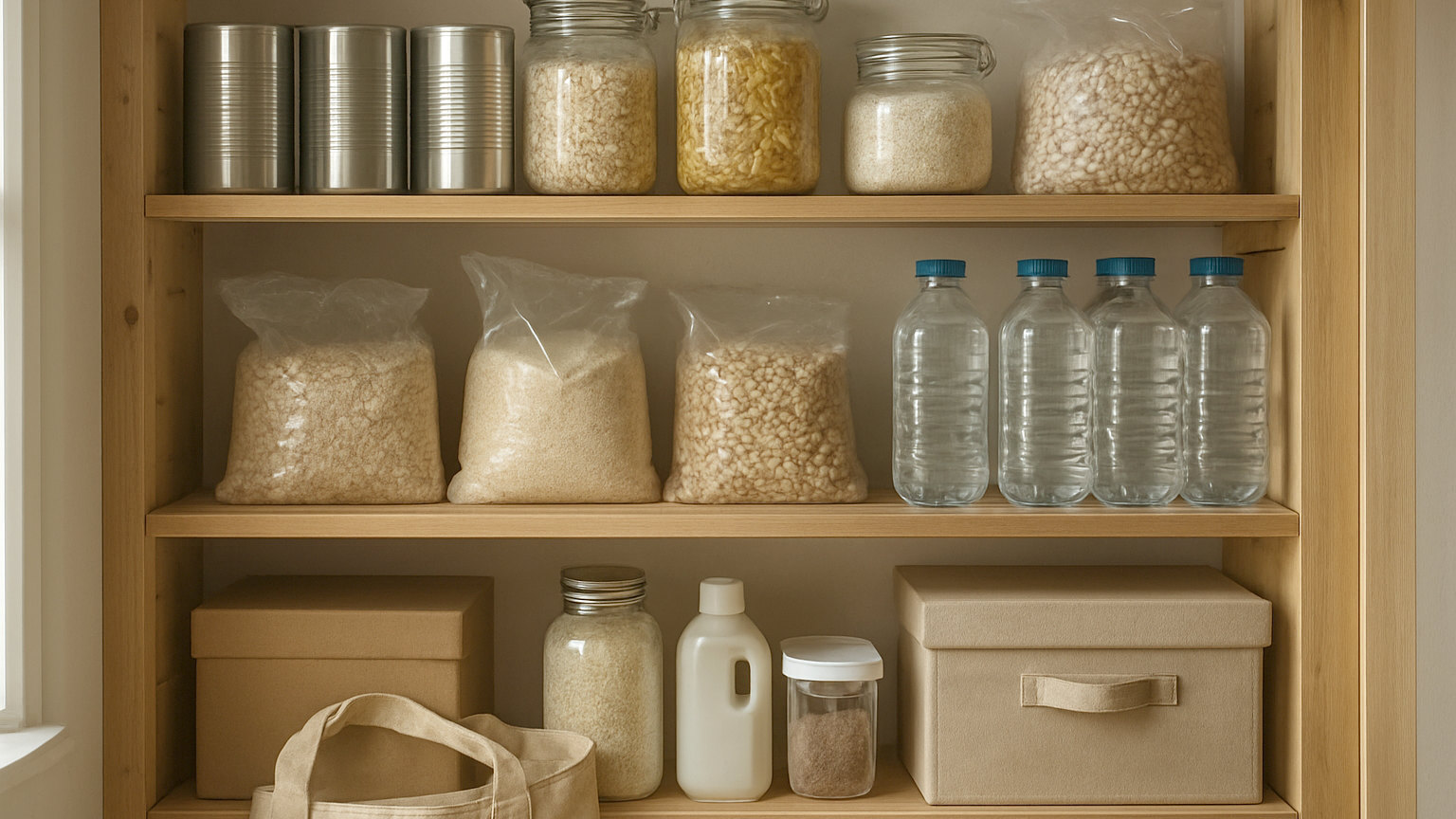
Dried pasta, rice, pulses, instant noodles, dried mash, soup powders, freeze dried meals and anything requiring rehydration. All are excellent value and all consume water at exactly the wrong moment. They belong in a store as depth for when supply is restored, and they should not be the only thing in it.
Does tinned food supply fluid?
Some, and it is worth knowing. Tinned fruit, tomatoes, soup and vegetables are largely water by weight, and the liquid in them counts toward hydration. During a genuine water shortage, choosing foods with high water content and drinking the liquid from tins rather than draining it makes a measurable difference. Salty foods do the opposite and increase fluid requirement.
What about a boil water notice?
It applies to all water used for consumption, including cooking, washing salad, making ice, brushing teeth and preparing baby formula. Food needing no water sidesteps the whole issue, which is why it belongs in a store even for households who never expect a full supply failure. Boil notices are considerably more common than complete outages.
How much drinking water does this save?
A meaningful proportion. A household cooking pasta, rice and soup through a day might use several litres, against a drinking requirement of around three litres per person. Eliminating cooking water for two or three days materially extends a stored supply, which is otherwise the first thing to run out.
What about hygiene?
Plan for that too, since it competes for the same water. Wet wipes, hand sanitiser and disposable plates all reduce consumption. Eating from the tin or the pouch avoids washing up entirely. These are small measures individually and they add up quickly across a household over several days.
What is the sensible balance?
Two or three days of entirely water free food, with the rest of the store built from cheaper items that need water. That covers the most likely interruptions without paying the premium for convenience across the whole store. Ready to eat pouches and tins cost more than dried equivalents, and a few days worth is affordable.
How do you cope with a boil notice specifically?
Boil in batches rather than continuously. Bring a large pan to a rolling boil for a minute, let it cool covered, and decant into clean bottles, so that a single fuel burn produces several litres rather than repeatedly heating small amounts. Remember the notice covers teeth cleaning, ice, washing salad and baby formula as well as drinking, and that food needing no water sidesteps the whole cycle.
What about washing up?
Reduce it rather than solving it. Eating from the tin or pouch, wiping pans with kitchen paper before washing, and lining them with foil all cut water use substantially. Wet wipes and hand sanitiser cover hygiene between proper washes. During a water interruption the cleaning is frequently a larger draw than the cooking, and it is the easier of the two to eliminate.
Keep two or three days of tins and ready to eat pouches, drink the liquid from tins, and treat dried staples as depth rather than the front line.