The most useful principle in emergency food is that the first day should need no cooking at all. It removes the fuel question, the carbon monoxide risk and the washing up, and there is far more ordinary food that works cold than most people assume.
Why plan a no cook day?
Because cooking is where the risks and the complications sit. A power cut takes the hob, the kettle, the microwave and the oven simultaneously, and the temptation to bring a barbecue or a camping stove indoors is what kills people every winter. If the first twenty four hours require nothing but a tin opener, that temptation never arises and you buy time to arrange something safer.
What actually works cold?
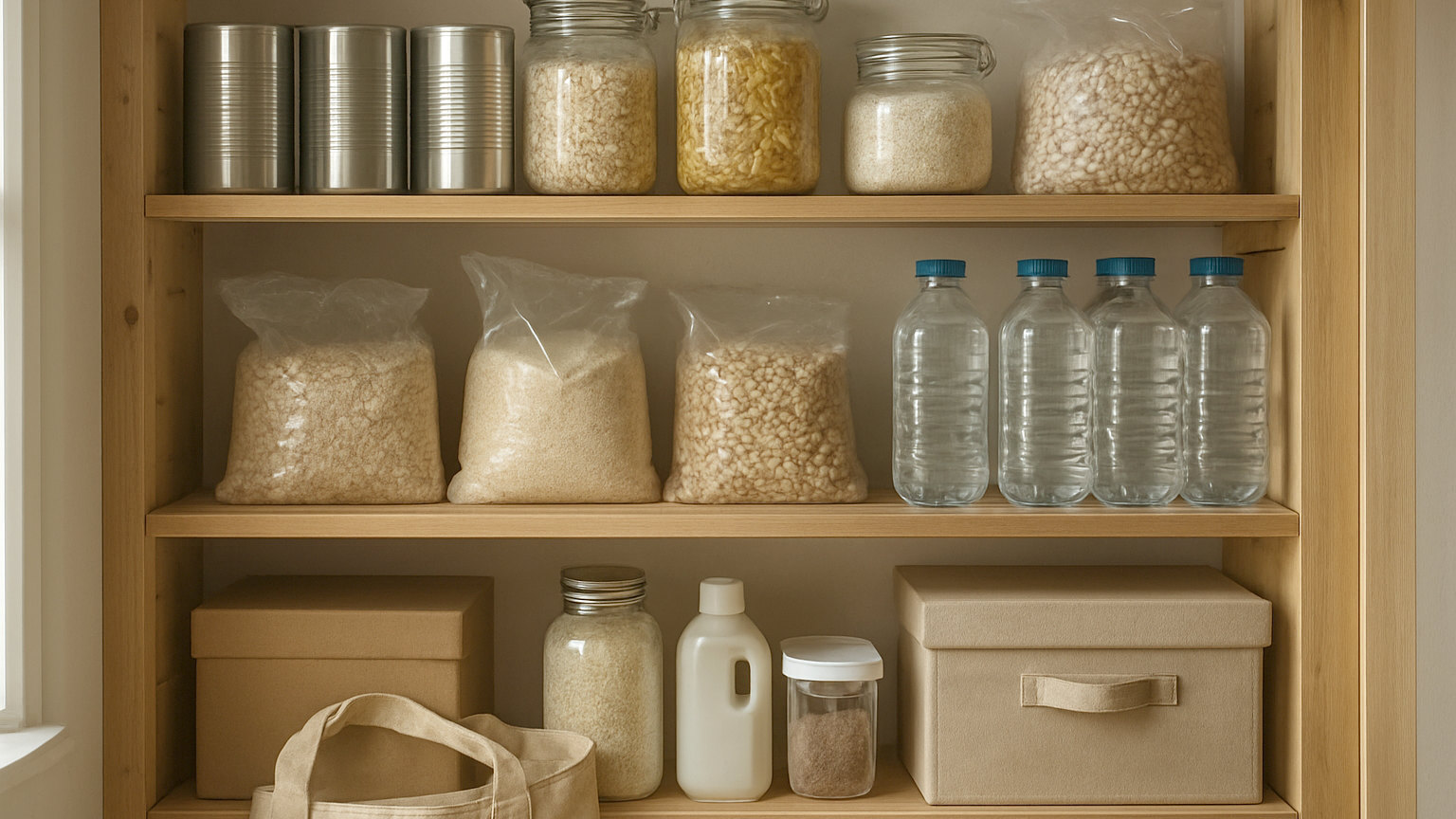
Tinned fish, tinned meat, baked beans, tinned vegetables, tinned fruit, ready to eat rice and grain pouches, long life milk, cereal, oatcakes, crackers, bread and wraps, peanut butter, cheese for the first day or two, nuts, dried fruit, biscuits, chocolate and long life fruit juice. Between them these make genuine meals rather than a series of snacks.
- Tinned protein: fish, meat, beans and pulses
- Ready to eat pouches of rice, grains and lentils
- Bread, wraps, crackers and oatcakes
- Peanut butter, spreads, honey and jam
- Long life milk, cereal, nuts and dried fruit
- Tinned fruit and long life juice for variety
What does a cold meal look like?
Better than it sounds. Tinned tuna with a rice pouch and sweetcorn is a proper meal. Beans with crackers and cheese works. Peanut butter on oatcakes with a banana covers breakfast. Tinned fruit with long life custard is a genuine pudding. The trick is planning combinations in advance rather than opening tins at random and discovering you have three components that do not go together.
What about the tin opener?
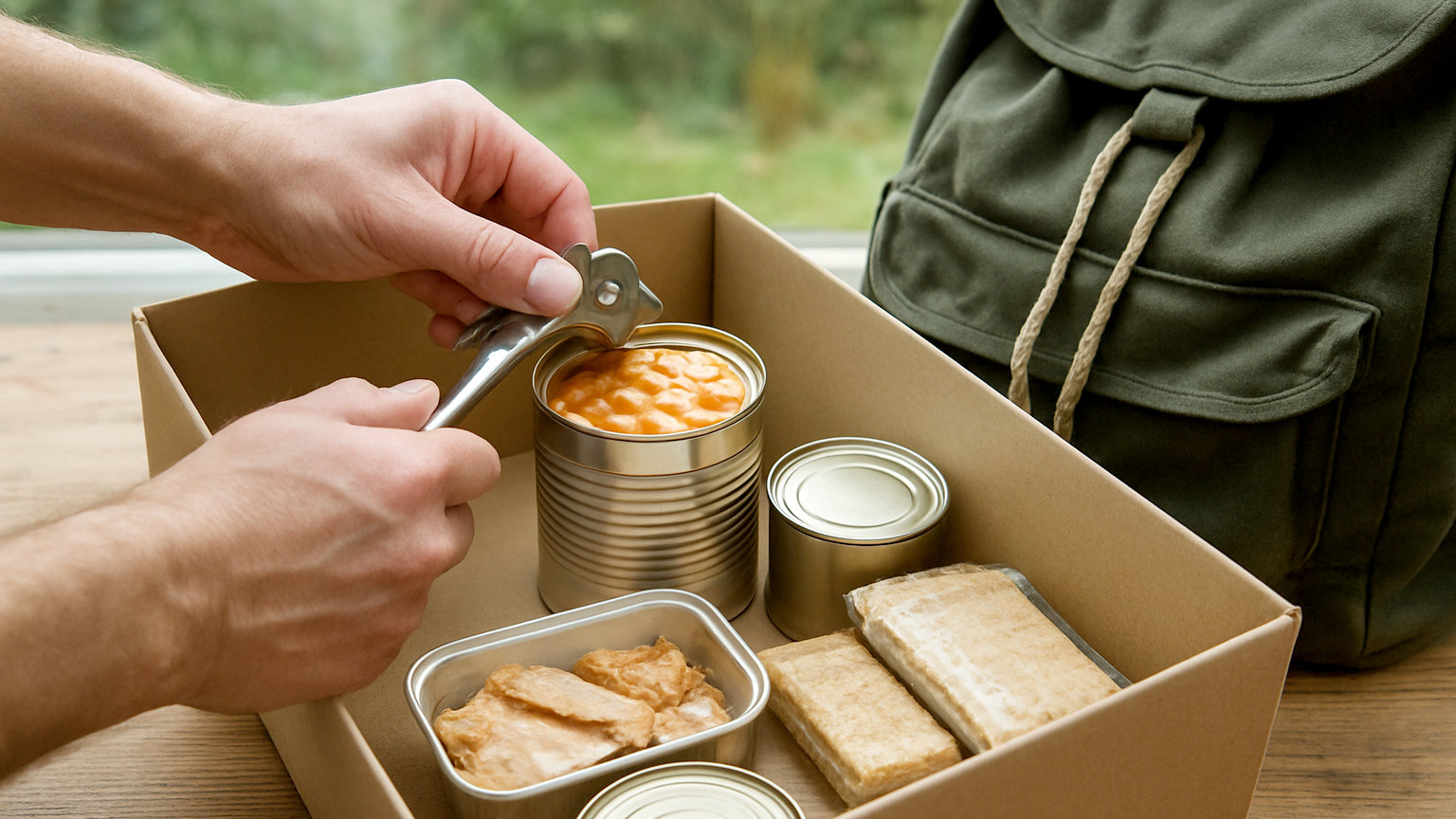
It is the single most important item and the one most often missing. Electric openers stop working, and ring pull tins are convenient until you meet one that is not. Keep a manual tin opener with the store, and ideally a second one in the grab bag. A cupboard full of tins and no opener is a genuinely frustrating situation and an entirely avoidable one.
Do you need hot food at all?
Not nutritionally, and psychologically it matters a great deal. Cold food is perfectly adequate for calories and nutrition, and people who are cold and anxious respond disproportionately well to something warm. That is why a means of boiling water, used safely outdoors or with proper ventilation, is worth having for day two onward even though day one does not require it.
How many calories can you get cold?
As many as you need. Peanut butter, nuts, cheese, chocolate and oil are all extremely calorie dense and need no preparation. A day of cold food can comfortably exceed two thousand calories per adult without difficulty, which is the planning figure. Being cold raises the requirement, so err upward rather than down.
What should you eat first?
Whatever is most perishable. Fridge contents in the first few hours, then freezer contents as they soften, then the cupboard store. Working in that order preserves the shelf stable food for later in the outage and reduces waste considerably. It also means the first meals are the most appealing, which helps morale at the point when people are most unsettled.
What should be in the plan?
Two or three specific no cook meals written down, with the ingredients kept together. In an outage nobody wants to design a menu by torchlight. Knowing that day one is beans and crackers for lunch and tuna and rice for dinner removes a decision and confirms you actually have the components rather than assuming.
How long can you keep it up?
Comfortably for the length of any normal British disruption, though it wears after a few days. Cold food is nutritionally fine indefinitely, and the problem is psychological rather than physical: people become tired of it and morale drops. That is the argument for arranging a safe way to heat water by day two or three rather than for stocking differently, since one hot drink or one hot meal a day resets the whole tone of a difficult week.
Plan the first day around a tin opener alone, write two or three cold meals down, and keep a manual opener with the store.