Stoves divide by fuel type, and each type trades convenience against cold weather performance and fuel availability. For household emergency use the answer is simpler than the range of options suggests.
What are the types?
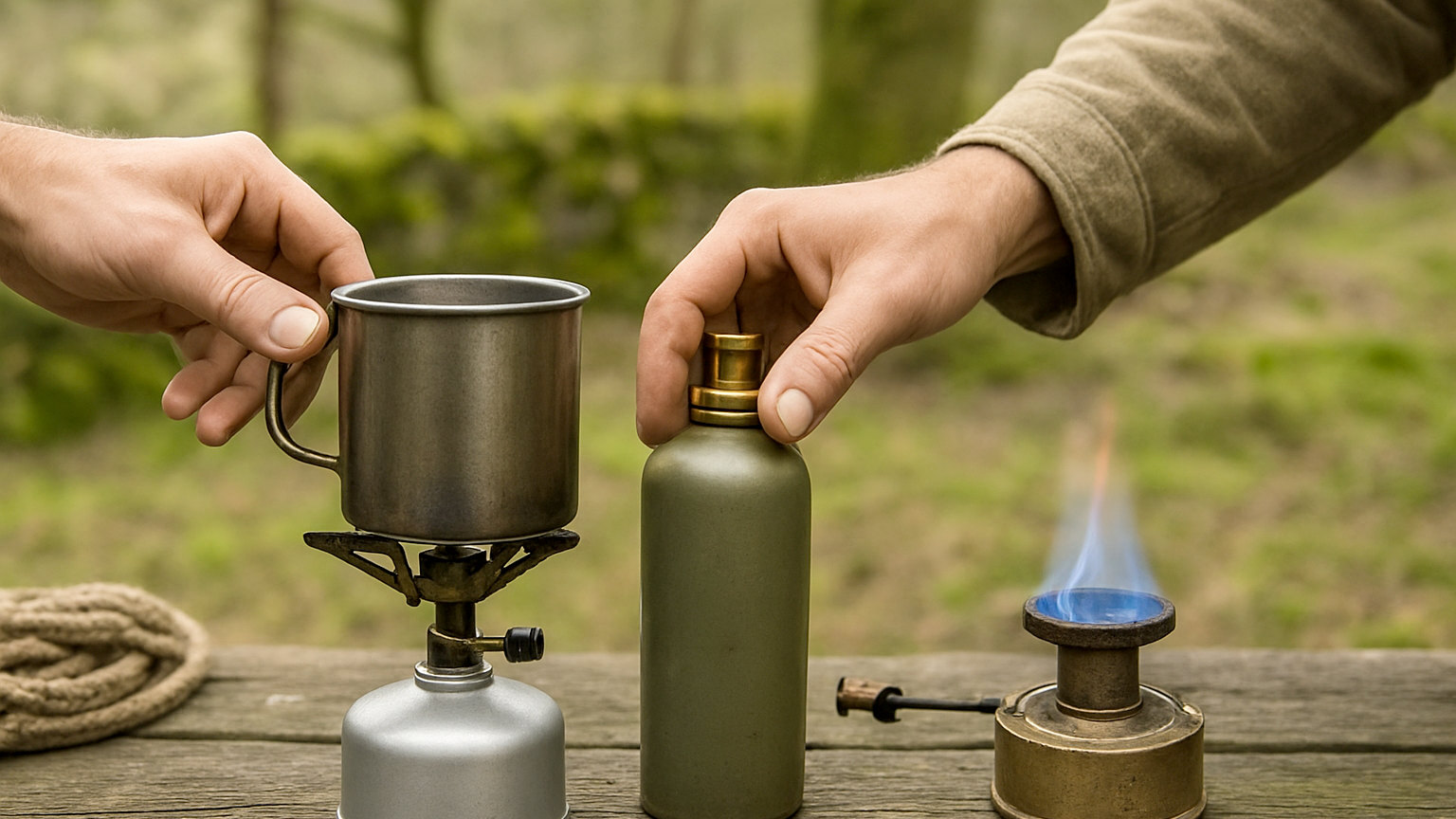
Gas stoves running on screw on canisters or on the flat cartridges used in portable buffet stoves. Liquid fuel stoves burning petrol or paraffin. Alcohol stoves burning methylated spirit. Solid fuel stoves burning hexamine or similar tablets. And wood burning stoves. Each has a clear best use and none is best at everything.
Which suits a household?
A portable butane stove of the type used at buffets and on market stalls. They cost very little, take a flat cartridge available from supermarkets and hardware shops, provide a proper burner and a stable platform for a full sized pan, and are simple enough that anyone can use one. For cooking for a family during a power cut, nothing else is as straightforward.
- Portable butane stove: cheap, stable, ideal for household use
- Screw on gas canister stove: light, best for walking
- Liquid fuel: best in extreme cold and remote travel
- Meths: simple, silent, no moving parts, slower
- Solid fuel: emergency backup, small and smoky
- Wood burning: free fuel, needs dry wood and attention
What is the problem with butane in the cold?
It stops vaporising properly below around four degrees, so the stove produces a weak flame or none at all. This matters because winter power cuts are exactly when you need it. Keeping the cartridge indoors or in a pocket before use helps, and mixed gas containing propane or isobutane performs considerably better in cold conditions. Liquid fuel stoves are unaffected entirely.
When is liquid fuel worth it?
In serious cold and where gas canisters are unavailable. Petrol and paraffin stoves work at any temperature, the fuel is available everywhere including abroad, and a bottle of fuel is far more energy dense than a canister. They are heavier, need priming, require occasional maintenance and are noisy. For mountaineering and expedition travel they are the standard, and for a kitchen power cut they are overkill.
What about meths stoves?
Genuinely reliable and slower. An alcohol burner has no moving parts, nothing to break, no valves and no priming, and methylated spirit is cheap and available. The drawbacks are a slower boil, no simmer control on simple designs, and a flame that is nearly invisible in daylight, which is a real burn risk. As a backup that will always work, it is hard to beat.
How much output do you need?
Less than you think. A stove that boils a litre in four or five minutes is entirely adequate for household cooking. Very high output stoves consume fuel faster and are designed for melting snow and expedition use. Simmer control matters more than raw power for cooking actual meals rather than just boiling water.
Should you have more than one?
Two is sensible, using different fuels. A butane stove for the household plus a small meths or gas backpacking stove covers a failure of either fuel supply, and the second one lives in the grab bag. They are inexpensive enough that redundancy costs very little.
What should you check before buying?
Fuel availability locally, stability with a full pan, whether it has a windshield or accepts one, and whether the cartridge type is the common standard rather than something proprietary. Buy the fuel at the same time and try it once at home, since a stove nobody has lit is an assumption rather than a capability.
What about stability?
It matters more than any performance figure and is frequently overlooked. A small backpacking stove screwed to the top of a narrow canister will tip with a full family sized pan on it, and a pan of boiling water going over during a power cut is a serious injury. Portable butane stoves have a wide flat body and proper pan supports, which is much of why they suit household use. If you use a canister stove for anything large, fit a stabiliser base.
Buy a portable butane stove for the household, keep the cartridges warm in winter, add a small backup on a different fuel, and light it once before you need it.