Emergency cooking equipment is an area where very little is genuinely necessary and a great deal is sold. The useful list is short and most households already own most of it.
What is genuinely essential?
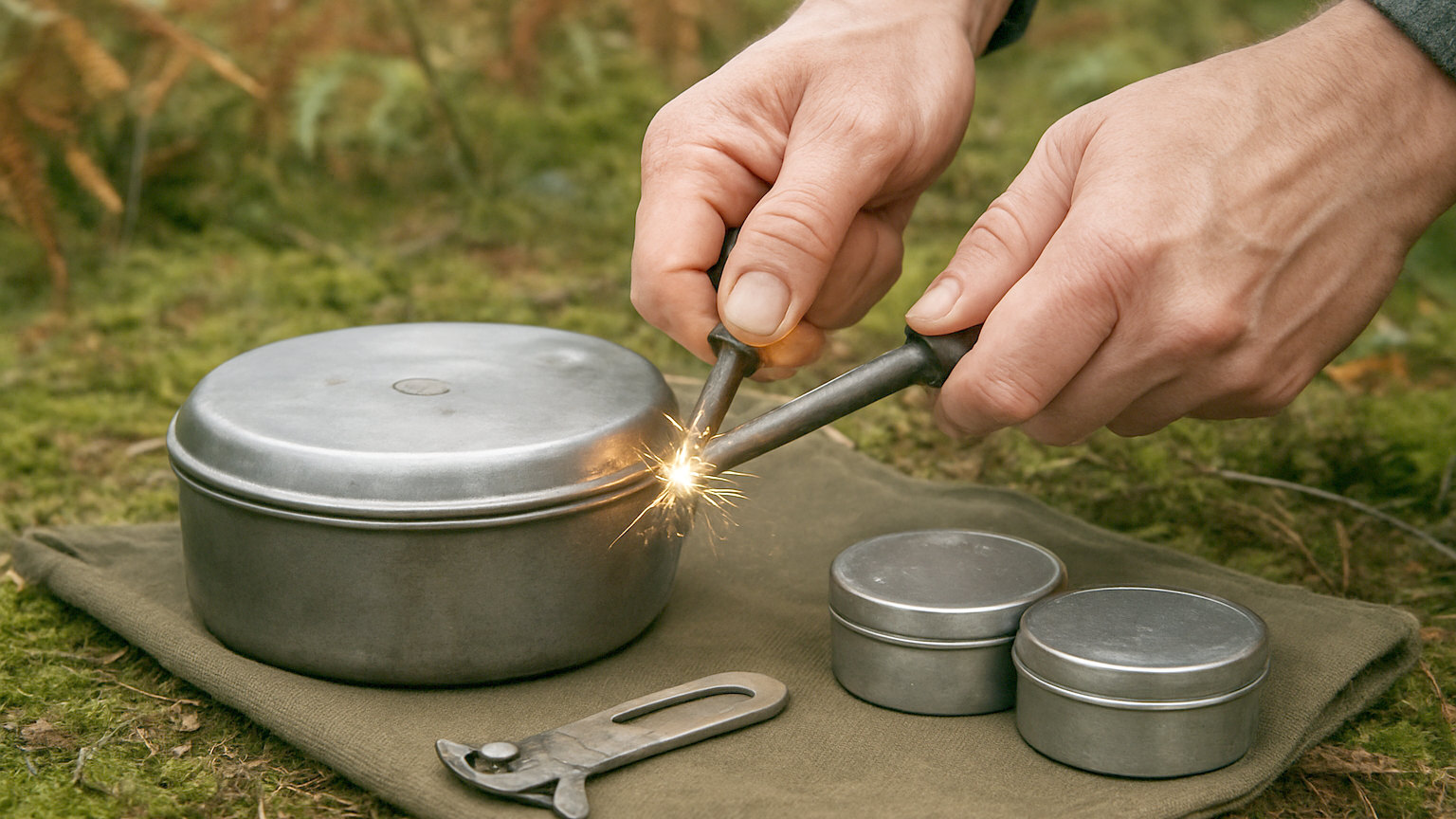
A pan with a lid, matches or a lighter, and a manual tin opener. Those three cover heating water, cooking a one pot meal and accessing the food. Everything else improves comfort rather than capability. A household that has these three and a working stove can cook through any realistic disruption.
Which pan works best?
A wide, shallow pan with a well fitting lid, in a size matching the burner. Wide and shallow heats faster and more evenly on a small flame than tall and narrow. A well fitting lid is worth more than any other feature, since it cuts boiling time substantially. Two to three litres suits a household, and a smaller pan is easier to handle on a compact stove.
- A wide shallow pan with a well fitting lid
- Matches and a lighter, kept dry and with the stove
- A manual tin opener, which is the item most often missing
- A long handled spoon and a knife
- Oven gloves or a cloth, since handles get hot
- A kettle if you have one, which boils faster than a pan
Does the material matter?
Somewhat. Aluminium is light and heats fast and dents easily. Stainless steel is durable, heavier and heats less evenly. Hard anodised aluminium combines lightness with durability. Titanium is very light, expensive and heats unevenly. For household use, whatever pan you already own is fine, provided the handle is not plastic that will melt on a naked flame.
What about the handle?
Check it before you need it. Many modern kitchen pans have plastic or composite handles that will soften or melt over a camping stove flame, and some have handles that get too hot to hold. A pan with a metal handle, or a folding handle designed for camping, avoids the problem. Keep an oven glove or a cloth with the stove regardless, since everything gets hot.
Is a kettle worth having?
A stovetop kettle is genuinely useful. It boils faster than an open pan because it is enclosed, it pours safely, and it frees the pan for cooking. Whistling models tell you when to turn the stove off, which saves fuel. Any ordinary stovetop kettle works on a camping stove provided the base is stable on the burner.
What do people forget?
The tin opener, consistently. A cupboard of tins and no opener is a genuinely frustrating position, and electric openers stop working while not every tin has a ring pull. Keep a manual opener with the store and a second in the grab bag. After that, matches, a means of lighting the stove that does not need electricity, and something to lift a hot pan.
What about washing up?
Minimise it rather than equipping for it. A single pan meal leaves one pan. Kitchen paper for wiping out before washing, a scourer and a small amount of detergent covers the rest. Eating from the pan or from tins removes plates entirely. Water is likely to be the constraint rather than equipment.
What is worth adding for comfort?
A flask, which keeps a single boil useful for hours and saves a great deal of fuel. Insulated mugs. A folding trivet or windshield. A long handled spoon, since reaching into a pan over a flame with a short one is unpleasant. None of these are necessary and all of them make a week considerably more bearable.
Should you keep a separate set?
One old pan set aside is worth it if you cook over wood or charcoal, since soot blackens the outside permanently and transfers to everything. For gas stove use your ordinary kitchen pans are entirely suitable and there is no reason to duplicate. The sensible arrangement is normal pans for the stove and one sacrificial pan and kettle for anything involving a fire.
One wide pan with a lid, matches, a manual tin opener and an oven glove. Add a flask and a stovetop kettle if you want comfort.