Retained heat cooking is an old technique that solves the modern problem of limited fuel. Ten minutes of boiling plus several hours of insulation produces the same result as an hour of simmering.
How does it work?
Food is brought to a full boil on a stove for five to fifteen minutes, then the covered pot is placed inside a heavily insulated container. The pot retains enough heat to continue cooking for several hours, since the insulation slows the loss to a fraction of what an open pot would suffer. The food cooks gently while using no further fuel at all.
What is a haybox?
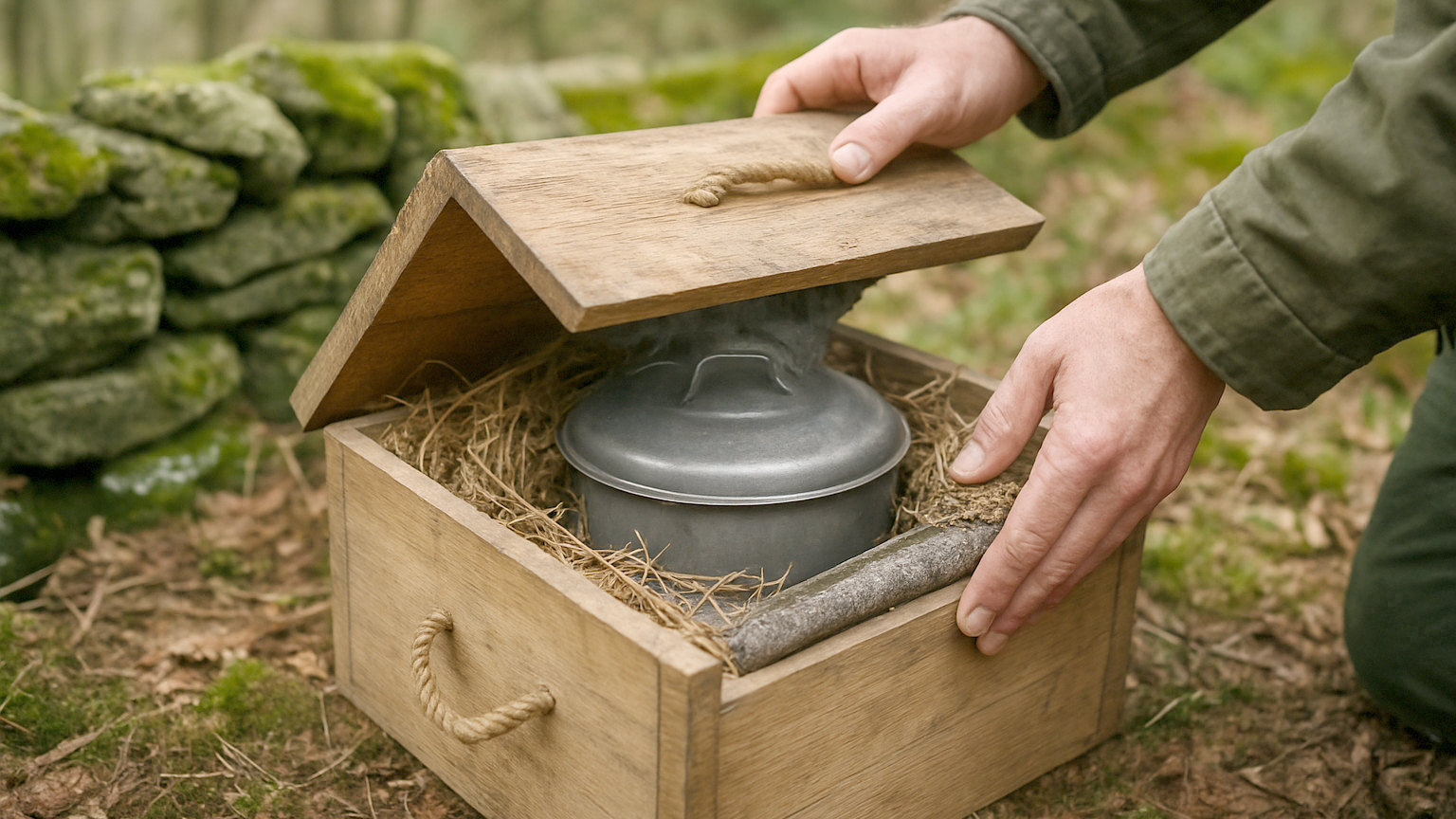
The traditional version: a wooden box packed with hay, straw or any bulky insulating material, with a hollow for the pot and a thick lid. It was widely used in Britain during both world wars to save fuel and was promoted officially for that purpose. Modern equivalents use a purpose made insulated bag, a cool box, or simply a pot wrapped in blankets inside a cardboard box.
- Bring the food to a full boil for five to fifteen minutes first
- Transfer the covered pot straight into heavy insulation
- Do not lift the lid, which loses the stored heat
- Allow two to four times the normal cooking time
- Best for stews, pulses, rice, porridge and soups
- Reheat to boiling before serving if it has cooled
What can you improvise it from?
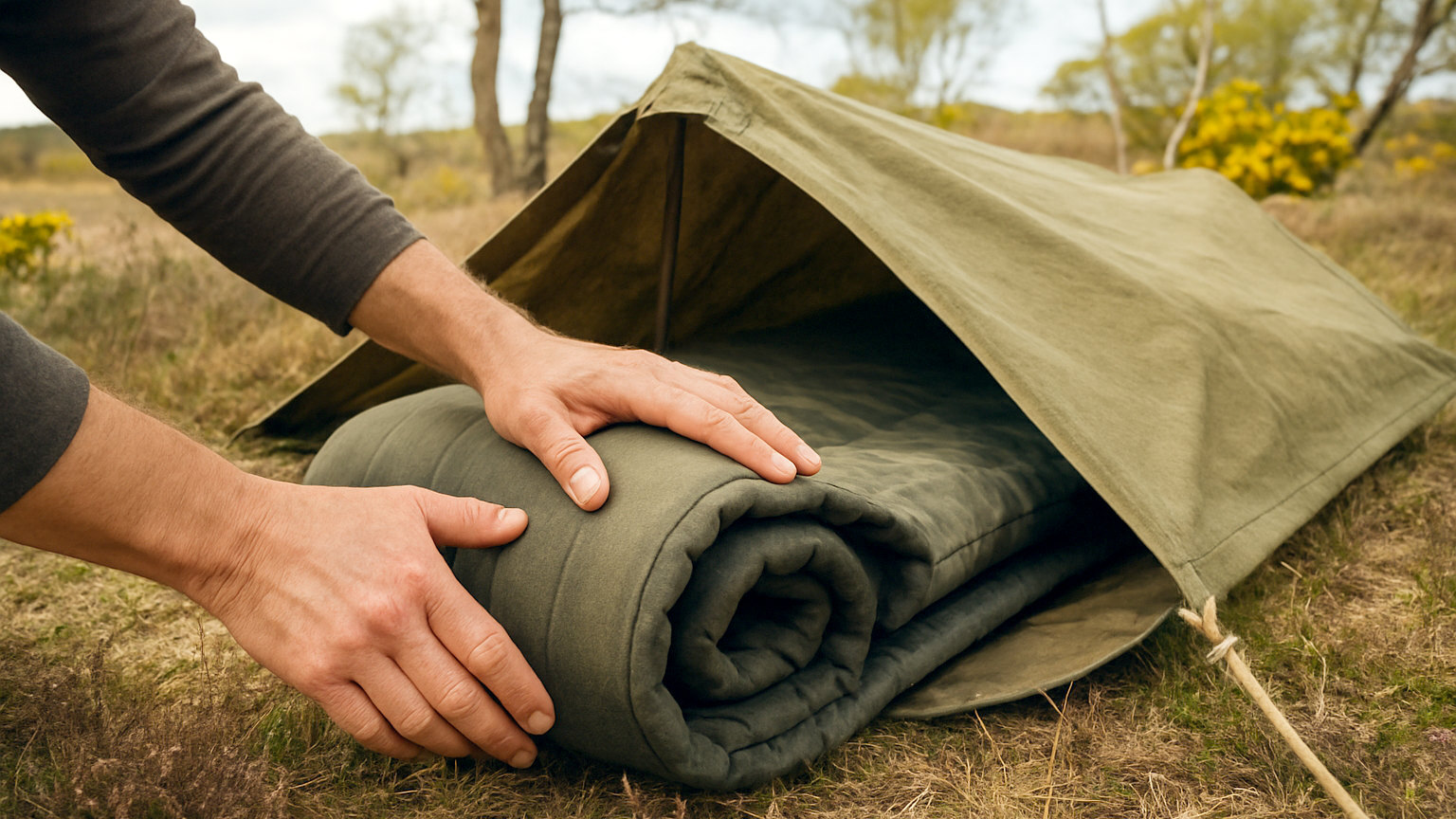
Almost anything bulky and insulating. A cardboard box packed with blankets, towels, newspaper, cushions or clothing works well. A cool box is close to ideal, being already insulated and lidded. A sleeping bag wrapped around a pot inside a rucksack has been used successfully. The requirement is thick insulation on every side including underneath and above.
What foods suit it?
Anything that would normally simmer. Stews, casseroles, dried pulses, lentils, rice, porridge, soups and root vegetables all cook well. Dried beans, which otherwise need long simmering and a great deal of fuel, are the standout case. Foods needing a hard boil throughout, or frying, or precise timing, are unsuitable.
How long does it take?
Two to four times the normal cooking time, and it is forgiving. A stew that would simmer for an hour needs three or four hours in a haybox, and leaving it longer does no harm since it cannot burn or boil dry. This makes it well suited to putting on in the morning and eating in the evening, which is exactly the pattern that suits a disrupted day.
What are the food safety points?
Reach a genuine boil first and reheat before eating. The initial boil must be long enough to heat everything through thoroughly, not just the surface. Food then cools slowly through the temperature range where bacteria multiply, so it should be eaten while still hot or brought back to the boil before serving. Do not use it for reheating leftovers or for large joints of meat where the centre may not reach temperature.
How much fuel does it save?
A great deal. Replacing an hour of simmering with ten minutes of boiling cuts the fuel for that dish by around eighty percent. Across a week of cooking on a limited number of gas cartridges, that is the difference between running out and having plenty. It is the highest value technique in emergency cooking and it requires no equipment.
Is it worth buying a proper one?
Insulated thermal cookers and purpose made cooking bags work very well and are convenient. They cost more than a cardboard box and blankets, which perform nearly as well. Buy one if you will use it regularly for everyday cooking, which many people do for the fuel savings, and improvise otherwise.
Where did it come from?
Fuel shortage, repeatedly. Hayboxes were promoted officially in Britain during both world wars as a way of stretching scarce coal and gas, and the same principle appears in traditional cooking across many countries. Modern insulated cooking bags were developed to reduce firewood use and indoor smoke in households cooking over open fires. In every case the driver has been fuel scarcity, which is exactly the situation an emergency creates.
Boil hard for ten minutes, insulate the pot heavily on all sides, leave it for several hours, and reheat to boiling before serving.