People buy a stove and one canister, which covers a weekend of camping and not a week of cooking for a household. Fuel is the constraint that bites first and the one most often underestimated.
How much do you actually need?
Considerably more than one canister. A typical gas cartridge boils somewhere around a dozen litres of water depending on conditions, and a household making drinks and one hot meal a day gets through that in a couple of days. Two or three cartridges is a sensible minimum for a week, and four is comfortable. Cold weather, wind and boiling from cold all increase consumption.
Which fuels store best?
Gas canisters and methylated spirit, both of which keep indefinitely if sealed and stored properly. Solid fuel tablets keep for years. Petrol is the problem, degrading within three to six months and faster with ethanol content, so it needs rotating. Paraffin keeps reasonably well. For a store you will not touch for a year, gas and meths are the sensible choices.
- Two to four gas cartridges for a week of household cooking
- Gas and meths store indefinitely, petrol degrades in months
- Store gas canisters outdoors, upright, away from heat
- Never store gas in a cellar or below ground level
- Keep meths in its original container, clearly labelled
- Check your home insurance for stored fuel limits
Where should gas be stored?
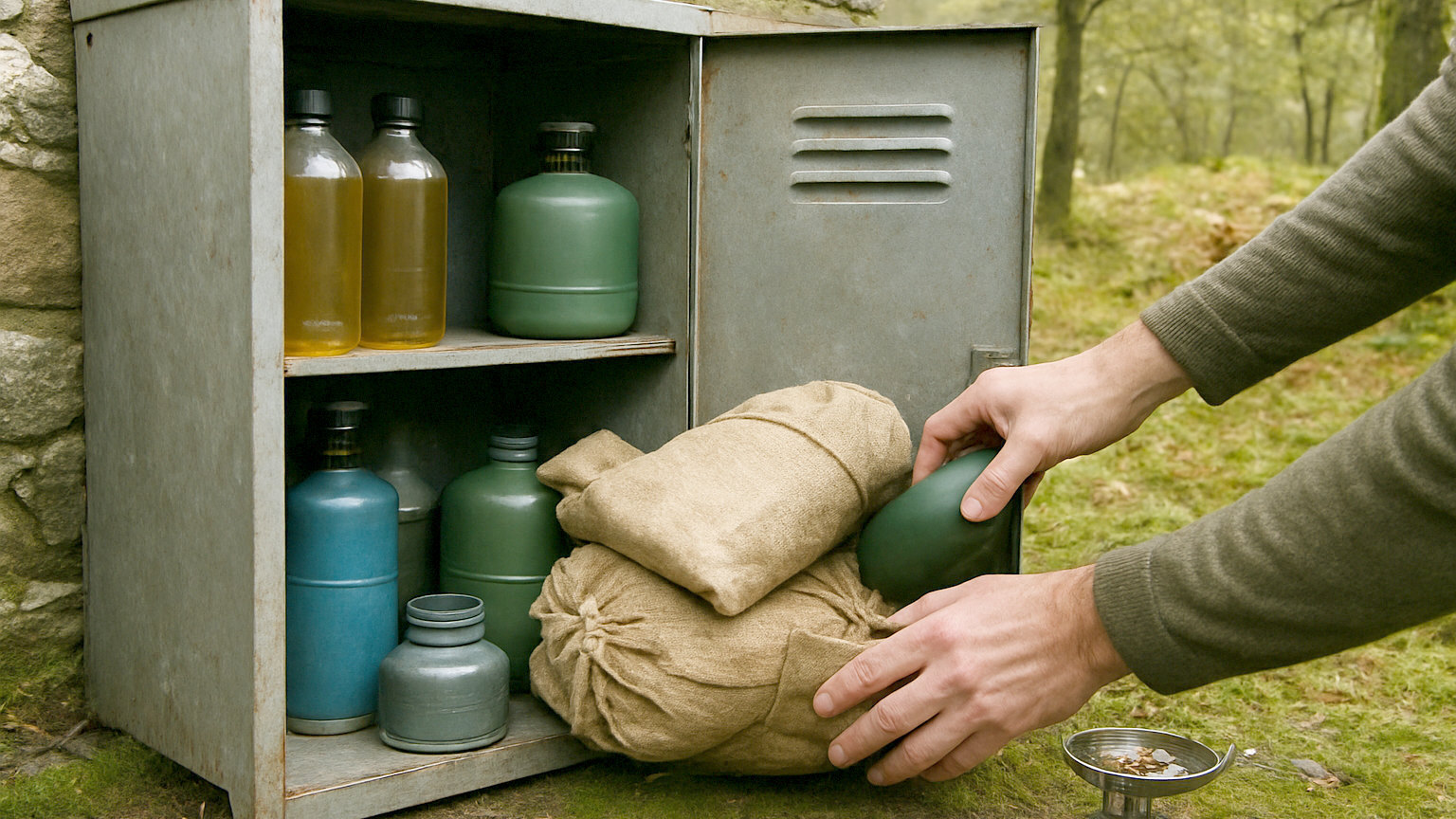
Outside the house, in a ventilated shed or an outdoor store, upright and away from any heat source or ignition. Never in a cellar, basement or below ground space, because both butane and propane are heavier than air and pool rather than dispersing. Never in a loft, where summer heat raises pressure. A locked shed at ground level is the standard answer.
How should you store liquid fuels?
In approved containers, outdoors, within legal limits. Petrol at domestic premises is limited to thirty litres without notification under the petroleum regulations, in containers of specified maximum sizes, and must be kept away from ignition sources and drains. Methylated spirit should stay in its original labelled container. Paraffin should be kept outdoors in a suitable sealed container.
Does gas degrade?
The fuel does not, and the canister can. Sealed canisters keep essentially indefinitely, and the valve seal and the canister itself can corrode if stored damp or on a concrete floor. Keep them dry, off the floor, and check for rust or damage before use. A canister that has been dented or that shows corrosion around the valve should be disposed of properly rather than used.
How do you know how much is left?
By weight. Gas canisters are marked with a tare weight, the empty weight, so weighing a canister and subtracting tells you the gas remaining. Floating a canister in water gives a rough indication from how high it sits. Guessing by shaking is unreliable and leads to running out mid meal, which is why keeping a spare matters more than knowing precisely.
What about disposal?
Take empty canisters to a household waste recycling centre, which accepts them, rather than putting them in domestic bins. Puncturing them yourself is not necessary and introduces risk. Partially full canisters should also go to a recycling centre rather than being stored indefinitely, and many sites have a specific gas cylinder area.
What is the sensible store?
Three or four gas cartridges in a shed, a bottle of methylated spirit for a backup stove, and matches or a lighter with each. That covers a week of household cooking, costs very little, keeps for years and takes almost no space. Rotate it through camping use so nothing sits untouched for a decade.
Do the cartridge types interchange?
Not usually, and it is worth checking before buying. Screw on canisters use a standard threaded valve that most backpacking stoves accept, so those are broadly interchangeable between brands. The flat cartridges used by portable butane stoves come in more than one pattern, and some manufacturers use a proprietary fitting. Buy the stove and several matching cartridges together so you are not hunting for an unusual size during a disruption.
Store three or four cartridges rather than one, keep gas outdoors and upright at ground level, avoid petrol for long storage, and weigh canisters to check.