
Washing up consumes a surprising share of household water, and during an interruption it competes directly with drinking. Reducing it is straightforward and mostly about sequence rather than technique.
What is the first step?
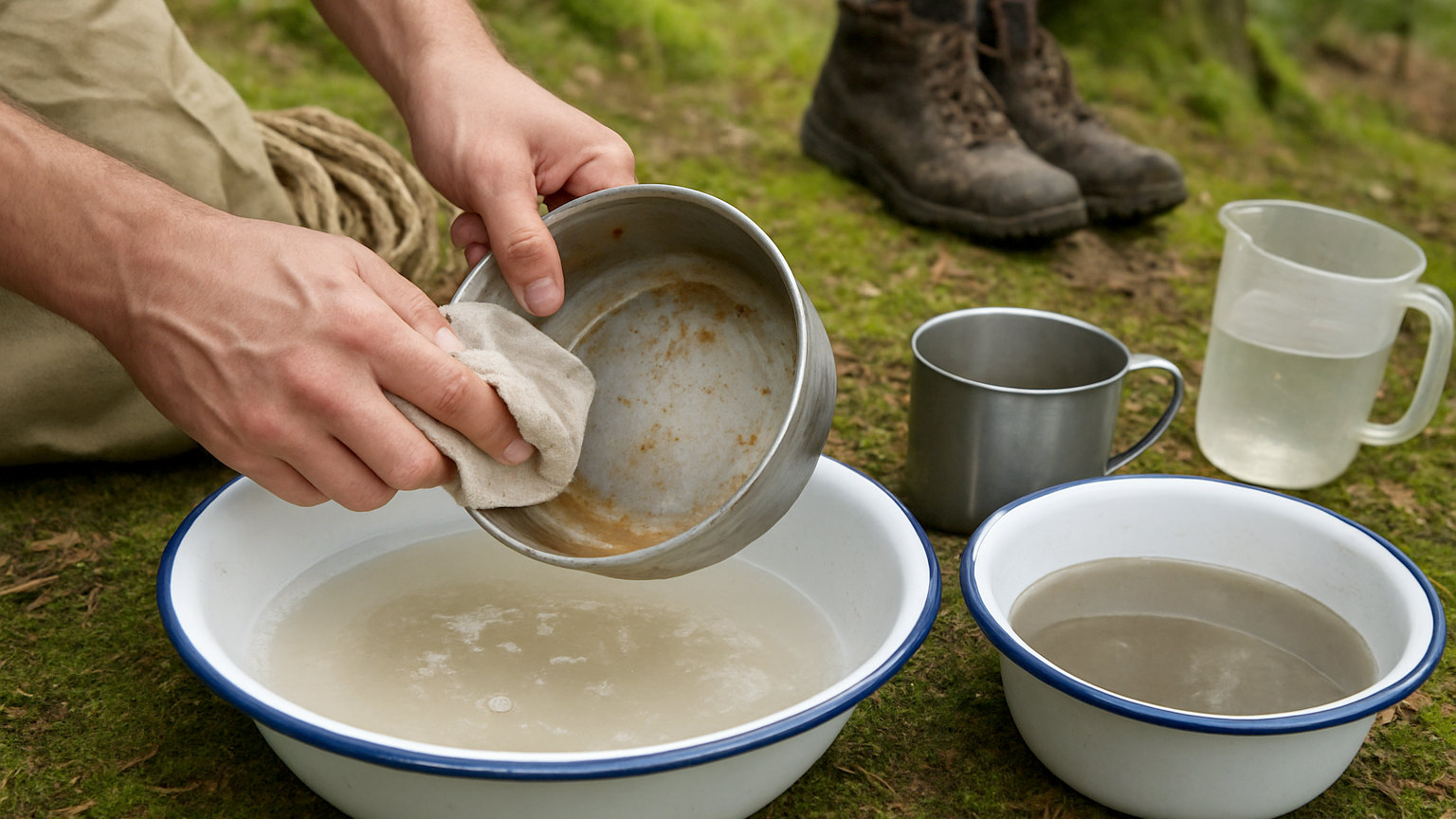
Wipe before washing. Scraping and wiping pans and plates with kitchen paper or a cloth removes most of the food residue before any water is involved, which dramatically reduces both the water and the detergent required. It is the single most effective habit and takes seconds. Dispose of the paper rather than rinsing it.
What is the three bowl method?
The standard approach used in camping and catering. One bowl of hot water with detergent for washing, a second of warm water for rinsing, and a third with a little sterilising solution or very hot water for a final dip. Items move through in order, and the same three bowls do a whole meal for a group. It uses far less water than running a tap and gives a genuinely hygienic result.
- Wipe or scrape everything before washing
- Wash cleanest items first, greasiest last
- Use bowls rather than a running tap
- Reuse water downward, ending with flushing
- Air dry rather than using tea towels that spread bacteria
- Reduce the washing up by cooking in one pan
What order should you wash in?
Cleanest to dirtiest. Glasses and mugs first, then cutlery, then plates, then pans and anything greasy. This keeps the water usable for far longer than starting with the roasting tin. It is the same principle used in commercial kitchens and it can double how many items one bowl of water will handle.
Where does the water go afterwards?
Down the cleanliness order to the lavatory. Washing up water is perfectly good for flushing, and a bucket beside the sink catches it. During an interruption this effectively doubles the value of every litre, since it does two jobs. Rinse water can also be used for a first wash of something greasy before being tipped away.
How do you reduce what needs washing?
Cook and eat differently. One pot meals leave one pan. Eating from the pan or directly from tins and pouches removes plates. Lining a pan with foil means it needs only a wipe. Reusing the same mug all day rather than taking a clean one each time makes a meaningful difference across a household over a week.
Are disposables worth it?
In a genuine water shortage, yes, with a caveat. Paper plates and disposable cutlery eliminate washing up entirely, which matters when water is being rationed. The problem is waste, since bin collections may also be disrupted, so the rubbish accumulates. Keep a modest quantity for the worst case rather than planning around them.
What about hygiene standards?
Do not let them slip, particularly if anyone is unwell. Poorly washed dishes spread stomach bugs readily, and a household already dealing with an interruption does not need an outbreak. Hot water and detergent matter, the final rinse matters, and hand washing before handling food matters most of all. Air drying is more hygienic than a damp shared tea towel.
How much should you allow?
A few litres a day for a household using bowls and wiping first, against ten or more for running taps. That saving is significant when the total available is measured in tens of litres. Budget for it explicitly rather than assuming, since washing up is usually left out of water calculations entirely.
What about hand washing?
Keep it as the one thing you do not economise on. Hand washing with soap and water before preparing food and after using the lavatory is the measure that prevents a stomach bug spreading through a household, and alcohol gel is a poor substitute against some organisms. Reserve a small quantity of clean water specifically for hands, poured from a bottle over a bowl so a little goes a long way, and treat it as separate from the washing up allocation.
How do you dry things?
Air dry on a rack wherever possible. A shared damp tea towel spreads bacteria between items and is worse than leaving things to drain, particularly in a household where someone is unwell. If you must use a cloth, use a clean dry one and change it frequently, and dry it properly between uses rather than leaving it bunched up damp.
Wipe first, use three bowls, wash cleanest to dirtiest, pour the used water into a bucket for flushing, and cook in one pan.


